
10 Tips for Infrared Sauna Success: A Beginner's Guide After 3,000+ Builds
Key Takeaways
- Start slow: 15–20 minutes at 130°F for your first week, then gradually increase to 30–45 minutes at 140–145°F. Rushing the heat is the most common beginner mistake
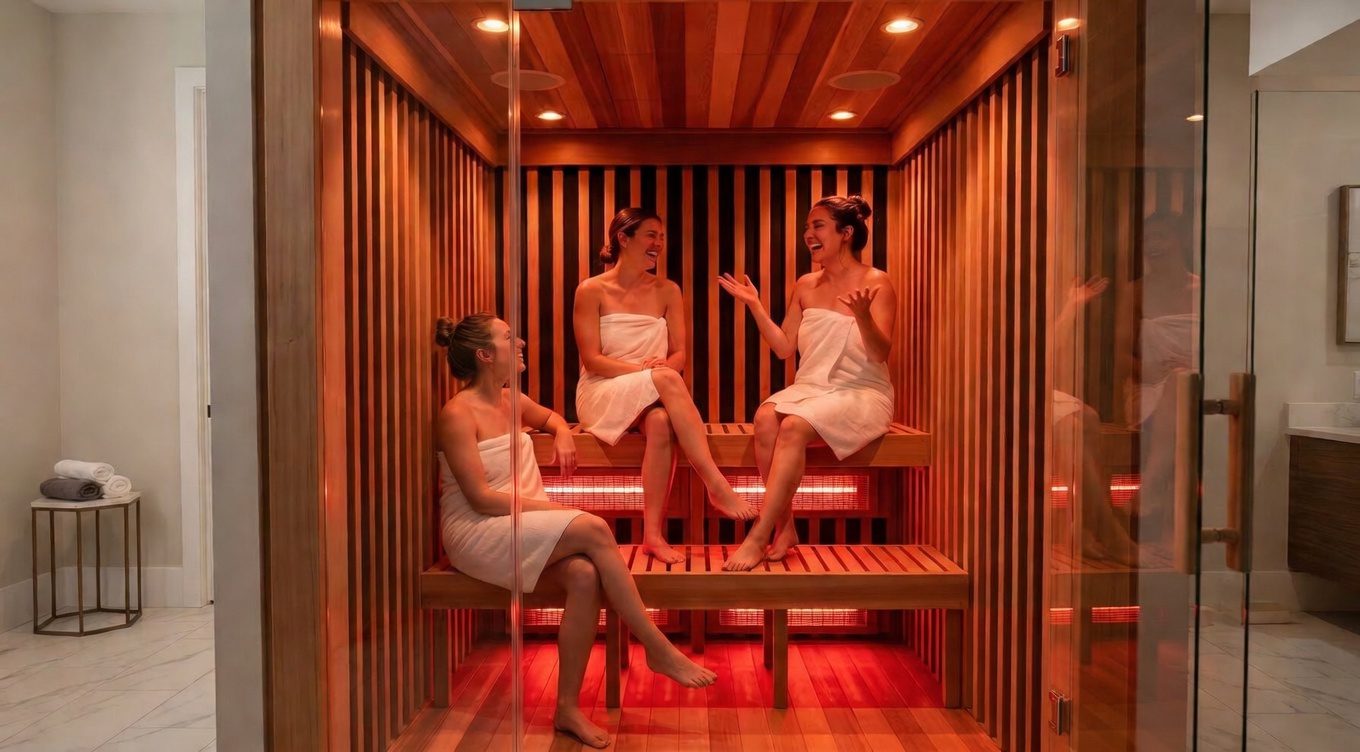
- Hydrate aggressively: 16 oz water before, 8 oz during, 16 oz after. Add electrolytes post-session. Dehydration is why most people feel bad after their first sauna
- The sweet spot is 3–5 sessions per week. Daily use is safe for most healthy adults, but consistency matters more than frequency. Three great sessions beat seven mediocre ones
- Results compound over time: light sweat in week 1 becomes deep detoxification by week 4. Stick with it — the real benefits start showing around week 3
- Time of day matters: morning sessions boost energy and focus; evening sessions improve sleep quality. Experiment with both and pick what fits your life
I've been using an infrared sauna every day for over twelve years. In that time, I've also designed and built more than 3,000 custom infrared saunas for clients across North America. I've watched thousands of people go from first-timers to daily users — and I've seen the same mistakes and breakthroughs repeat themselves over and over.
This guide is everything I wish someone had told me before my first session. Not generic wellness advice — specific, practical tips from someone who has spent more hours inside an infrared sauna than probably anyone on the planet.
Whether you just bought your first sauna or you're researching before you decide, these ten tips will help you get the most from every session — starting from day one.
1. Start slow — your body needs time to learn how to sweat
This is the most important tip, and the one most people ignore. Your body has never experienced far infrared heat before. Unlike a traditional sauna that heats the air around you, an infrared sauna heats your body directly — penetrating 1.5 to 2 inches into tissue. Your thermoregulatory system needs time to calibrate to this new stimulus.
Your first week: Set the temperature to 130°F and stay for 15–20 minutes. That's it. You might barely sweat. That's completely normal. Your body is learning.
Week two: Increase to 135°F and 20–30 minutes. You'll notice the sweat comes faster and deeper.
Week three and beyond: Work up to 140–145°F and 30–45 minutes. This is where the real therapeutic benefits — detoxification, cardiovascular conditioning, pain relief — reach their full potential.
Don't chase 150°F. Infrared saunas work differently than traditional saunas. Because the heat penetrates your body directly rather than heating the air, 140°F in an infrared sauna produces a deeper physiological response than 180°F in a traditional steam sauna. Our VantaWave® heaters are engineered at a 7.9-micron wavelength — the exact frequency that resonates with human tissue — so every degree is working harder.
2. Hydrate like your session depends on it — because it does
Dehydration is the number one reason people feel lightheaded, nauseous, or get headaches during or after a sauna session. It's also completely preventable.
The math is simple: you'll lose between 0.5 and 1.5 pounds of water weight per session through sweat. If you don't front-load hydration, your body won't have the fluid it needs to sweat effectively — and sweating IS the mechanism through which most infrared sauna benefits are delivered.
Hydration Guide
Minimum 40 oz total per session
16 oz
Before
30 min before
8 oz
During
Sip slowly
16 oz
After
Within 30 min
Add electrolytes post-session for deeper recovery
Before: Drink 16 oz of room-temperature water about 30 minutes before your session. Cold water works too, but room temperature is absorbed faster.
During: Bring 8 oz of water into the sauna and sip slowly. Don't chug — small sips keep you hydrated without making you feel waterlogged.
After: Drink another 16 oz within 30 minutes of finishing your session. This is also the best time to add electrolytes — sodium, potassium, and magnesium all leave your body through sweat. A pinch of sea salt in your water, coconut water, or an electrolyte supplement all work.
3. Wear as little as possible — infrared needs skin contact
Here's something most people don't realize: infrared light needs to reach your skin to work. Clothing blocks a significant portion of far infrared radiation. The less you wear, the more infrared energy your body absorbs, and the deeper the therapeutic effect.
Ideally, use a towel and nothing else. If that's not comfortable — especially in shared or commercial settings — wear a bathing suit or light cotton shorts. Avoid synthetic fabrics (polyester, nylon) as they trap heat unevenly and block more infrared than natural fibers.
Always sit or lie on a towel. This protects the cedar from sweat, keeps the sauna hygienic, and makes cleanup simple. We recommend two towels: one to sit on, one for your back.
4. Pick the right time of day for your goals
When you sauna matters more than most people think. The physiological effects are slightly different depending on time of day, and matching your session to your goals makes a measurable difference.
Morning sessions (6–9 AM) are best if your goal is energy and focus. The heat triggers a norepinephrine release — the same alertness neurotransmitter that coffee stimulates, but without the jitters or crash. A 20–30 minute morning session followed by a cool shower is the most effective natural energy boost I've found in twelve years of experimentation. It replaces my need for a second cup of coffee entirely.
Evening sessions (7–9 PM) are best if your goal is sleep quality. The thermoregulatory cooling that happens after you leave the sauna — your core temperature drops 1–2°F below baseline — triggers your body's sleep onset mechanism. This is the same reason a hot bath before bed helps you fall asleep, but the effect is stronger and longer-lasting with infrared. I take my sauna at 7 PM most nights and I'm consistently asleep by 10, sleeping deeper than I ever did before I started this habit.
Avoid saunas within 60 minutes of intense exercise. Your body needs time to cool down and rehydrate after a workout before adding more heat stress. If you want to combine exercise and sauna, finish your workout, cool down, drink 16 oz of water, and then do your session.
5. Learn to breathe intentionally
Your breath is the single most powerful tool you have inside the sauna — more important than the temperature setting, more important than the duration. Slow, controlled breathing activates your parasympathetic nervous system, which amplifies every benefit the infrared heat provides.
Here's the technique I use every session: inhale for 4 counts through your nose, hold for 4 counts, exhale for 6 counts through your mouth. The extended exhale is the key — it tells your nervous system to shift from fight-or-flight into rest-and-digest mode. This is when deep detoxification happens, when muscles truly release tension, when the stress hormone cortisol drops.
Don't try to meditate perfectly. Don't try to empty your mind. Just breathe with intention. If your mind wanders — and it will — return to the count. 4 in, 4 hold, 6 out. Within five minutes, you'll feel your body settle into the heat in a way that's qualitatively different from just sitting there.
6. Build a post-session routine that maximizes recovery
What you do in the 30 minutes after your session matters almost as much as the session itself. Your body is in an elevated metabolic state — pores are open, circulation is high, muscles are relaxed. How you transition out determines whether those benefits lock in or fade.
Step 1: Cool down gradually (5–10 minutes). Don't jump straight into a cold shower. Sit outside the sauna for a few minutes and let your body begin cooling naturally. This gradual transition extends the parasympathetic activation that the heat started.
Step 2: Rinse off. A warm-to-cool shower rinses the toxins your body just expelled through sweat. If you skip this step, your skin reabsorbs some of what it just worked to release. Use a natural, chemical-free soap — your pores are wide open and will absorb whatever you put on your skin.
Step 3: Rehydrate and refuel. Drink your post-session 16 oz with electrolytes. If you're sauning in the evening, a light meal with quality protein and healthy fats within an hour helps your body capitalize on the elevated growth hormone and metabolic boost.
7. Skip the phone — seriously
I know. You want to bring your phone. Everyone does. But I'm asking you to try it without — for two weeks — and see what happens.
There are practical reasons: heat degrades batteries and can damage electronics. Most phone manufacturers warn against exposing devices to temperatures above 95°F, and your sauna will be well above that. I've seen clients crack phone screens, kill batteries, and void warranties.
But the real reason is deeper. The 20–40 minutes you spend in your sauna may be the only time in your entire day when you're completely unreachable. No notifications. No emails. No scrolling. This digital disconnection is, by itself, therapeutic. The stress reduction from simply not being available — even for half an hour — compounds over weeks and months in ways that surprise people. Many of our clients tell us this unintended benefit ended up being the most valuable one.
If you need entertainment, try music through a Bluetooth speaker kept outside the sauna, an audiobook, or simply the practice of sitting with your own thoughts. You might be surprised what your mind does when you stop feeding it content.
8. Aim for consistency, not intensity
The biggest mistake I see in new sauna users — after going too hot too fast — is treating infrared sauna like a workout they need to crush. They do a brutal 45-minute session at 150°F, feel wiped out, skip three days, then try again.
That approach misses the point entirely. Infrared sauna therapy is a practice, not a performance. The benefits are cumulative. They compound over weeks and months of consistent use. Three comfortable 25-minute sessions per week will produce dramatically better results than one grueling 45-minute session followed by six days of nothing.
The research consistently shows that 3–5 sessions per week is the sweet spot for most therapeutic benefits. The landmark Finnish study that tracked 2,315 men over 20 years found that those who used a sauna 4–7 times per week had a 40% lower risk of all-cause mortality compared to once-per-week users. Consistency was the variable that mattered — not temperature, not duration.
My recommendation: start with 3 sessions per week. Put them in your calendar like appointments. Do them at the same time each day. After a month, your body will start craving the session — and that's when you know you've built a habit that will last.
9. Understand when NOT to use your sauna
Infrared saunas are safe for the vast majority of healthy adults. But there are situations where you should skip a session or consult your doctor first:
- After drinking alcohol. Alcohol dehydrates you and impairs your body's thermoregulation. Combining alcohol and sauna significantly increases your risk of dehydration, dizziness, and fainting. Wait until you're fully sober and well-hydrated.
- During acute illness with fever. If your body is already running a fever, adding external heat stress is counterproductive. Wait until the fever breaks and you've been symptom-free for 24 hours.
- Certain medications. Diuretics, beta-blockers, anticholinergics, and some blood pressure medications can impair your body's ability to sweat or regulate temperature. Check with your doctor if you're on any prescription medication.
- Pregnancy. Elevated core temperature in the first trimester carries risks. Most doctors recommend avoiding saunas during pregnancy — consult your OB-GYN.
- Severe cardiovascular conditions. Unstable angina, recent heart attack, or severe heart failure are contraindications. If you have any cardiovascular condition, get clearance from your cardiologist first.
- Open wounds or recent surgery. Wait until wounds are fully closed and your doctor clears you for heat exposure.
When in doubt, ask your doctor. Infrared saunas produce a real physiological stress response — that's why they work. But 'real physiological stress' means you should treat them with the same respect you'd give any other therapeutic intervention.
10. Trust the process — results compound over time
This is the tip that separates the people who use their sauna for a month from the people who use it for a decade. The benefits of infrared sauna therapy are cumulative. Week one doesn't feel like month three. Month three doesn't feel like year one.
Your First 30 Days
Week 1
Getting comfortable
Light sweat, body adjusting to heat
15–20 min
Week 2
Deeper sweat
Better sleep, feeling the rhythm
20–30 min
Week 3
Visible changes
Skin clarity, reduced soreness
30–40 min
Week 4
Full benefit
Routine established, compounding gains
30–45 min
Week 1: You're getting comfortable. You might barely sweat. You're figuring out the temperature, the timing, where to put the towel. This is the calibration phase — your body is learning a new kind of heat. Don't judge the experience yet.
Week 2: The sweat comes faster and deeper. You'll likely notice improved sleep — this is one of the first benefits most people report. Your sessions start to feel like a ritual rather than an experiment.
Week 3: Your skin starts looking different — clearer, more even-toned. Post-workout soreness diminishes. You start to feel a pull toward your session — your body begins anticipating and wanting the heat.
Week 4 and beyond: Full therapeutic benefit. Your body has adapted. The sweat is copious and comes within minutes. Sleep quality has measurably improved. Chronic aches have quieted. Stress resilience has increased. You're not 'trying infrared sauna therapy' anymore — you're someone who saunas. It's part of who you are.
At three months, the changes are profound enough that skipping a session feels like skipping a workout — your body notices and complains. At one year, you'll wonder how you ever lived without it. I say this not as a sauna manufacturer trying to sell you something, but as someone who has experienced it personally for 4,380+ consecutive days.
Bonus: Why your heater technology matters more than you think
Not all infrared saunas deliver heat the same way. The quality of your heaters determines how evenly, how deeply, and how efficiently infrared energy reaches your body. Cheap ceramic rod heaters create hot spots and cold zones. Carbon panel heaters are better but vary wildly in quality and EMF emissions.
We designed our VantaWave® heaters specifically to solve these problems. They deliver a 7.9-micron wavelength — the exact frequency most efficiently absorbed by human tissue — with 0.97 emissivity (nearly perfect energy transfer) and ultra-low EMF readings below 0.2 milligauss. What this means in practice: the heat is deep, even, and consistent from edge to edge. No hot spots. No cold corners. Every minute of your session is working at peak efficiency.
If you're also interested in maximizing your time in the sauna, consider integrated red light therapy. Our red light bench positions medical-grade 660nm LEDs just 1–4 inches from your body — clinical proximity that wall-mounted panels at 2–3 feet simply can't match. It adds cellular recovery and skin health benefits to your infrared session without adding any extra time.
Getting started: your first-week protocol
Here's exactly what I'd do if I were starting from scratch today:
- Sessions 1–3: Set temperature to 130°F. Stay for 15 minutes. Drink 16 oz water before, bring 8 oz inside. Wear a towel. Breathe intentionally. Cool down for 5 minutes after. Shower. Drink 16 oz with electrolytes.
- Sessions 4–6: Increase to 135°F and 20 minutes. Same hydration protocol. Notice how the sweat comes easier now.
- Sessions 7–9: Increase to 140°F and 25 minutes. Try the breathing technique: 4 in, 4 hold, 6 out. Leave your phone outside the sauna.
- Week 2+: Gradually work up to 140–145°F and 30–45 minutes. Find your time of day. Build the habit. Three times a week minimum.
That's it. No complicated protocols. No expensive supplements. No biohacking equipment. Just consistent heat, proper hydration, and patience. The sauna does the rest.
If you want to see how we build our saunas and why the construction quality matters for your experience, or if you're ready to explore what a custom infrared sauna designed for your space looks like, we'd love to walk you through it. Every sauna we build is designed around the principles in this guide — because we're not just building saunas, we're building daily rituals.
For more in-depth reading, visit our guides and books library — the most comprehensive free resource on infrared sauna therapy on the internet.
Frequently asked questions
Frequently Asked Questions
Start with 15–20 minutes at 130°F and gradually increase to 30–45 minutes over 2–3 weeks. Your body needs time to learn how to sweat efficiently in infrared heat. Rushing this process leads to discomfort, headaches, and a bad first impression of something that should feel amazing.
Minimal clothing or a towel. Less clothing means more infrared absorption by your skin. Infrared light needs direct skin contact to penetrate tissue, so anything between you and the heaters reduces effectiveness. Avoid synthetic fabrics — cotton or nothing is best.
3–5 times per week for optimal benefits. Daily use is safe for most healthy adults. The Finnish longevity study showed 4–7 sessions per week produced the greatest health benefits, but consistency matters more than frequency. Three solid sessions beat seven rushed ones.
Both, ideally. A quick rinse before removes lotions, oils, and sunscreen that can block infrared absorption and clog your pores. A shower after rinses off the toxins and heavy metals your body just expelled through sweat — you don't want those sitting on your skin and being reabsorbed.
Not recommended. Temperatures above 95°F can damage batteries, screens, and internal components. More importantly, the 20–40 minutes of digital disconnection may be the most underrated benefit of regular sauna use. Try two weeks without your phone and see how you feel.
130–145°F for most sessions. You don't need extreme heat — infrared heats your body directly at a cellular level, unlike traditional saunas that heat the air. 140°F in a quality infrared sauna with efficient heaters produces a deeper physiological response than 180°F in a traditional sauna.
Yes, completely normal. It takes 2–3 sessions for your body to acclimate to far infrared heat and learn to produce a deep, therapeutic sweat. The first few sessions may feel underwhelming — that's your thermoregulatory system calibrating. By week two, the sweat will come faster and heavier. Be patient.

Founder & Lead Designer, SaunaCloud®
3,000+ custom saunas built since 2014 · Author of The Definitive Guide to Infrared Saunas · Featured in Forbes, Inc., and MSN
Chris has been designing and building custom infrared saunas since 2014. He wrote one of the first comprehensive books on infrared sauna therapy and is personally involved in every SaunaCloud build — from design consultation through delivery and beyond.
Continue Reading
Infrared Sauna Health Benefits: What a Decade of Building Saunas Reveals
Read article
How Infrared Saunas Work: From Photon to Health Effect in Five Steps (2026)
Read article
The Ritual I Miss Most: What 12 Years of Daily Sauna Practice Taught Me About Showing Up for Myself
Read articleReady to Build Your Daily Sauna Ritual?
Every SaunaCloud sauna is custom-designed for your space, your goals, and your daily routine. VantaWave® heaters, Western Red Cedar, optional red light therapy — built to last a lifetime of daily sessions.