
Chromotherapy in Infrared Saunas: The Difference Between Mood Lighting and Medicine (2026)
.webp)
Key Takeaways
- Chromotherapy LEDs in saunas operate at roughly 0.01-0.5 mW/cm² — that's 100-1000x LESS power than the therapeutic light devices used in clinical photobiomodulation studies. It's the difference between a nightlight and a medical device. Citing clinical light therapy research to validate decorative sauna LEDs is like citing Formula 1 data to sell a golf cart
- The studies most often cited to support chromotherapy — neonatal jaundice treatment (blue light), NASA wound healing (LED), and SAD bright light therapy — all used ENTIRELY DIFFERENT devices at entirely different power levels, wavelengths, and durations than what a sauna chromotherapy panel provides. The science is real; the application to sauna mood LEDs is not
- What colored LEDs in saunas ACTUALLY do: create ambiance and influence mood through psychological color association. Blue light feels calming. Red/amber feels warm. This is real environmental psychology — but it's mood lighting, not medicine, and it shouldn't be marketed as therapeutic
- Photobiomodulation (PBM) at red/NIR wavelengths (630-850nm) at therapeutic power densities (10-100+ mW/cm²) HAS extensive clinical evidence for collagen stimulation, wound healing, pain reduction, and cellular energy. This is what SaunaCloud's red light therapy integration provides — actual therapeutic light, not decorative colored LEDs
- SaunaCloud doesn't include chromotherapy because we don't sell features we can't support with evidence. We offer red light therapy integration with verified PBM specifications — the technology that actually has clinical backing. We'd rather give you one feature that works than seven that look pretty
Almost every infrared sauna on the market includes 'chromotherapy' — colored LED lights that cycle through the rainbow inside the cabin. Companies claim these lights reduce inflammation, accelerate healing, detoxify organs, and treat everything from depression to chronic pain.
SaunaCloud doesn't include chromotherapy. And the reason is simple: we looked at the evidence, and it doesn't support the claims.
Let me show you why — and let me show you the difference between decorative colored LEDs and the actual light therapy that DOES have clinical evidence.
Three types of light therapy the industry conflates
The sauna industry uses the terms 'light therapy,' 'color therapy,' 'chromotherapy,' and 'photobiomodulation' interchangeably. They are not the same thing. Understanding the distinction is the key to evaluating every claim you'll encounter.
Type 1 — Photobiomodulation (real therapy, real evidence): Specific wavelengths at 630-660nm (red) and 810-850nm (near-infrared). Therapeutic power density: 10-100+ mW/cm². Mechanism: photons are absorbed by cytochrome c oxidase in mitochondria → ATP production increases → cellular energy for repair, collagen synthesis, pain modulation. Evidence: hundreds of clinical studies for wound healing, collagen, pain reduction, and inflammation. This is what SaunaCloud's red light integration provides.
Type 2 — Clinical bright light therapy (real therapy, specific use): 10,000 lux full-spectrum white light. Used for seasonal affective disorder (SAD), circadian rhythm disorders, and some forms of depression. Morning exposure, 20-30 minutes. FDA-recognized for SAD treatment. This is NOT what sauna LEDs provide.
Type 3 — Chromotherapy (decorative, unproven for tissue effects): Low-power colored LEDs cycling through red, blue, green, yellow, violet, and other colors. Power density: approximately 0.01-0.5 mW/cm² — that's 100-1000x less than therapeutic PBM devices. No published evidence that these power levels produce therapeutic tissue effects. Effect: mood and ambiance through environmental color psychology. This IS what most saunas include.
The sauna industry cites studies about Type 1 and Type 2 to sell Type 3. That's like citing aviation engineering to sell paper airplanes.
Why the power numbers matter more than the color
This is the argument that demolishes most chromotherapy health claims — and nobody in the consumer sauna industry makes it.
The NASA-funded LED wound healing study — cited by virtually every chromotherapy-promoting sauna company — used LEDs at 670nm at 50 mW/cm², applied for 4 minutes per day. The result: measurably accelerated wound healing. This is real, published, replicated science.
A typical sauna chromotherapy panel delivers approximately 0.1 mW/cm² based on LED specifications common in consumer saunas. That's 500x LESS power than the NASA study. The sauna industry cites the NASA results to validate their colored LEDs — without mentioning that the power output is off by three orders of magnitude.
At therapeutic power densities, red light stimulates fibroblasts, increases ATP production, and accelerates tissue repair. At sauna-chromotherapy power densities, red light makes the room look red. One is medicine. The other is ambiance.
Color psychology is real — it's just not phototherapy
Here's what colored LEDs in saunas actually do — honestly assessed:
Blue light: Psychologically calming — blue environments reduce perceived stress in environmental psychology studies. BUT blue wavelengths (446-477nm) suppress melatonin production. If you're using your sauna in the evening for sleep improvement, blue light actively works against that goal. The 'calming' color that disrupts the sleep benefit.
Red/amber light: Psychologically warming and relaxing. Does NOT suppress melatonin. If you must have colored lighting, this is the best choice for evening sessions. The warm glow complements the sauna experience without interfering with circadian biology.
Green light: Associated with balance and nature in color psychology. No tissue-level effects at sauna LED power levels. No evidence that green light 'aids detox' or 'removes toxins' despite common claims.
Yellow/violet/other colors: Psychological associations exist (yellow with cheerfulness, violet with creativity). These are cultural and psychological, not physiological. No peer-reviewed evidence for tissue-level effects at decorative LED power levels.
There's nothing wrong with enjoying colored lighting in your sauna. It creates a pleasant atmosphere. Just don't confuse atmosphere with therapy.
Fact-checking the chromotherapy evidence chain
Every chromotherapy-promoting sauna company cites a handful of studies. Here's what those studies actually say — and why they don't apply to sauna LEDs.
Claim: 'Blue light treats neonatal jaundice.' Reality: True — neonatal phototherapy uses medical-grade blue light (460-490nm) at specific therapeutic doses to break down bilirubin in premature infants' skin. This is real medicine performed in hospital NICUs. A blue LED in a sauna is not performing this function on an adult body. Citing neonatal jaundice treatment to validate sauna chromotherapy is like citing chemotherapy to validate green tea.
Claim: 'NASA proved LED light heals wounds.' Reality: True — NASA-funded research showed high-intensity LEDs at 670nm, 730nm, and 880nm at 50+ mW/cm² accelerated wound healing in cell cultures and animal models. This is photobiomodulation at therapeutic doses. Sauna chromotherapy LEDs operate at roughly 1/500th of this power. The NASA study validates PBM; it does not validate decorative colored LEDs.
Claim: 'The Azeemi & Raza 2005 paper validates chromotherapy.' Reality: This paper, titled 'A Critical Analysis of Chromotherapy and Its Scientific Evolution,' is a historical literature review — not a clinical trial. It traces color-based healing from ancient Egypt through modern applications. It acknowledges some legitimate light therapy applications (neonatal jaundice, PBM) but does not provide clinical evidence that low-power colored LEDs produce therapeutic effects. Despite being cited by virtually every chromotherapy article online, reading it doesn't support the claims being made.
Claim: 'Each color corresponds to a chakra/organ/healing frequency.' Reality: This is a spiritual and philosophical framework from various wellness traditions. There is no peer-reviewed evidence that shining a green LED on your body affects your liver or that violet light balances any energy center. Spiritual practices are personal choices worthy of respect — but they aren't clinical evidence, and marketing them as such is dishonest.
Why SaunaCloud chose PBM over chromotherapy
When we designed our sauna integration options, we had a choice: include $15 worth of colored LED strips and market them as 'chromotherapy' (like every competitor does), or invest in actual red light therapy panels at therapeutic specifications.
We chose the option with clinical evidence.
SaunaCloud's red light therapy integration uses LEDs at 660nm (red) and 850nm (near-infrared) — the two wavelengths with the most photobiomodulation research. Power density is in the therapeutic range, not decorative. The system is separate from the sauna heaters and independently controlled. It's based on the same wavelength and power parameters used in clinical studies for collagen remodeling, wound healing, and pain reduction.
Chromotherapy gives you 7 colors at non-therapeutic power levels. Our red light integration gives you 2 wavelengths at therapeutic power levels. We'd rather do one thing that works.
The one color rule that actually matters in your sauna
Blue light at any intensity suppresses melatonin production — the hormone that initiates sleep. If you're using your sauna in the evening for sleep improvement (which the research supports), and your sauna has blue chromotherapy LEDs, turn them off during evening sessions. Switch to red or amber, or use no colored lighting at all.
The blue light paradox: Blue is marketed as the 'calming' chromotherapy color. But blue wavelengths suppress melatonin — actively working against the sleep benefit that's one of sauna's strongest research-backed outcomes. This is the one chromotherapy consideration with genuine scientific backing, and it's a warning, not a benefit.
Frequently asked questions
Frequently Asked Questions
The colored LEDs create pleasant ambiance and may influence mood through color psychology — blue environments feel calming, red/amber feels warming. This is real environmental psychology. There is no published evidence that low-power colored LEDs at the intensity found in consumer saunas produce tissue-level therapeutic effects. The marketing claims (healing, detox, pain reduction) exceed the available science.
No — they are completely different technologies despite both using light. Red light therapy (photobiomodulation) uses specific wavelengths (630-660nm, 810-850nm) at therapeutic power densities of 10-100+ mW/cm². Chromotherapy uses various colored LEDs at approximately 0.01-0.5 mW/cm² — that's 100-1000x less power. PBM has hundreds of clinical studies. Chromotherapy at sauna LED power levels has essentially none.
It's inexpensive to add ($15-30 in LED strips), it looks impressive (pretty colors cycling through the cabin), and it's easy to market by borrowing clinical claims from legitimate light therapy research (NASA wound healing, neonatal jaundice, PBM) without mentioning the massive power density difference. It's a marketing feature, not a therapeutic one.
No — having colored LEDs doesn't make a sauna worse. It's harmless mood lighting. Just don't buy a sauna BECAUSE of chromotherapy, and don't expect health benefits from the colored lights. Evaluate saunas on what actually matters: heater technology, wood quality, EMF levels, build quality, and whether they offer actual PBM integration at therapeutic specifications.
It's a historical literature review published in a peer-reviewed journal (Evidence-Based Complementary and Alternative Medicine). It traces the history of color-based healing practices from ancient civilizations to modern day. It's a legitimate academic paper — but it's NOT a clinical trial proving chromotherapy works at sauna LED power levels. The sauna industry cites it as evidence for their chromotherapy features; reading the actual paper doesn't support that conclusion.
Bright light therapy for SAD is legitimate and well-studied — but it requires 10,000 lux white full-spectrum light exposure for 20-30 minutes, typically in the morning. Sauna chromotherapy LEDs provide a tiny fraction of this intensity and are not full-spectrum. If you have seasonal depression, get a purpose-built SAD light box (available for $30-80) — don't rely on sauna colored LEDs for this purpose.
Yes — our saunas include warm, non-stimulating interior lighting suitable for relaxation (warm white, non-blue). We offer red light therapy integration as an optional upgrade — this is actual photobiomodulation at 660nm + 850nm at therapeutic power densities, not decorative chromotherapy. It's based on the same wavelengths and power parameters used in clinical research.
Founder & Lead Designer, SaunaCloud®
3,000+ custom saunas built since 2014 · Author of The Definitive Guide to Infrared Saunas · Featured in Forbes, Inc., and MSN
Chris has been designing and building custom infrared saunas since 2014. He wrote one of the first comprehensive books on infrared sauna therapy and is personally involved in every SaunaCloud build — from design consultation through delivery and beyond.
Continue Reading
Red Light Therapy in Infrared Saunas: The Complete Science of Integration (2026)
Read article
Infrared Sauna and Skin: Separating the 'Glow' from the Claims (2026)
Read article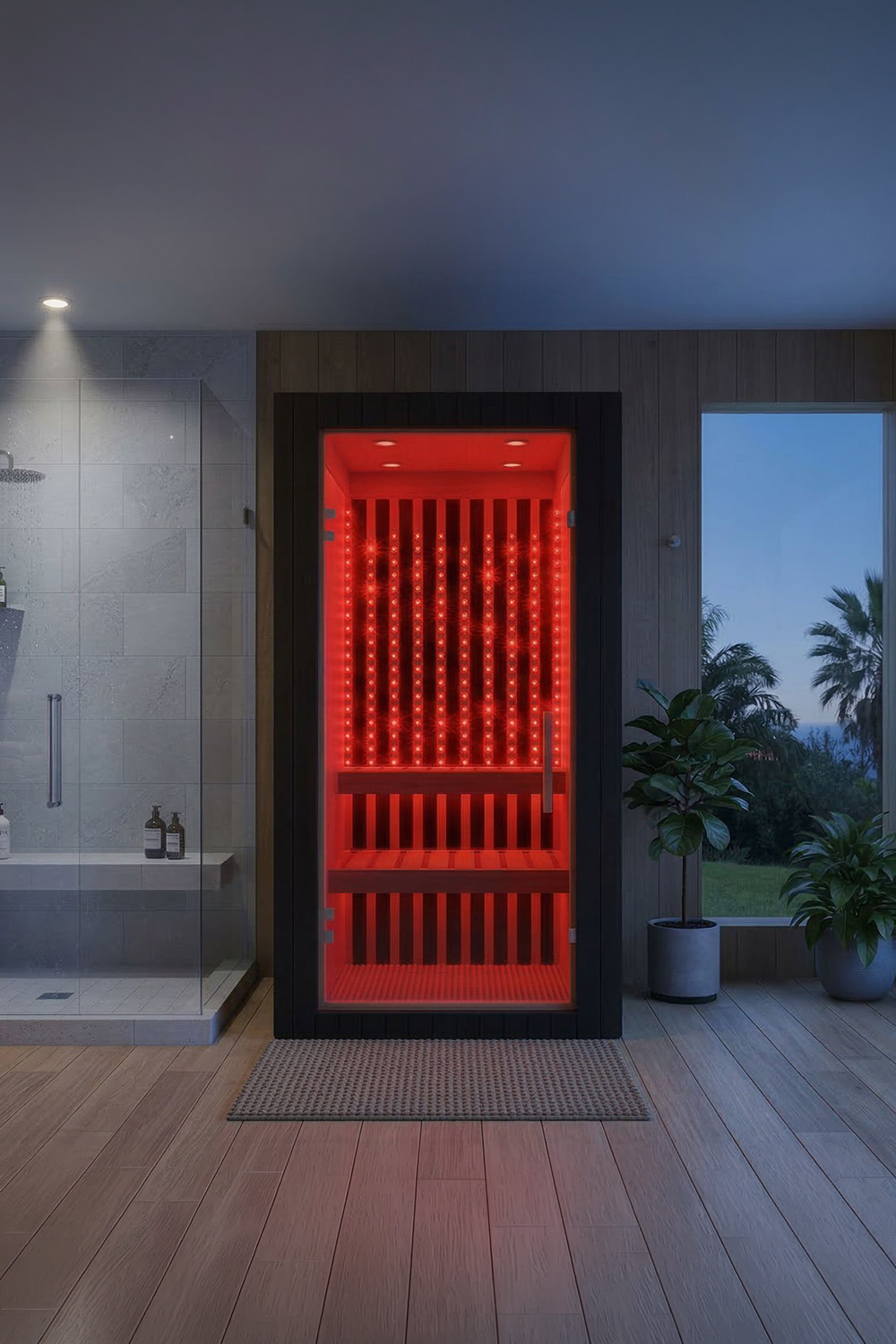
Infrared Sauna and Wound Healing: Two Mechanisms, Two Technologies, One Session (2026)
Read articleSee the Difference: Therapeutic Red Light vs Decorative Chromotherapy
660nm + 850nm at therapeutic power densities — the wavelengths and specifications with clinical evidence, not colored mood lighting marketed as medicine.