
How to Convert Your Traditional Sauna to Infrared: Step-by-Step Guide (2026)
Key Takeaways
- Your existing sauna room represents 50-60% of the build cost already done — framing, insulation, wood, door, bench structure. Converting to infrared costs roughly 40-60% of a comparable new build. You don't need to start over
- The conversion process in 6 steps: assess existing space → remove traditional heater → install infrared panels → upgrade electrical → install control panel/power supply → add upgrades (red light therapy, ventilation)
- Wood compatibility matters: Western Red Cedar (ideal for infrared), hemlock (adequate), pine/spruce (problematic — may ooze sap at infrared panel temperatures). If your existing wood is cedar or hemlock in good condition, it stays
- Electrical adaptation is usually straightforward: traditional saunas run on 240V/30-50A dedicated circuits. Infrared may need different amperage but can often use the existing circuit with electrician assessment. In many cases, the infrastructure is already in place
- Common conversion reasons: traditional sauna too hot to tolerate (especially for elderly/children), energy costs (infrared uses less), specific health benefits (Waon therapy research), red light therapy integration (too hot for LEDs in traditional saunas)
You already have a sauna room — framed walls, insulated, finished with wood, a bench, a door. You've done the hard part. Converting from traditional to infrared doesn't require starting over — it requires swapping the heat source and upgrading the controls.
Why people convert
Comfort: Traditional saunas at 170-200°F are too intense for some users — elderly adults, children, people with respiratory sensitivity. Infrared at 130-150°F provides the same core temperature elevation in a more comfortable environment. Energy: Traditional rock heaters use more electricity and require 30-45 minute warmup. Infrared panels heat up in 10-15 minutes and use less power per session.
Health research: The Waon therapy and CFS studies used far-infrared specifically. Some users want the modality the research tested. Red light therapy: PBM LED panels can't survive in 180°F traditional sauna air — the electronics fail. Infrared's lower ambient temperature allows bench-integrated red light therapy at therapeutic wavelengths. Maintenance: No rocks to replace, no high-temp element to corrode, simpler long-term upkeep.
Assessment: is your sauna convertible?
Send us photos and dimensions and we'll give you a definitive answer. Here's what we evaluate: Dimensions: Minimum 4'x4' interior for a comfortable single-person conversion. Larger is better — more wall space for heater panels. Wood condition: Is the wood structurally sound? Any rot, mold, or significant damage? Wood type: Cedar and hemlock are ideal. Pine and spruce may ooze sap at infrared panel temperatures and may need replacing. Insulation: Is the room properly insulated? Traditional saunas should have insulation — verify it's intact. Electrical: What circuit currently feeds the traditional heater? Amperage, voltage, wire gauge. Ventilation: Is there adequate fresh air exchange?
The six-step conversion process
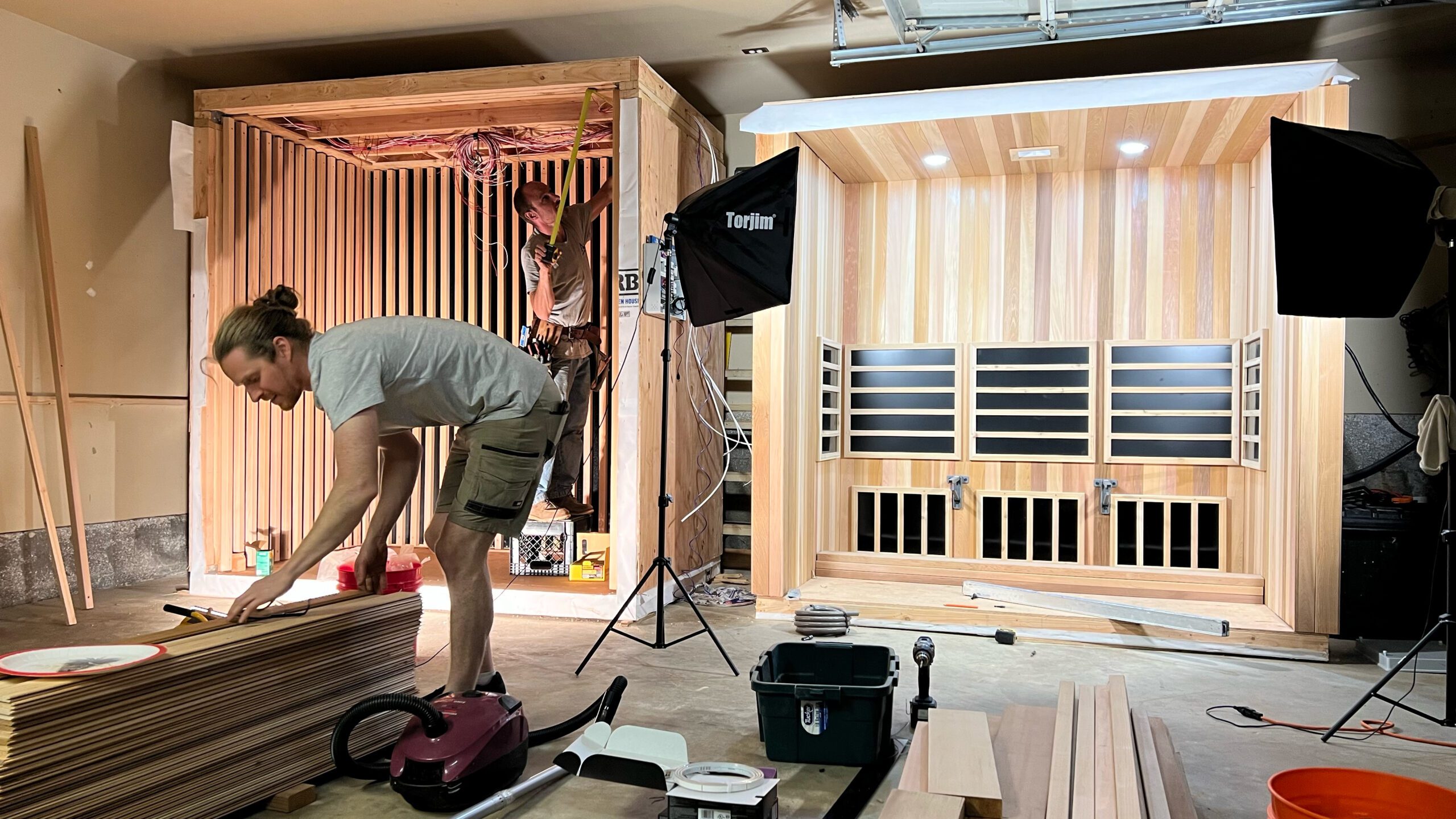
Step 1 — Assess and plan: SaunaCloud evaluates your existing space (photos + dimensions + electrical specs) and designs the infrared layout — heater panel placement, overhead panel position, control location, red light integration if desired.
Step 2 — Remove traditional heater: The rock heater, rocks, and associated high-temperature electrical connections are removed. If space allows and you want to keep the option of traditional heat, the unit can be left inactive (though most conversions remove it to free wall/floor space for infrared panels).
Step 3 — Install VantaWave infrared panels: Carbon wall panels mount to existing walls. The overhead halogen panel installs above. Full-surround placement ensures uniform infrared coverage. Panel positioning is designed around the existing bench layout.
Step 4 — Electrical upgrade: Your licensed electrician adapts the existing circuit for the CORE 5 power supply. Traditional saunas typically run on 240V/30-50A dedicated circuits — infrared may need different amperage but can often use the existing wiring. SaunaCloud provides complete electrical specs.
Step 5 — Install control panel and power supply: CORE 5 mounts above/outside the sauna. Control panel installs at a convenient location inside or outside the sauna room. SaunaCloud provides phone/video support throughout installation.
Step 6 — Add upgrades: Optional red light therapy integration (660nm + 850nm bench-integrated LEDs). Improved ventilation if needed. Updated interior lighting (warm, non-blue wavelengths for evening use).
Wood compatibility
Western Red Cedar — ideal. Naturally aromatic, antimicrobial, dimensionally stable at heat. If your traditional sauna is cedar, you're in the best possible starting position. Hemlock — adequate. Common in traditional saunas, works well with infrared but lacks cedar's antimicrobial properties and aroma. Pine/spruce — potentially problematic. Softwoods can ooze sap when heated by infrared panels at close range. If your traditional sauna is pine with no sap issues at traditional temperatures, it may work at infrared's lower temperatures — but assess carefully.
The cost-benefit math
Your existing sauna room represents 50-60% of a new build's cost: framing, insulation, vapor barrier, wood finishing, bench construction, door, and exterior structure are all done. Conversion cost is primarily the heater system, control panel, CORE 5 power supply, electrical modification, and installation labor. Rule of thumb: a conversion costs roughly 40-60% of a comparable new custom infrared build.
Frequently asked questions
Frequently Asked Questions
Most can — if the structure is sound, the wood is in good condition, and the room is properly insulated. Cedar and hemlock saunas are ideal candidates. Pine may need assessment for sap issues. Send us photos and dimensions and we'll evaluate your specific sauna for conversion feasibility.
Roughly 40-60% of a comparable new custom infrared build. Your existing structure (framing, insulation, wood, bench, door) represents 50-60% of the total cost of a new build — and it's already done. The conversion cost covers the heater system, control panel, power supply, electrical adaptation, and any upgrades.
Often no — traditional saunas already run on dedicated 240V circuits. Your licensed electrician will assess whether the existing circuit can be adapted for the infrared system's requirements. SaunaCloud provides complete electrical specifications. In many cases, the existing wiring and breaker are adequate with minor modifications.
If space allows, yes — the traditional heater can remain as an inactive unit while infrared panels are added to the walls. Some owners like having the option of both modalities. However, most conversions remove the traditional heater to maximize wall space for infrared panel coverage and improve the session experience.
The physical installation typically takes 1-2 days for an experienced contractor following SaunaCloud's plans. Planning and design (assessment, specs, panel layout) takes 1-2 weeks beforehand. Electrical work is usually a half-day for a licensed electrician. Total timeline from first call to first session: typically 3-6 weeks including shipping.
Yes — if you remove the traditional rock heater, the steam option goes with it. Infrared saunas produce dry heat. If steam is important to you, consider keeping the traditional heater as a secondary option. However, most people who convert found they weren't using the steam feature regularly — the comfort and health benefits of infrared became their primary motivation.

Founder & Lead Designer, SaunaCloud®
3,000+ custom saunas built since 2014 · Author of The Definitive Guide to Infrared Saunas · Featured in Forbes, Inc., and MSN
Chris has been designing and building custom infrared saunas since 2014. He wrote one of the first comprehensive books on infrared sauna therapy and is personally involved in every SaunaCloud build — from design consultation through delivery and beyond.
Continue Reading
How to Build a Custom Infrared Sauna: The Engineer's Guide (2026)
Read article
Infrared Sauna vs Traditional Sauna: The Honest Comparison (2026)
Read article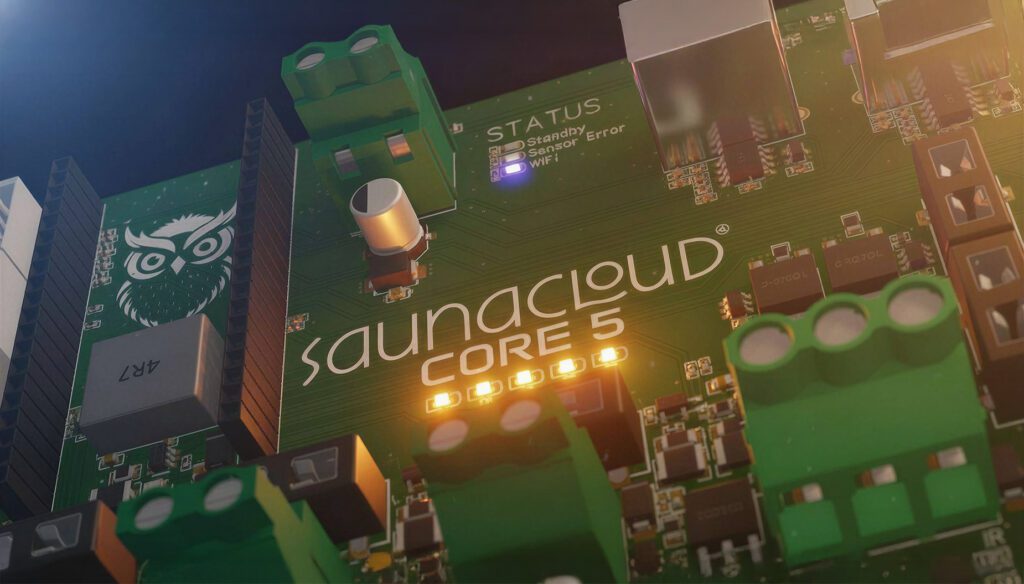
Infrared Sauna Heater Comparison: Carbon vs Ceramic vs Halogen vs VantaWave® (2026)
Read articleHave an Existing Sauna You Want to Convert?
Send us photos and dimensions — we'll design your infrared upgrade with VantaWave heaters and CORE 5 power supply. Call 800-370-0820.