
Far Infrared and Sunlight: Why Your Infrared Sauna Feels Like Distilled Sunshine
Key Takeaways
- The warmth you feel from the sun is far infrared radiation — the same type of energy an infrared sauna delivers. It's not the visible light or UV making you warm. It's the infrared — 52% of all solar energy
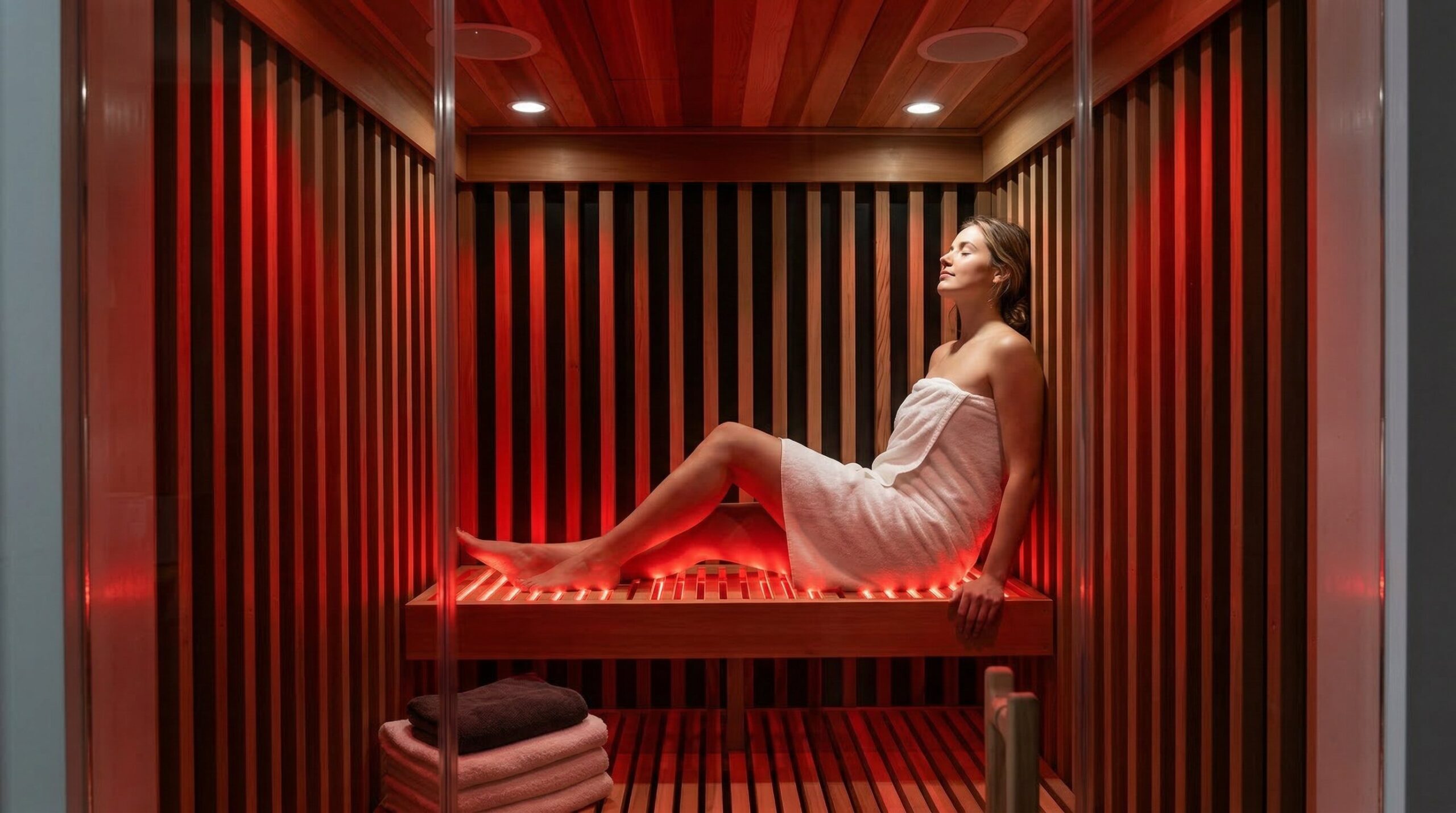
- An infrared sauna is 'distilled sunshine' — it delivers the therapeutic far infrared wavelength (7–10 microns) with zero UV radiation. All the healing warmth, none of the skin damage, available year-round
- Infrared saunas do NOT produce vitamin D. Vitamin D requires UVB radiation. This is a feature: get your vitamin D from brief sun exposure or supplements, get your therapeutic heat from your sauna
- Far infrared is everywhere in nature: the earth emits it, warm rocks radiate it, hot springs deliver it. Sitting on sun-warmed stone feels amazing because you're getting infrared from above and below simultaneously
- For seasonal affective relief: daily infrared sessions in winter months provide warmth-triggered endorphin and serotonin release, improved circulation, and a comforting ritual that counters cold-weather malaise
Close your eyes and remember the last time you stepped into a patch of sunlight on a cool day. That immediate, penetrating warmth that soaked through your clothes and into your muscles. The involuntary sigh of relaxation. The feeling that something fundamentally good was happening to your body.
That feeling — that specific, deep, warming sensation — is far infrared radiation. Not the visible light (that mostly bounces off your skin). Not the ultraviolet (that causes sunburn). The infrared. It's the same type of energy that an infrared sauna delivers. And understanding this connection changes how you think about infrared therapy — from something that sounds clinical and technological to something as natural and ancient as sunshine itself.
What the sun actually emits
Most people think of sunlight as, well, light — the visible brightness that illuminates our world. But visible light is less than half the story. The sun emits energy across the entire electromagnetic spectrum, and the breakdown is surprising:
The Solar Spectrum — What You Actually Feel
5%
What you see
What you FEEL — the warmth
An infrared sauna delivers the healing 52% without the damaging 5%
Ultraviolet radiation (~5%): The smallest component but the most discussed. UVA causes skin aging. UVB causes sunburn and triggers vitamin D production. UVC is blocked by the atmosphere. In excess, UV damages DNA and increases skin cancer risk. This is the part of sunlight you need to be careful with.
Visible light (~43%): The rainbow of wavelengths your eyes can detect — violet through red. This is what illuminates your world, sets your circadian rhythm, and lets you see. But visible light doesn't significantly heat your body. It mostly reflects off your skin and clothing.
Infrared radiation (~52%): The majority of the sun's energy output. More than half. This invisible radiation — stretching from near-infrared (just past red) through mid-infrared to far infrared — is what heats the earth's surface, warms your skin, and produces the deep sensation of comfort you feel in sunshine. When you say "the sun feels warm," you're describing an infrared experience.
This means every time you enjoy the warmth of sunlight, you're already a fan of infrared therapy. You just didn't know it had a name.
Why sunlight feels so good — the biology
The deep satisfaction of sitting in sunshine isn't just psychological — it's biological. Multiple physiological mechanisms activate simultaneously:
- Endorphin release: Far infrared penetrates your skin and warms tissue directly. This thermal stimulus triggers your body's endorphin system — the same natural painkillers released during exercise, laughter, and physical affection. The "sunshine high" is real neurochemistry.
- Parasympathetic activation: Warmth signals safety to your nervous system. When your body is warm and comfortable, the parasympathetic branch (rest and digest) activates, reducing cortisol, slowing heart rate, and promoting a state of calm alertness. This is why you feel relaxed — not sleepy — in warm sunlight.
- Nitric oxide production: Infrared exposure increases nitric oxide release in blood vessels, causing vasodilation — blood vessels widen, blood pressure drops, and circulation improves. This is one mechanism behind the cardiovascular benefits of regular sun exposure.
- Serotonin boost: Sunlight triggers serotonin production — the "sunshine hormone" that regulates mood, appetite, and sleep. While the visible light component plays a role through the eyes, the infrared warmth component contributes through the body's thermal comfort signaling.
- Evolutionary encoding: Humans evolved under the sun for millions of years. Warmth + light = daytime = safety = food gathering = social activity. This association is deeply embedded in our neurology. We are wired to feel good in infrared warmth.
Every one of these mechanisms also activates during an infrared sauna session. The biology doesn't care whether the far infrared comes from the sun or from a VantaWave® heater — it responds to the wavelength and intensity, not the source.
The problem with getting your infrared from the sun
If the sun is such a great source of far infrared, why not just sit outside? Because sunlight is a package deal — and the package includes some parts you don't want:
- UV comes with the infrared: You can't absorb the therapeutic far infrared without also absorbing UV radiation. Every minute of infrared benefit comes with a minute of UV exposure — skin aging, DNA damage, and cumulative cancer risk.
- No dose control: Solar intensity varies by latitude, season, time of day, altitude, and cloud cover. You can't dial in "135°F for 30 minutes" from the sun. The dose is whatever nature provides.
- 30–45 minutes of controlled therapy is impossible: A therapeutic infrared session requires sustained, consistent exposure at a specific intensity. Getting that from the sun means significant UV exposure — more than most dermatologists would recommend.
- Winter and northern climates: From October through March in much of North America and Europe, solar infrared intensity is minimal. The angle of the sun is too low, the days are too short, and the atmosphere absorbs too much. For half the year, sunshine isn't a viable infrared source.
- You can't do it daily: Using the sun as therapy means daily UV accumulation. Using an infrared sauna means daily therapeutic warmth with zero cumulative skin damage.
The infrared sauna: distilled sunshine
Think of an infrared sauna as distilled sunshine — the healing component extracted, purified, and delivered in a controlled dose.
Sunshine vs Infrared Sauna
| ☀️ Sunshine | 🧖 Infrared Sauna | |
|---|---|---|
| Far infrared | ✓ | ✓ |
| Visible light | ✓ | Not needed |
| UV radiation | ✓ Harmful | None — safe |
| Controlled dose | ✗ | ✓ |
| Year-round access | ✗ | ✓ |
| 30–45 min safe | ✗ | ✓ |
| No skin damage | ✗ | ✓ |
| Vitamin D | ✓ | Supplement |
Your infrared sauna delivers pure far infrared at the therapeutic wavelength (7–10 microns) with zero UV radiation. No skin damage. No cancer risk from the light itself. No sunburn. No premature aging. Just the deep, penetrating warmth that your body is biologically designed to respond to — available every day, year-round, regardless of weather, season, or latitude.
A single 30–45 minute infrared sauna session delivers more controlled, therapeutic far infrared exposure than hours of intermittent sunshine — because the intensity is consistent, the wavelength is optimized (VantaWave® heaters at 7.9 microns), and you're surrounded by the energy from every direction rather than receiving it only from above.
This is why the phrase “distilled sunshine” isn’t marketing hyperbole — it’s a literal description. The sun delivers far infrared mixed with visible light and UV. Your sauna delivers only the far infrared, at the specific wavelength (7.9 microns from VantaWave® heaters) that human tissue absorbs most efficiently. It’s a purer, more concentrated version of the sun’s therapeutic output.
The practical implications are significant. A person in Seattle or Toronto who uses an infrared sauna daily through the winter months receives more total therapeutic far infrared exposure than someone in Phoenix who goes outside for 30 minutes a day — because the sauna session is concentrated, consistent, and optimized, while the Phoenix sun exposure is diffuse, variable, and diluted by UV and visible light that contribute nothing to the thermal therapy.
The vitamin D question
Let's address this directly because it's the most common question: infrared saunas do NOT produce vitamin D. Vitamin D synthesis requires UVB radiation hitting the skin — a specific wavelength (280–315 nm) that is not present in an infrared sauna.
This is a feature, not a bug. You don't want UV exposure in your sauna — that would defeat the purpose of safe, daily, therapeutic heat. Instead, get your vitamin D through:
- Brief, responsible sun exposure: 10–15 minutes of midday sun on exposed skin, 2–3 times per week (depending on skin tone and latitude). This produces sufficient vitamin D for most people without significant UV damage.
- Diet: Fatty fish (salmon, sardines, mackerel), egg yolks, and fortified foods provide dietary vitamin D.
- Supplements: Vitamin D3 (cholecalciferol) with K2 (menaquinone) for optimal absorption and calcium metabolism. Most functional medicine practitioners recommend 2,000–5,000 IU daily, adjusted based on blood testing.
The combination — infrared sauna for daily therapeutic heat + vitamin D supplement for the one thing the sauna can't provide — gives you the benefits of sunshine without the damage. Distilled sunshine plus the missing vitamin.
Far infrared in nature: it's everywhere
Far infrared isn't exotic technology — it's the most abundant form of thermal radiation in the natural world:
The earth itself emits far infrared. Geothermal radiation warms the soil, rocks, and water from below. This is why the ground stays warmer than the air on a cool night — the earth is radiating far infrared upward.
Sun-warmed rocks, sand, and earth emit far infrared for hours after the sun sets. Have you ever sat on a sun-warmed boulder and felt that deep, satisfying warmth soaking into your body from below? You were receiving far infrared from the heated rock — the same energy your sauna delivers. The relaxation you felt wasn't imagined — it was infrared-triggered endorphins.
Hot springs deliver far infrared through heated mineral water. This is why traditional hot spring cultures — Japanese onsen, Icelandic geothermal pools, Roman thermae — have valued heated water immersion for millennia. The water carries far infrared energy directly to the body. For the full history of heat therapy through the ages, see our comprehensive guide.
An infrared sauna recreates what nature has always provided — surrounding you with gentle, healing far infrared from every direction, like sitting in the center of a circle of sun-warmed stones.
The seasonal connection: infrared as winter medicine
Many people feel worse in winter — lower energy, darker mood, stiffer joints, more frequent illness. This is usually attributed to reduced visible light (seasonal affective disorder). But reduced far infrared exposure is part of the picture too.
In winter, solar infrared intensity drops dramatically. You're spending less time outdoors. You're bundled in clothing that blocks infrared absorption. Your blood vessels are chronically constricted from cold. The daily infrared warmth that your biology expects — that it evolved under — is largely absent for months.
A daily infrared sauna session in winter provides:
- Daily warmth therapy: 30 minutes of deep infrared warming that your body hasn't experienced since autumn
- Endorphin and serotonin boost: The same neurochemical response that sunshine triggers, available every day regardless of weather
- Vascular reconditioning: Opening blood vessels that cold weather has been constricting for months, improving circulation to extremities, skin, and organs
- A warm, comforting ritual: The psychological value of stepping into a warm cedar room during a cold, dark February is not trivial. Ritual, comfort, and sensory pleasure all contribute to winter resilience
Several of our clients in northern climates — Minnesota, Montana, Ontario, British Columbia — describe their infrared sauna as their most important winter wellness tool. Not their most exotic or impressive — their most important. The daily warmth makes the winter tolerable in a way that no supplement, light box, or exercise routine fully replicates.
One client in Anchorage, Alaska told me that her infrared sauna is the reason she stopped considering moving south. “I used to dread November through March,” she said. “Now I actually look forward to my sauna ritual more in winter than summer. It’s the warmest, most relaxing 30 minutes of my day, and it completely changed how I experience the dark months.” This anecdotal feedback is consistent across our northern-climate installations — the sauna fills a thermal gap that modern indoor living creates.
This matters for immune function too. Cold-induced vasoconstriction reduces blood flow to extremities, skin, and mucous membranes — all frontline immune defenses. Daily infrared therapy reverses this constriction, improving immune cell circulation and tissue oxygenation. Many of our winter sauna users report fewer colds and respiratory infections — though we can’t attribute this solely to infrared exposure, the circulatory mechanism is well-established.
Infrared and your body clock
Your circadian rhythm responds to temperature as well as light. Morning warmth signals "wake up" — it's why you feel alert in morning sunshine. Evening cooling signals "prepare for sleep" — it's why your body temperature drops naturally before bedtime.
You can use this intentionally: morning infrared sauna sessions provide the warming/alertness signal that sets your circadian clock — similar to morning sunlight but through the thermal channel. Evening sessions (finished 60–90 minutes before bed) trigger thermoregulatory cooling afterward, promoting deep sleep through the same mechanism as a hot bath before bed.
For more on therapeutic infrared protocols, explore the physics of infrared and heat, our red light therapy integration, or browse the complete guides library.
Frequently asked questions
Frequently Asked Questions
Partially. The warmth you feel from the sun is far infrared radiation — the same type of energy an infrared sauna produces. However, sunlight also contains UV radiation (which causes skin damage) and visible light. An infrared sauna delivers only the therapeutic far infrared, without UV or skin damage risk. Think of it as distilled sunshine — the healing warmth extracted and concentrated.
For the thermal and circulatory benefits — the deep warming, endorphin release, cardiovascular conditioning, and stress reduction — yes. An infrared sauna provides the same far infrared that sunshine does, in a controlled dose, without UV exposure. However, it does not produce vitamin D. Get vitamin D from brief sun exposure (10–15 min midday) or D3+K2 supplements.
No. Infrared saunas emit only far infrared light, which is completely separate from ultraviolet radiation on the electromagnetic spectrum. There is zero UV exposure in an infrared sauna — no sunburn risk, no skin damage, no cancer risk from the light itself. You can use it daily for years without any cumulative skin damage.
The sun's warmth is primarily far infrared radiation (52% of solar energy) penetrating your skin and warming tissue directly. This triggers endorphin release, activates the parasympathetic nervous system, increases nitric oxide production (lowering blood pressure), and boosts serotonin. Humans evolved under the sun for millions of years — we're biologically wired to feel good in infrared warmth.
Many people report mood improvement from regular infrared sauna use during winter. The warmth triggers endorphin and serotonin release similar to sunshine exposure, provides a comforting daily ritual, and counteracts cold-weather circulatory constriction. It's not a replacement for light therapy or medical treatment for diagnosed SAD, but it's a powerful complement that addresses the thermal component of seasonal malaise.
No. Far infrared is the safest portion of the electromagnetic spectrum for human exposure. It's the same energy emitted by your own body (at 9.3 microns), by warm rocks, by heated sand, by the earth itself. Unlike UV, it does not damage DNA. Unlike X-rays, it does not ionize cells. It has been used therapeutically in Japan since the 1960s with an excellent safety record.
Approximately 52% — more than half. Infrared is the single largest component of the solar spectrum, exceeding visible light (43%) and far exceeding UV (5%). When you feel warmth from the sun, you're feeling the infrared majority. Most people are surprised to learn that more of the sun's energy is invisible infrared than visible light.

Founder & Lead Designer, SaunaCloud®
3,000+ custom saunas built since 2014 · Author of The Definitive Guide to Infrared Saunas · Featured in Forbes, Inc., and MSN
Chris has been designing and building custom infrared saunas since 2014. He wrote one of the first comprehensive books on infrared sauna therapy and is personally involved in every SaunaCloud build — from design consultation through delivery and beyond.
Continue Reading
Infrared Sauna Health Benefits: What a Decade of Building Saunas Reveals
Read article
Hot Yoga in an Infrared Sauna: Poses, Benefits, and a 30-Minute Session Guide
Read article
Why Premium Materials Matter in Infrared Saunas: The Italian Ingredient Philosophy
Read articleBring Distilled Sunshine Into Your Home
VantaWave® heaters at 7.9 microns — the same far infrared wavelength the sun delivers, without the UV. Custom designed for your space, available year-round.