
Infrared Saunas for Cancer Patients: A Compassionate Guide to Comfort, Recovery, and Reclaiming Your Body
Key Takeaways
- An infrared sauna does not treat cancer. This article is about supporting YOU — your comfort, your recovery, your sleep, your mental health, and your quality of life during and after the hardest period of your life
- The most reported benefits from cancer patients: improved sleep quality, reduced stress and anxiety, natural pain relief, reduced chemo-related fatigue, and a sense of agency when everything else feels out of control
- During treatment (with oncologist approval): 120°F, 10–20 min, 2–3x/week between chemo cycles. Post-treatment recovery: 135–140°F, 30–40 min, 4–5x/week. This is where patients experience the most profound benefits
- Talk to your oncologist: 'I want to use an infrared sauna at 130–145°F for stress relief and symptom management between treatment cycles. It's not clinical hyperthermia. Are there concerns with my plan?'
- For caregivers: an infrared sauna may be the most meaningful gift you can give someone in cancer treatment. It provides daily comfort — and you need it too. Caregiver burnout is real
Medical Disclaimer: This article is for informational purposes only and is not medical advice. If you have cancer, work with your oncology team for all treatment decisions. Infrared sauna therapy may support quality of life during and after treatment — but only with your oncologist's explicit approval. For the science behind heat and cancer, see our companion research article.
This article is for you
You've been diagnosed with cancer. Or you're in treatment. Or you've finished treatment and you're trying to rebuild a life that feels like yours again. You're searching for anything — anything at all — that might help you feel better, heal faster, or simply get through the day with a little less pain and a little more peace.
This article is not going to tell you an infrared sauna cures cancer. It doesn't. This article is going to tell you, honestly and compassionately, how infrared sauna therapy can support you — your comfort, your recovery, your sleep, your mental health, and your quality of life. Because those things matter profoundly, even when the medical world focuses entirely on the disease.
What cancer treatment actually feels like
The medical world talks about cancer treatment in clinical terms — regimens, protocols, cycles, response rates. But the daily reality is something else entirely. Chemotherapy brings nausea that medication doesn't fully control, fatigue so deep that walking to the kitchen feels like climbing a mountain, neuropathy that makes your hands and feet tingle and burn, and a cognitive fog that erases words from your vocabulary. Radiation leaves your skin raw, your energy depleted, and your body tender in ways you can't explain. Surgery brings pain, limited mobility, and the slow, uncomfortable process of healing.
And underneath all of it: the emotional weight. The anxiety that doesn't stop. The depression that settles in when you're too exhausted to fight it. The loss of control over your own body. The way treatment changes your identity — you become a "cancer patient" and everything else fades.
Cancer treatment saves lives. But it often feels like it's destroying your quality of life to save your life. Anything that can help you feel more like yourself — more comfortable, more rested, more human — during this period isn't a luxury. It's a necessity.
Your sauna as your sanctuary
During cancer treatment, everything is done to you. Needles, scans, infusions, procedures, medications administered by someone else on someone else's schedule. You have remarkably little agency over your own body.
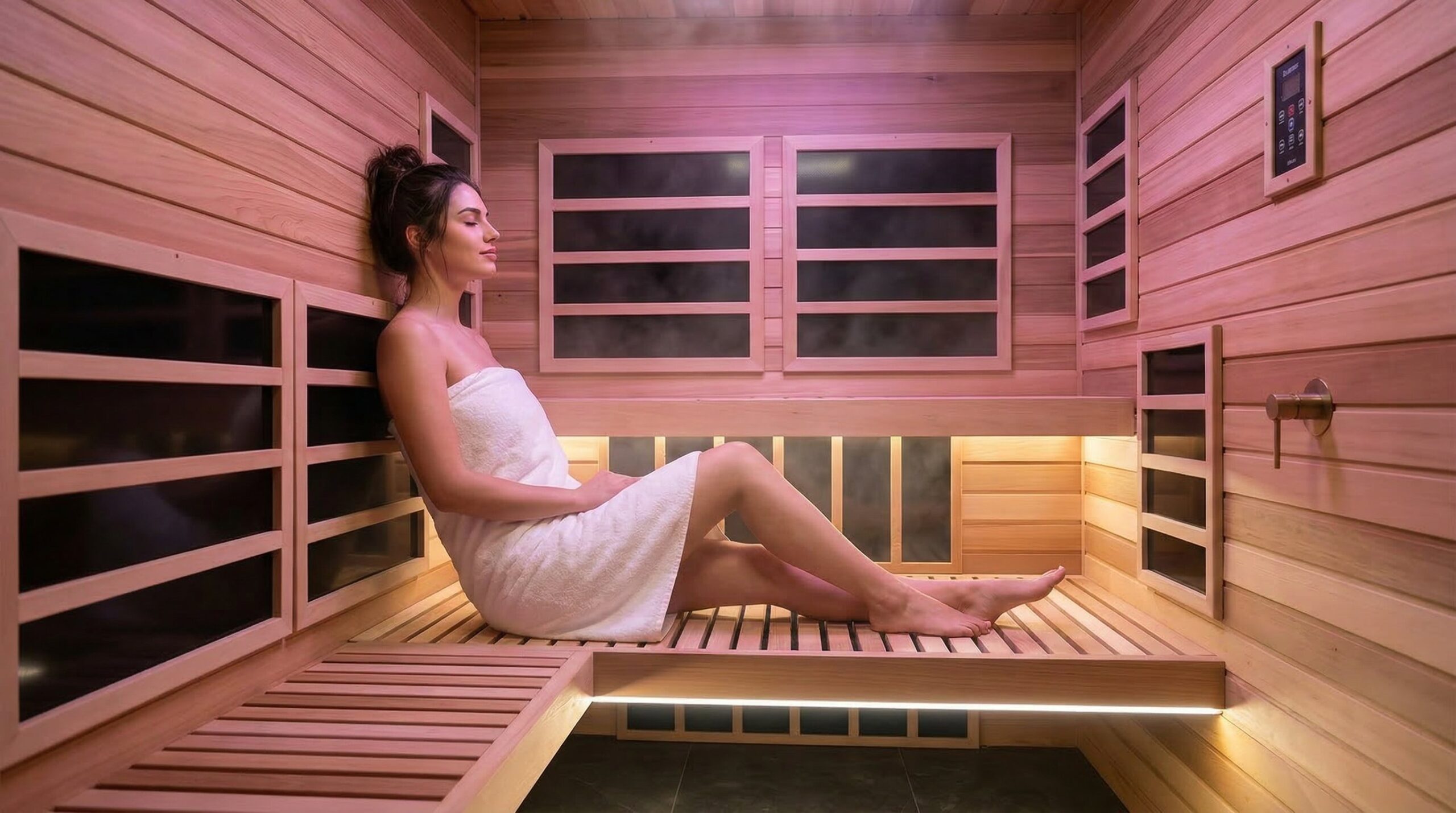
Your infrared sauna is something you choose to do for yourself. You decide when. You set the temperature. You control how long. You step in on your terms and step out when you're ready. For 20–30 minutes, there are no beeping machines, no fluorescent lights, no waiting rooms. Just you and gentle warmth in a quiet cedar room.
Many of our cancer patients describe this sense of agency — this daily act of self-care they control — as one of the most psychologically important aspects of their sauna use. The physical benefits are real and measurable. But the feeling of doing something for yourself, by yourself, during a period when everything else is done to you? That matters in ways that clinical trials don't capture.
Practical benefits during treatment
Managing chemo side effects
- Fatigue: Counterintuitive, but gentle infrared sessions can reduce the crushing chemo fatigue. Better sleep quality (sauna before bed) leads to more restorative rest. The gentle cardiovascular stimulation fights the deconditioning that happens when you're too exhausted to exercise.
- Nausea: Some patients report reduced nausea with gentle sauna sessions between chemo cycles. The warmth can settle the stomach and the relaxation reduces stress-mediated nausea. Start very low (120°F, 10 min) and see how your body responds.
- Neuropathy: Chemo-induced peripheral neuropathy (numbness, tingling, burning in hands and feet) is driven partly by impaired circulation. Far infrared's deep tissue heating improves peripheral blood flow. Position your hands and feet toward the VantaWave® heater panels for maximum exposure.
- Chemo brain: Improved cerebral circulation and dramatically better sleep quality can help with the cognitive fog that chemo creates. Not a cure — but many patients report their thinking clears somewhat with consistent sauna use.
- Pain: Deep infrared heating provides drug-free pain relief through endorphin release and direct tissue warming. For patients already on multiple medications, reducing pain medication need is valuable.
Managing radiation and surgical recovery
Important: Do NOT apply infrared heat to areas currently receiving radiation therapy. Irradiated skin is already damaged and heat-sensitive. After radiation is complete and skin has healed, infrared + red light therapy can support tissue recovery.
For surgical recovery, wait until your surgeon clears you for heat exposure — typically 4–8 weeks. Once cleared, infrared promotes wound healing through improved circulation, and red light therapy accelerates scar healing and tissue repair.
Managing emotional health
This section matters as much as the physical benefits. Every sauna session reduces cortisol (measurably), releases endorphins (naturally), and improves sleep (the foundation of emotional resilience). But beyond the neurochemistry: the warm, enclosed cedar space can feel protective and womb-like during a period when the world feels threatening. Many patients use their sauna time for meditation, prayer, journaling, or simply sitting with their own thoughts in a space that feels safe.
Sleep — the benefit that changes everything else
If I had to name the single most impactful benefit of infrared sauna use for cancer patients, it’s sleep. Cancer disrupts sleep through pain, anxiety, medication side effects, hormonal changes, and the simple terror of lying in the dark with your thoughts. And poor sleep worsens everything: pain sensitivity increases, immune function drops, cognitive fog thickens, emotional resilience crumbles.
An infrared sauna session 60–90 minutes before bed triggers the thermoregulatory cooling response — your core temperature rises during the session, then drops 1–2°F below baseline afterward. This temperature drop is the same physiological signal your body uses to initiate sleep. It triggers melatonin production and promotes entry into deep slow-wave sleep — the restorative sleep stage that cancer treatment so often destroys.
When cancer patients start sleeping better, a cascade of improvement follows. Pain tolerance increases. Energy returns. Thinking clears. Mood lifts. Immune function recovers. Sleep is the foundation — and infrared sauna is one of the most effective non-pharmaceutical tools for rebuilding it during cancer treatment.
Detoxification of treatment byproducts
Chemotherapy drugs are, by design, toxic. They’re intended to kill rapidly dividing cells — cancer cells, yes, but also healthy cells in your gut lining, hair follicles, and bone marrow. The metabolic processing of these drugs places enormous burden on your liver and kidneys. Sweating through infrared provides an additional excretion pathway for drug metabolites and cellular debris — supplementing your liver and kidneys during the period when they’re most overwhelmed.
SaunaCloud saunas are built with zero adhesives — 100% solid Western Red Cedar, no plywood, no MDF, no formaldehyde. For immunocompromised patients, breathing clean air inside the sauna isn’t a luxury — it’s a safety requirement. You don’t want to be off-gassing chemicals into the air you’re breathing during a detox session.
The conversation with your oncologist
Having the Conversation with Your Doctor
Print this card and bring it to your next appointment
What to say:
“I'd like to use an infrared sauna at 130–145°F for 20–35 minutes between treatment cycles for stress relief and symptom management. It's not clinical hyperthermia — it raises core body temperature by about 2–3°F. Are there any concerns with my treatment plan?”
Questions to ask:
Any timing concerns relative to my chemo schedule?
Do my medications interact with heat exposure?
Are my blood counts safe for heat exposure right now?
Any concerns with my specific treatment plan?
Most oncologists will approve infrared sauna use for symptom management — especially when you frame it accurately: stress relief, sleep, pain management, and general wellbeing. Not as a cancer treatment. The key is being specific about what you're asking to do.
If your oncologist hasn't heard of infrared saunas, offer to share this article and our companion science article. The critical points: it operates at 130–145°F (much lower than traditional saunas), raises core temperature by only 2–3°F, and you're using it for quality of life — not as an alternative therapy.
Your sauna journey through cancer
Your Sauna Journey Through Cancer Treatment
During Treatment
120°F, 10–20 min, 2–3x/week
Comfort, sleep, stress relief
With oncologist approval · between chemo cycles
Post-Treatment Recovery
135–140°F, 30–40 min, 4–5x/week
Detox, immune rebuilding, tissue repair
"Getting your life back"
Long-Term Survivorship
Daily wellness practice
Immune surveillance, cardiovascular health
"From surviving to thriving"
Phase 1: During active treatment
With oncologist approval. Start at 120°F for just 10 minutes, 2x per week — between treatment cycles. Avoid 24–48 hours before and after chemo infusions. Never push through discomfort. Hydrate aggressively: electrolyte water before, during, and after. Track how you feel: energy, sleep, pain, nausea, mood. If you feel worse after a session, reduce temperature and duration. Build gradually to 125–130°F, 15–20 minutes, 3x per week over several weeks — only as tolerated.
Phase 2: Post-treatment recovery
This is where most patients experience the most profound benefits. Once treatment ends and your oncologist clears you for normal activity, build to the full protocol: 135–140°F, 30–40 minutes, 4–5x per week. Your body needs to clear residual drug metabolites, rebuild immune function, repair damaged tissue, restore sleep architecture, and process the emotional aftermath of treatment. Infrared therapy supports every one of these recovery processes.
Survivors consistently describe this period as "getting my life back" — and the sauna becomes a core part of that journey. The daily warmth, the sweat, the deep sleep, the gradual return of energy — it adds up. Week by week, month by month, you feel more like the person you were before.
Phase 3: Long-term survivorship
Daily sauna use as a lifetime wellness practice. Ongoing immune surveillance support through NK cell activation. Cardiovascular health maintenance — important because some chemotherapy drugs damage the heart. Continued stress management and sleep optimization. The transition from surviving to thriving. This is where the sauna stops being about cancer recovery and starts being about living well.
A note for caregivers and families
If you're reading this on behalf of someone you love who has cancer, I want to speak to you directly.
An infrared sauna may be the most meaningful gift you can give a cancer patient. Not because of the clinical benefits — though those are real — but because it provides daily comfort during the hardest period of their life. It gives them something positive to do for themselves. It provides warmth when treatment makes the world feel cold.
Consider accessibility when planning the installation — some patients have limited mobility during treatment. A custom-designed sauna can be configured for easy entry and comfortable seating.
And here's something nobody tells caregivers: the sauna is for you too. Caregiver burnout is real. You're carrying emotional weight that would crush most people. You need your own recovery tool, your own stress relief, your own 30 minutes of peace. Taking care of yourself isn't selfish — it's what allows you to keep taking care of them.
What we've learned from cancer patients
Among our 3,000+ installations, many have been for cancer patients and survivors. I've spoken personally with patients who credit their sauna with getting through treatment — not curing their cancer, but getting through it. The most common thing I hear: "This is the only thing that makes me feel like myself during chemo."
I never make medical claims. But I've heard that sentence — or some version of it — enough times to know that something meaningful is happening when cancer patients use infrared consistently. It's not magic. It's warmth, circulation, endorphins, sleep, and the simple human need to feel cared for — including by yourself.
If you're navigating cancer — as a patient, a survivor, or a caregiver — we're here to help you figure out if an infrared sauna is right for your situation. No pressure, no claims, no salesmanship. Just an honest conversation. Our zero-toxin construction means immunocompromised patients aren't exposed to off-gassing chemicals, and our build quality ensures the sauna will be there for you for decades. Explore our guides library for more resources.
Frequently asked questions
Frequently Asked Questions
For many patients, gentle infrared sauna sessions between chemo cycles are safe and beneficial — but ONLY with your oncologist's approval. Avoid sessions 24–48 hours before and after infusions. Start at very low temperatures (120°F) for short sessions (10 minutes). Never push through discomfort. Your oncologist should clear you based on your specific treatment, blood counts, and medication interactions.
The most commonly reported benefits: improved sleep quality, reduced stress and anxiety, natural pain relief without additional medications, reduced chemo-related fatigue, improved mood, and — perhaps most importantly — a sense of agency and self-care during a period when everything else feels out of your control.
Wait until your surgeon clears you for heat exposure — typically 4–8 weeks post-surgery depending on the procedure and healing progress. Once cleared, start gently (120°F, 10 minutes) and gradually increase. Infrared therapy improves wound healing circulation, and red light therapy accelerates scar recovery.
Many patients report improved cognitive clarity with regular sauna use. The mechanisms include improved cerebral blood flow, reduced neuroinflammation, and — most significantly — dramatically better sleep quality. When your body is resting properly and stress hormones are lower, cognitive function typically improves. It's not a cure for chemo brain, but it helps.
Frame it accurately: you want to use an infrared sauna at 130–145°F for 20–35 minutes for symptom management and stress relief — NOT as a cancer treatment. Ask about timing relative to your chemo schedule, medication interactions, blood count safety, and any specific concerns with your treatment plan. Most oncologists approve when the request is framed this way.
Many families install infrared saunas for loved ones during cancer treatment. It provides daily comfort, stress relief, pain management, and a sense of normalcy during the hardest period of their life. Consider accessibility — some patients have limited mobility. The sauna also benefits caregivers, who need their own stress relief and recovery tool.
Post-treatment recovery is where infrared sauna therapy provides the most profound, most responsible benefits. Your body must recover from chemotherapy, radiation, and surgery damage. Regular sauna use supports: detoxification of residual drug metabolites through sweat, immune system rebuilding through NK cell activation, tissue repair through improved circulation, sleep restoration, and the emotional transition from 'surviving' to 'thriving.'
Founder & Lead Designer, SaunaCloud®
3,000+ custom saunas built since 2014 · Author of The Definitive Guide to Infrared Saunas · Featured in Forbes, Inc., and MSN
Chris has been designing and building custom infrared saunas since 2014. He wrote one of the first comprehensive books on infrared sauna therapy and is personally involved in every SaunaCloud build — from design consultation through delivery and beyond.
Continue Reading
.webp)
We'll Walk You Through Everything with Care
If you or a loved one is navigating cancer, we're here for an honest conversation about whether an infrared sauna is right for your situation. No pressure, no claims — just support.