
How to Spot a Cheap Infrared Sauna: 8 Red Flags Every Buyer Must Know
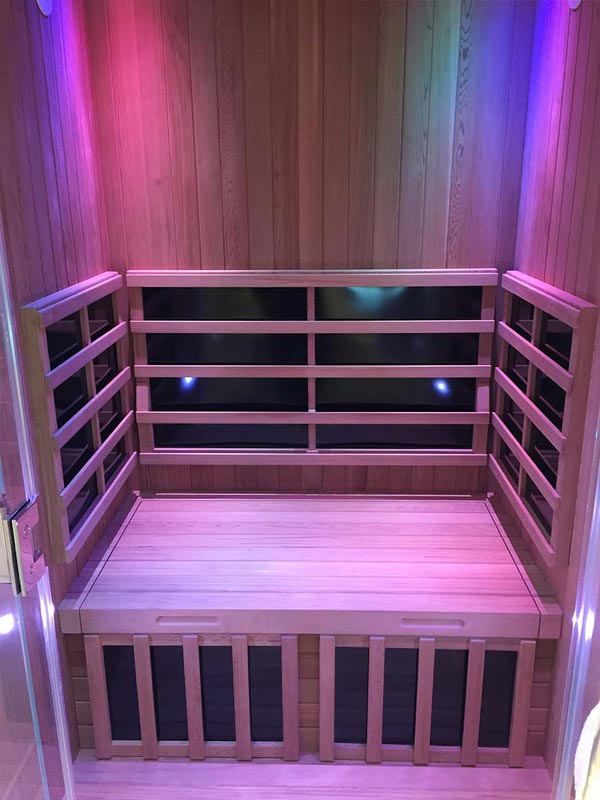
Key Takeaways
- The single biggest quality indicator is the wood — pull back a heater panel or look under a bench. If you see layers (plywood) or compressed material (MDF/particle board), walk away. These materials contain formaldehyde-based adhesives that off-gas at sauna temperatures
- 'Low EMF' means nothing without a number. Ask for the milligauss reading at body distance (where you sit, not at the wall). Under 3 mG is acceptable, under 1 mG is excellent. Many budget saunas measure 20-100+ mG. SaunaCloud's VantaWave: under 0.5 mG
- 'Full spectrum' is the biggest marketing scam in the industry. Wien's Displacement Law: a single heater at a single temperature produces one peak wavelength. You cannot produce three distinct wavelengths from one heat source. Most 'full spectrum' saunas just add a halogen bulb at 750 degrees F
- Most infrared saunas are identical prefabricated boxes made in Chinese factories and sold under 10-20 different brand names. Reverse image search the product photos — if the same sauna appears under multiple brands, it's a white-label import you can find on Alibaba for 30% of the retail price
- A quality 2-person infrared sauna costs $4,000-$8,000 minimum. A custom installation runs $6,000-$15,000+. If someone is selling a 'complete infrared sauna' for $1,500-$2,500, significant compromises have been made on materials, heaters, EMF, and warranty
There are hundreds of brands selling infrared saunas right now. Prices range from $500 Amazon boxes to $15,000+ custom installations. And here's the problem: from a website photo, most buyers can't tell the difference.
Every company uses the same buzzwords. "Low EMF." "Full spectrum." "Premium wood." "Therapeutic grade." Scroll through ten different sauna websites and you'll see the same claims repeated verbatim — because most of these companies are selling the same product under different names.
I've spent twelve years building custom infrared saunas and twelve years watching people get burned by companies that prioritize margins over materials. This guide teaches you to cut through the marketing and evaluate what actually matters — so you can tell the difference between a therapeutic investment and an expensive space heater.
Apply these criteria to every brand you're considering — including us. We publish our specifications because we want you to compare. That's the difference between a company that builds saunas and a company that sells them.
Red flag #1 — Plywood, MDF, or particle board construction
This is the single biggest quality indicator, and it's the one most buyers miss. The wood is everything.
Here's the test: pull back a heater panel or look under a bench. If you see layers in the wood (that's plywood) or compressed, sawdust-like material (that's MDF or particle board), walk away. These aren't solid wood — they're engineered composites held together with formaldehyde-based adhesives.
Now think about what happens to those adhesives at 140°F in an enclosed space. They off-gas. You're sitting in a hot box breathing formaldehyde — a known human carcinogen classified by the WHO's International Agency for Research on Cancer. The entire purpose of an infrared sauna is to support your health, and plywood construction actively undermines that purpose.
What to look for instead: solid wood boards with visible grain running through the full thickness. No layers. No compressed material. No veneer over cheap substrate.
- Premium choice: Western Red Cedar — naturally antimicrobial, rot-resistant, handles decades of heat and moisture cycling, and has a pleasant therapeutic aroma. It's the gold standard for a reason
- Acceptable alternative: Hemlock — less aromatic and less antimicrobial than cedar, but solid and functional
- Acceptable alternative: Basswood — hypoallergenic (good for chemical sensitivity) but less durable long-term
The wood should be solid throughout every component: walls, ceiling, floor, benches, backrests, and heater mounting panels. Not just the parts you can easily see.
Red flag #2 — Vague or misleading EMF claims
"Low EMF" means nothing without a number. It's like saying a car gets "good gas mileage" without telling you the MPG. Every infrared sauna company claims low EMF because there's no regulation — nobody is checking.
Here's what they don't want you to know: many budget saunas that claim "low EMF" measure at 20-100+ milligauss (mG) at body distance. Some measure even higher. The Swedish safety standard that most health-conscious consumers reference puts the threshold at 3 mG.
The threshold to look for: under 3 mG at body distance is acceptable. Under 1 mG is excellent. SaunaCloud's VantaWave heaters measure under 0.5 mG — essentially zero electromagnetic field at the distance where your body sits.
The critical distinction is where the measurement is taken. Some companies measure EMF at the wall — where the heater panel surface is — and report that number. But you don't sit against the wall. Your body is 4-12 inches away from the heater during normal use. Always ask for the reading at body distance, measured by a third-party gaussmeter.
How to verify yourself: Buy a TriField meter (~$150 on Amazon). Turn on the sauna, let it reach operating temperature, and measure EMF at bench level where your body actually sits. If the company won't let you test before buying, or if they get uncomfortable when you bring up third-party testing, that's your answer.
Red flag #3 — "Full spectrum" marketing
This is the biggest scam in the infrared sauna industry, and it's the one that makes me angriest — because it exploits people who are trying to make informed decisions.
Companies claim their saunas produce near, mid, AND far infrared, implying you get all three "therapeutic wavelengths" in one unit. Three wavelengths must be better than one, right? It sounds like you're getting more for your money.
Here's the physics reality that these companies either don't understand or are deliberately ignoring:
Wien's Displacement Law: A single heating element at a single temperature produces radiation with a single peak wavelength. You cannot produce three distinct peak wavelengths from one heat source. This is fundamental thermodynamics, not opinion. Every infrared heater has one peak — the temperature determines where it is.
So what do "full spectrum" saunas actually contain? Far infrared carbon panels (the real therapy — this is the same technology every carbon-panel sauna uses) plus a halogen bulb mounted near the ceiling. The halogen bulb produces near-infrared radiation at a surface temperature around 750°F.
The problems with this approach:
- The halogen bulb creates intense, uneven heat concentrated in one spot — your head and upper body get blasted while your lower body gets standard far infrared
- 750°F surface temperature is uncomfortable and potentially unsafe at close range
- The halogen bulb shifts the overall emission profile away from the therapeutic 7-10 micron far infrared range that your body absorbs most efficiently
- The "mid infrared" claim is essentially meaningless — there's no distinct mid-infrared heater, just the tail of the emission curves from the far infrared panels and the halogen bulb
Full spectrum is a marketing term, not a physics term. Every infrared sauna is technically 'full spectrum' because all thermal radiation spans a range of wavelengths around the peak. What matters is WHERE the peak is — and VantaWave's peak is at 7.9 microns, exactly where human tissue absorbs most efficiently.
The science is clear: far infrared in the 7-10 micron range is where the therapeutic benefits — detoxification, cardiovascular conditioning, pain relief, deep tissue heating — are concentrated. Optimizing the peak wavelength in that range is what matters, not bolting on a halogen bulb and calling it "full spectrum."
Red flag #4 — No heater specifications
A quality manufacturer will tell you exactly what's inside their sauna. They'll publish specifications because they're proud of the engineering. A company that can't answer basic technical questions doesn't know what they're selling — because they didn't build it.
Ask these five questions to any manufacturer:
- What is the heater surface temperature during operation?
- What is the peak emission wavelength?
- What is the emissivity rating of the heater material?
- What material are the heaters made from (and what is the specific composition)?
- What is the EMF reading at seating distance, measured by a third-party meter?
A quality company answers all five with specific numbers. No hedging, no "approximately," no redirecting to marketing language. If the response is "carbon heaters" or "ceramic heaters" with no further detail, you're looking at generic, unspecified components sourced from the lowest bidder.
For reference, here are the specifications you should use as a benchmark:
- Surface temperature: 180-220°F (hot enough for deep tissue penetration, not so hot it's uncomfortable)
- Peak wavelength: 7-10 microns (the range where human tissue absorbs far infrared most efficiently)
- Emissivity: 0.95+ (how efficiently the heater converts electrical energy to infrared radiation — 1.0 is perfect)
- EMF: under 3 mG at body distance (under 1 mG is ideal)
- Material: the company should specify the exact heater composition, not just "carbon" or "ceramic"
SaunaCloud's VantaWave specifications: 200°F surface temperature, 7.9-micron peak wavelength, 0.97 emissivity, under 0.5 mG EMF at body distance. We publish these numbers because we want you to compare them to every other sauna you're considering. See the full VantaWave specifications.
Red flag #5 — Prefab box with no customization
Here's a truth that most sauna buyers never discover: the majority of infrared saunas sold in North America and Europe are identical prefabricated boxes manufactured in the same handful of Chinese factories. The same sauna — same dimensions, same heaters, same wood, same electronics — is sold under 10 to 20 different brand names with different logos slapped on the control panel.
These are white-label imports. The "brand" you're buying from didn't design the sauna, didn't engineer the heaters, didn't select the wood, and in many cases has never seen the inside of the factory. They purchased a container of prefab units, added their logo, built a nice website, and marked it up 3-5x.
How to check: reverse image search the product photos. Take the main marketing image from the company's website, drop it into Google Images, and see what comes up. If the exact same sauna appears under multiple brand names — same dimensions, same heater layout, same bench design, same door handle — it's a white-label import. You can often find the original manufacturer on Alibaba at 30% of the retail price.
Beyond the deception, prefab boxes have a practical problem: your room isn't the same as everyone else's room. A prefab forces you to work around its dimensions. You lose space. Heater placement is generic, not optimized for the cabin size. You can't choose where the door goes, where the controls mount, how the bench is configured, or whether to add red light therapy integration.
A custom-built sauna fits your space exactly. The heater layout is optimized for the specific cabin dimensions. Every element — bench depth, backrest angle, control placement, ventilation, electrical routing — is designed for your installation, not for a shipping container.
Red flag #6 — Warranty that only covers the wood
This one is subtle, and most buyers don't catch it until something goes wrong. Many budget brands advertise a "lifetime warranty" — which sounds impressive. But read the fine print.
The "lifetime warranty" covers the wood structure — the component least likely to fail. Wood doesn't have moving parts. Barring water damage or severe abuse, a wooden cabinet will last decades regardless of quality.
The parts that actually fail — heaters and electronics — get buried in the warranty terms with 1-2 year coverage. The control panel, power supply, wiring, heater panels, temperature sensors, timers — the components that make the sauna actually function — have a warranty shorter than many cell phone plans.
What to look for: separate, clearly stated warranty terms for each component category:
- Wood structure: lifetime or 10+ years
- Heater panels: 5+ years (these are the most expensive components to replace)
- Electronics and control panel: 5+ years
- Labor: clearly defined — does the warranty cover installation of replacement parts?
A short warranty on heaters and electronics is the most honest thing a company will tell you. It's how long they expect those components to last.
Red flag #7 — No US-based phone support
If the manufacturer can't take a phone call, that tells you everything you need to know about what happens when something goes wrong.
Many budget brands route all support through email — with response times measured in days or weeks, not hours. When your sauna stops working, when a heater panel goes dark, when you have a question about electrical installation, you need to speak to a human who understands the product and can help you troubleshoot in real time.
Ask this question before you buy: can I call a phone number and speak to someone who has actually built a sauna? Not a call center rep reading from a script. Not a chat bot. An actual person who understands infrared heater technology, electrical requirements, wood construction, and installation procedures.
If the answer is no — or if the only phone number routes to a voicemail that nobody returns for three days — imagine what happens when you need warranty service in year three.
Red flag #8 — Price that seems too good to be true
It is.
A quality infrared sauna for two people costs $4,000-$8,000 minimum. A quality custom installation with premium materials, optimized heater layout, and proper electrical work costs $6,000-$15,000+. These prices reflect the actual cost of solid Western Red Cedar, engineered low-EMF heaters, quality electronics, proper construction, and a company that will answer the phone for the next decade.
If someone is selling a "complete infrared sauna" for $1,500-$2,500, here's what you're getting: plywood or particle board behind the heater panels, generic carbon heaters with unknown EMF readings, no published specifications, a control panel sourced from the lowest bidder, a warranty that covers the wood (the part that won't break) for "lifetime" and the electronics (the parts that will) for 12-24 months, and email-only support from a marketing company that has never built a sauna.
The analogy is straightforward: you wouldn't buy the cheapest furnace for your house and expect it to run safely for twenty years. Your sauna is a permanent wellness investment that you'll sit inside every day, breathing deeply, with your skin fully exposed. The components matter.
Does a quality sauna cost more? Yes. Does it cost more per year of use? Almost never. A $7,000 sauna that lasts 25 years costs $280 per year. A $2,000 sauna that lasts 4 years costs $500 per year — and you still need to buy the next one.
The 8 Red Flags Checklist
If you see any of these, investigate further before buying
Plywood or MDF construction
Formaldehyde-based adhesives off-gas at sauna temperatures
Vague EMF claims (no numbers)
Ask for milligauss at body distance — "low EMF" is meaningless
"Full spectrum" marketing
One heater = one peak wavelength (Wien's Law). The halogen bulb is a gimmick
No heater specifications
Can't provide surface temp, wavelength, emissivity, or EMF readings
Identical prefab box under multiple brands
Reverse image search — same sauna, different logos, found on Alibaba
Warranty only covers the wood
Heaters and electronics (the parts that fail) get 1-2 year coverage
No US-based phone support
Email-only with days or weeks of response time
Price under $3,000 for a 2-person
White-label import with compromised materials, heaters, and warranty
The buyer's checklist — what to verify before purchasing any infrared sauna
Print this list. Bring it to every showroom visit, phone call, and website evaluation. A quality manufacturer will welcome these questions. A company with something to hide will deflect them.
- Wood: 100% solid wood, verified species, no plywood/MDF/particle board anywhere in the construction — including behind panels and under benches
- EMF: under 3 mG at body distance, with third-party testing data available. Ask for the specific number, not marketing language
- Heater specifications: surface temperature, peak wavelength, emissivity rating, material composition — all documented and published
- Construction method: tongue-and-groove joinery, zero adhesives, stainless steel hardware. No glues, no caulk, no chemical sealants
- Warranty: covers heaters AND electronics for 5+ years, not just wood. Separate terms for each component category
- Support: US-based phone support with humans who have built saunas. Not email-only, not chat bots, not overseas call centers
- Customization: can they build to your exact specifications? Or are you choosing from a menu of prefab sizes?
- Reviews: third-party reviews on Trustpilot, BBB, or Google — not just testimonials hand-picked for their website
- Company history: how many years in business? How many installations completed? Can they provide references from customers in your area?
- Certifications: UL or CSA testing on electrical components. NEC compliance awareness for installation requirements
Any company that can check all ten boxes is worth your consideration. Any company that gets defensive, vague, or redirects you to marketing materials is telling you everything you need to know.
What You're Actually Getting
Budget Prefab
$1,500 - $3,000
Plywood / particle board backing
Unknown-origin carbon heaters
20-80 mG EMF at body distance
"Full spectrum" halogen bulb
One-size-fits-all dimensions
1-2 year heater warranty
Email-only support
White-label Chinese import
Lifespan: 3-7 years
SaunaCloud Custom
$6,000 - $15,000+
100% solid Western Red Cedar
VantaWave — 7.9μm, 0.97 emissivity
<0.5 mG EMF at body distance
Far infrared only (physics-correct)
Built to your exact space
7-year full component warranty
Direct phone with the builder
Designed & supported in California
Lifespan: 25-50+ years
Cost per year over lifespan: Budget ~$500/yr • Custom ~$280/yr
How SaunaCloud measures up
We asked you to evaluate every brand by the same criteria — including us. Here's where we stand, point by point. No marketing language. Just specifications.
- Wood: 100% solid Western Red Cedar, A-grade boards. Zero plywood, zero MDF, zero adhesives anywhere in the construction
- EMF: VantaWave heaters measure under 0.5 mG at body distance — essentially zero electromagnetic field
- Heater specifications: 200°F surface temperature, 7.9-micron peak wavelength, 0.97 emissivity. Published, documented, verifiable
- Construction: tongue-and-groove joinery, stainless steel fasteners, no chemical adhesives, no caulk, no sealants. See how we build.
- Warranty: 7-year limited lifetime warranty covering all components — wood structure, heater panels, electronics, and control systems
- Support: direct phone support at 800-370-0820. You'll speak to the team that designed and built your sauna. I personally answer calls
- Customization: every sauna is custom built to the customer's exact space and specifications. No prefab boxes, no standard sizes
- Reviews: 4.8 stars on Trustpilot from 65+ verified reviews
- History: 12 years in business, 3,000+ installations completed across North America
- Certifications: UL-listed electrical components, NEC-compliant installation guidance provided with every build
Are we the cheapest option? No. Intentionally not. Premium materials, precision engineering, custom fabrication, and a decade of support cost more than a white-label container from a factory you'll never visit. But premium costs more because premium is more — more quality, more longevity, more therapeutic value, and more years of daily use before you need to think about your sauna again.
The real cost comparison
Buyers fixate on purchase price because it's the number on the screen. But the real question isn't what a sauna costs — it's what it costs per year of actual use.
- Budget prefab ($2,000): typical lifespan 3-5 years before heater failure, wood degradation, or electronic issues. Cost per year: $400-$667. Then you buy another one
- Mid-range prefab ($4,000-$5,000): better components but still standardized. Typical lifespan 5-10 years. Cost per year: $400-$1,000
- SaunaCloud custom ($6,000-$15,000+): solid cedar construction, VantaWave heaters, full warranty. Expected lifespan 25-50+ years. Cost per year: $120-$600. And you never buy another one
The cheapest sauna is almost always the most expensive sauna over a lifetime of use. This is true for the same reason a $200 pair of boots that lasts fifteen years costs less than three $80 pairs that each last four: durability is cheaper than replacement.
How to buy with confidence
If you've read this far, you now know more about infrared sauna construction, heater technology, and industry marketing tactics than 99% of buyers. Use that knowledge.
- Start with the checklist. Apply it to every brand you're considering. Don't skip items because the website looks professional — a nice website is the easiest thing in the industry to buy
- Ask the five heater questions. Surface temperature, peak wavelength, emissivity, material, EMF at body distance. If you get vague answers, you have your answer
- Reverse image search. Drop the product photos into Google Images. If the sauna appears under multiple brand names, it's a white-label import
- Call the company. Not email. Not chat. Call. Ask to speak to someone who has built a sauna. Evaluate whether you'd trust this person to help you three years from now when something needs attention
- Read third-party reviews. Not the testimonials on their website — those are curated. Trustpilot, Google Reviews, BBB. Look for patterns in negative reviews — recurring mentions of the same issues (heater failure, EMF, support responsiveness) tell you what to expect
- Compare cost per year, not purchase price. A $7,000 sauna that lasts 25 years is cheaper than a $2,000 sauna that lasts 4
- Trust your instincts. If the sales process feels pushy, if questions are deflected, if specifications aren't available — these are signals. A company that's confident in its product gives you space to decide because they know the product speaks for itself
You're about to make an investment in something you'll use every day, sitting inside it with your skin fully exposed, breathing deeply. The quality of what surrounds you in that moment matters more than any other purchasing decision you'll make for your home.
Choose accordingly.
If you want to talk through any of this — specifications, installation questions, pricing, or just whether a custom sauna makes sense for your space — call us directly at 800-370-0820 or book a call. We'll walk you through every specification and answer every question on the checklist. That's what confidence in your product looks like.
Frequently Asked Questions
Check behind heater panels and under benches for plywood or particle board (layered or pressed wood). Ask for EMF readings at body distance — anything over 3 milligauss is concerning. Request heater specifications: surface temperature, peak wavelength, and emissivity. If the company can't provide specific numbers, the sauna is likely a white-label import with generic components.
Under 3 milligauss (mG) at body distance is acceptable. Under 1 mG is excellent. SaunaCloud's VantaWave heaters measure under 0.5 mG — essentially zero. Many budget saunas measure 20-100+ mG. Always ask for readings at seating distance, not at the wall — that's where your body actually is during a session.
No. 'Full spectrum' is a marketing term, not a physics advantage. Wien's Displacement Law dictates that a single heater at a single temperature produces one peak wavelength. Most 'full spectrum' saunas add a halogen bulb at approximately 750 degrees F, which creates intense, uneven heat and shifts the emission profile away from the therapeutic far infrared range. What matters is optimizing the peak wavelength at 7-10 microns, where human tissue absorbs most efficiently.
A quality 2-person infrared sauna starts at $4,000-$6,000. A custom-built installation with premium materials, VantaWave heaters, and red light therapy integration typically ranges from $6,000-$15,000+. If a complete infrared sauna costs under $3,000, significant compromises have been made on materials, heaters, EMF levels, or all three.
Generally no. Most sub-$3,000 saunas use plywood with formaldehyde-based adhesives, generic carbon heaters with high EMF, minimal insulation, and warranties that won't be honored. They're often the same white-label Chinese imports sold under dozens of brand names. They may produce heat for 2-3 years, but they're not delivering safe, therapeutic-grade infrared — and you're breathing off-gassed chemicals the entire time.
Western Red Cedar is the gold standard — naturally antimicrobial, rot-resistant, handles decades of heat and moisture cycling, and has a pleasant therapeutic aroma. It must be solid wood throughout, not plywood or veneer over cheap substrate. Hemlock is acceptable but lacks cedar's natural antimicrobial properties. Avoid any sauna using particle board, MDF, or plywood anywhere in the construction.
Reverse image search the product photos. Many brands sell the same white-label Chinese-manufactured sauna under different names. If the sauna looks identical across multiple websites — same dimensions, same heater layout, same bench design, same door handle — it's the same product. You can often find the original manufacturer on Alibaba at a fraction of the retail price.
Look for separate warranty coverage for the wood structure (lifetime or 10+ years), heaters (5+ years), and electronics/control panel (5+ years). Many budget brands offer a 'lifetime warranty' that only covers the wood — the component least likely to fail. Heaters and electronics fail first, so those warranty terms matter most. Also check whether the warranty covers labor and shipping for replacement parts.

Founder & Lead Designer, SaunaCloud®
3,000+ custom saunas built since 2014 · Author of The Definitive Guide to Infrared Saunas · Featured in Forbes, Inc., and MSN
Chris has been designing and building custom infrared saunas since 2014. He wrote one of the first comprehensive books on infrared sauna therapy and is personally involved in every SaunaCloud build — from design consultation through delivery and beyond.
Continue Reading
Are All Infrared Saunas the Same? The White-Label Truth
Read article
Near Infrared vs Far Infrared Saunas: The Physics-Based Guide to Choosing (2026)
Read article
Hot Yoga in an Infrared Sauna: Poses, Benefits, and a 30-Minute Session Guide
Read articleReady to Compare? We'll Walk You Through Every Specification
100% solid Western Red Cedar, VantaWave heaters at 0.97 emissivity and under 0.5 mG EMF, custom built to your exact space. Call 800-370-0820 or book a call — we answer every question on the checklist.