
Infrared Saunas for Allergies: How FIR Therapy Rebalances the Autonomic Nervous System (2026)
Key Takeaways
- Two published trials specifically tested far-infrared therapy for allergic rhinitis. Hu & Li 2007 (31 patients): significant improvements in eye itching, nasal itching, stuffiness, runny nose, and sneezing after 7 days. Kunbootsri 2013 (26 patients with control group): improved nasal airflow, lung function, and autonomic nervous system balance after 6 weeks
- The mechanism goes deeper than 'heat opens airways.' Allergic rhinitis involves parasympathetic nervous system overactivity that drives nasal congestion and discharge. The Kunbootsri study specifically showed sauna shifted autonomic balance — directly addressing the underlying nervous system imbalance, not just masking symptoms
- Heat can trigger histamine release in some individuals — a counterpoint nobody mentions. Mast cell degranulation from heat could theoretically worsen acute allergic reactions in heat-sensitive people. If your first session worsens symptoms, this may be why. Start conservative and observe
- The benefits require consistent use — the Kunbootsri study used 3x/week for 6 weeks. This isn't acute symptom relief from a single session; it's a gradual autonomic rebalancing that develops over weeks. Think of it like allergy immunotherapy — the benefit is cumulative
- A home sauna provides a controlled, allergen-reduced environment. No pollen, dust mites, pet dander, or outdoor allergens inside a properly maintained cedar sauna. Each session is a 20-30 minute respite from environmental triggers
Most sauna companies explain allergy relief as 'heat opens up your sinuses.' That's true in the moment — warm air does promote nasal vasodilation and temporary decongestion. But it's not the interesting part of the research.
The interesting part: two published trials tested far-infrared therapy specifically for allergic rhinitis, and the stronger study found that regular FIR sauna use rebalances the autonomic nervous system — addressing the underlying nervous system dysfunction that drives allergic symptoms, not just providing temporary sinus relief.
Why allergies involve your nervous system
Allergic rhinitis isn't just an immune overreaction — it involves autonomic nervous system dysfunction. The parasympathetic nervous system controls nasal blood vessel dilation (congestion), mucus production (runny nose), and sneeze reflex activation. In allergic rhinitis, parasympathetic activity is chronically elevated — your nasal passages are stuck in 'react' mode even when allergen exposure is low.
This is why many allergy sufferers have symptoms even in 'low pollen' conditions — the autonomic baseline is shifted. Any intervention that rebalances the autonomic system toward sympathetic tone (the 'calm down, stop reacting' side for nasal symptoms) could reduce allergic symptoms at their neurological root.
The far-infrared evidence for allergic rhinitis
Hu & Li 2007 (IEEE Engineering in Medicine and Biology Society): 31 patients with allergic rhinitis received far-infrared therapy, 40 minutes per day for 7 consecutive days. Results: significant improvements in eye itching, nasal itching, nasal stuffiness, runny nose, and sneezing. Smell impairment improved after the final treatment. No adverse effects reported. Limitation: Small sample, no control group.
Kunbootsri et al. 2013 (Asian Pacific Journal of Allergy and Immunology): 26 allergic rhinitis patients at Khon Kaen University, Thailand. Six-week sauna treatment protocol: 3 sessions per week, 30 minutes each. This study included a control group — patients who did not receive sauna treatment.
Results: The sauna group showed significant changes in heart rate variability (HRV) indicating a favorable shift in autonomic nervous system balance — reduced parasympathetic overactivity. Peak nasal inspiratory flow (PNIF) increased, meaning nasal airflow improved objectively. Forced expiratory volume (FEV1) improved, indicating better lung function. The control group showed no changes in any measured parameter.
This is the stronger study because it has a control group and measures OBJECTIVE outcomes (HRV, PNIF, FEV1), not just subjective symptom reports. The HRV finding is particularly important — it shows the mechanism is autonomic rebalancing, not just temporary sinus opening.
Evidence context: Two small studies (31 and 26 patients) with promising results. The Kunbootsri study is the more rigorous (controlled, objective measures). These are genuinely relevant findings — but not definitive. Larger replications are needed. Sauna is a complementary tool for allergy management, not a replacement for allergen avoidance, antihistamines, nasal steroids, or immunotherapy.
The histamine consideration nobody mentions
Here's a counterpoint the industry ignores: heat can trigger mast cell degranulation — the release of histamine from the very cells that drive allergic reactions. In some heat-sensitive individuals, this means sauna could theoretically WORSEN acute allergic symptoms, at least initially.
If your first few sauna sessions increase flushing, nasal congestion, or skin itching, histamine release may be the explanation. This typically resolves with repeated exposure as the body adapts — but it means the first few sessions may feel counterproductive. Start conservative: shorter sessions (15 minutes), moderate temperature (120-125°F), and observe your response for 24 hours before increasing.
Traditional vs infrared sauna for allergies
Traditional saunas with steam (löyly) may be better for acute congestion relief — the humid steam hydrates dried respiratory mucus and promotes expectoration. This is why a hot shower helps when you're congested.
Far infrared sauna provides a different mechanism — the ANS rebalancing documented by Kunbootsri 2013 appears to be a longer-term autonomic adaptation, not acute steam-mediated relief. For chronic allergy management (reducing baseline symptom severity over weeks), the FIR mechanism may be more valuable. For acute 'I can't breathe through my nose right now' relief, steam is more immediately effective.
An allergy-focused sauna protocol
Phase 1 — Testing tolerance (Weeks 1-2): 2-3 sessions per week. 15-20 minutes at 120-125°F. Monitor for histamine-type reactions (increased flushing, congestion, itching). If symptoms worsen acutely, reduce duration. If they resolve within hours, continue.
Phase 2 — Building adaptation (Weeks 3-6): 3 sessions per week at 125-135°F for 25-30 minutes — matching the Kunbootsri protocol. The ANS rebalancing is cumulative — consistent sessions over 6 weeks is what produced the measured improvements.
Phase 3 — Maintenance: 3-4 sessions per week ongoing. Many allergy patients report the most benefit during their worst allergy season when they've been consistent with sauna for at least 4-6 weeks prior. Evening sessions may be particularly beneficial — the parasympathetic rebound post-session supports better sleep, which is often disrupted by nighttime nasal congestion.
The allergen-free environment advantage
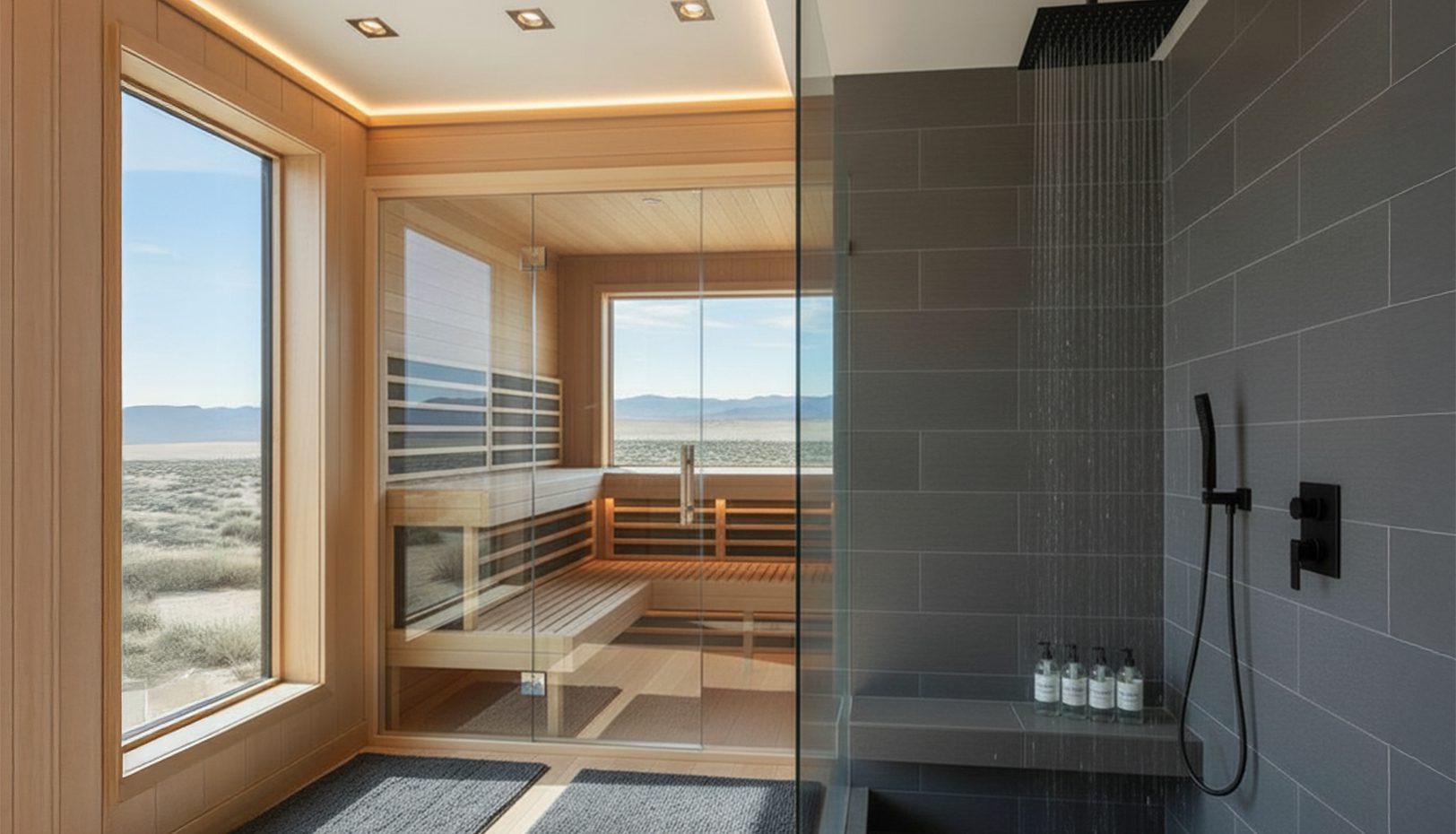
A properly maintained home sauna provides something allergy sufferers rarely get: a controlled, allergen-reduced environment. Inside a SaunaCloud cedar sauna, there's no pollen, no dust mites, no pet dander, no outdoor allergens. Western Red Cedar has natural antimicrobial properties. Each session is 20-30 minutes of breathing in a clean, warm, allergen-free space — a respite that no antihistamine can provide.
Frequently asked questions
Frequently Asked Questions
Two published trials specifically tested far-infrared therapy for allergic rhinitis with positive results — improved nasal airflow, reduced symptoms, and favorable autonomic nervous system changes. The benefits require consistent use (3x/week for 6+ weeks), not a single session. Sauna complements but doesn't replace allergen avoidance, antihistamines, or immunotherapy.
That's part of it (acute vasodilation and decongestion). But the more important mechanism appears to be autonomic nervous system rebalancing. Allergic rhinitis involves parasympathetic overactivity that drives congestion and discharge. The Kunbootsri 2013 study showed regular sauna use shifted autonomic balance, directly addressing this underlying dysfunction — not just masking the congestion temporarily.
Possibly in the short term. Heat can trigger mast cell degranulation (histamine release), which could worsen flushing, congestion, or itching acutely. This typically resolves with repeated exposure. If your first sessions worsen symptoms, try shorter duration and lower temperature. If symptoms persistently worsen rather than improve over 2-3 weeks, sauna may not be right for your allergy pattern.
Different mechanisms, different benefits. Steam (traditional sauna with löyly) is better for acute congestion relief — humid air hydrates dried mucus. Far infrared appears better for longer-term autonomic rebalancing that reduces baseline allergy severity over weeks. For chronic allergy management, the FIR ANS mechanism may be more valuable. For immediate 'I can't breathe' relief, steam works faster.
The Kunbootsri study showed improvements after 6 weeks of consistent use (3x/week). The Hu & Li study showed symptom improvement after 7 consecutive days of daily treatment. Expect: some acute relief in early sessions (sinus opening from heat), but meaningful autonomic rebalancing over 4-6 weeks of consistent use. This is a cumulative adaptation, not instant relief.
No. The studies tested sauna as a complementary intervention. Continue your prescribed allergy management — antihistamines, nasal corticosteroid sprays, immunotherapy if prescribed. Sauna may reduce symptom severity and improve quality of life alongside your existing treatment. If improvement is sustained, discuss medication adjustments with your allergist.

Founder & Lead Designer, SaunaCloud®
3,000+ custom saunas built since 2014 · Author of The Definitive Guide to Infrared Saunas · Featured in Forbes, Inc., and MSN
Chris has been designing and building custom infrared saunas since 2014. He wrote one of the first comprehensive books on infrared sauna therapy and is personally involved in every SaunaCloud build — from design consultation through delivery and beyond.
Continue Reading
Infrared Sauna and COPD: Cardiovascular Conditioning, Pneumonia Protection, and What the Evidence Shows (2026)
Read article
Infrared Sauna and Your Immune System: The Science of Immune Resilience vs 'Immunity Boosting' (2026)
Read article
Infrared Sauna and Autoimmune Disease: Anti-Inflammatory Without Immunosuppression (2026)
Read articleBreathe Better in an Allergen-Free Environment
Western Red Cedar sauna with natural antimicrobial properties — no pollen, no dust mites, no outdoor allergens. Custom designed for your space.