
Infrared Saunas and Autism: What's Supported, What's Theoretical, and How to Approach Safely (2026)
Key Takeaways
- There are zero clinical trials of infrared sauna specifically for autism spectrum disorder. Claims that sauna 'treats' or 'improves' autism are extrapolating beyond the evidence. The theoretical chain — environmental toxins cause ASD, sauna removes toxins, therefore sauna improves ASD — has not been tested as a connected pathway
- What IS supported by evidence: anxiety reduction (anxiety affects 40-50% of autistic individuals), sleep improvement (sleep disorders affect 50-80% of children with ASD), stress reduction, and muscle tension relief. These are general sauna benefits with direct relevance to common ASD-associated challenges
- Many autistic individuals have sensory processing differences. Heat, enclosed spaces, and unfamiliar environments can trigger sensory overwhelm. Sauna introduction must be gradual, respectful, and led by the individual's comfort — not forced. Start with the door open, low temperature, and short duration
- Children thermoregulate differently than adults — they dehydrate faster and may not communicate distress effectively. Temperature limits for children (110-120°F maximum), constant adult supervision, and clear communication strategies for non-verbal children are non-negotiable safety requirements
- Autism is a neurological difference, not a disease to be cured. This page positions sauna as a potential comfort and quality-of-life tool — for anxiety, sleep, calming routine, and sensory regulation — not as a 'treatment for autism'
There are no clinical trials of infrared sauna for autism. Not one. If a sauna company tells you their product treats, improves, or helps 'cure' autism, they're building a theoretical chain that the research hasn't tested.
What we CAN share honestly: sauna has well-established benefits for anxiety, sleep, stress, and muscle tension — all of which are common challenges for autistic individuals and their families. And for those who find warmth calming, a predictable daily sauna practice may provide a valued sensory routine.
This page respects that autism is a neurological difference, not a disease to be fixed. We're discussing comfort and quality of life — not treatment.
What the evidence actually supports
Anxiety reduction: Anxiety disorders affect 40-50% of autistic individuals — substantially higher than the general population. Sauna's anxiety-reducing effects (parasympathetic activation, cortisol reduction, endorphin release) are well-established and directly relevant. This isn't 'sauna treats autism.' It's 'sauna reduces anxiety, which autistic people experience at very high rates.'
Sleep improvement: Sleep disorders affect 50-80% of children with ASD — difficulty falling asleep, frequent nighttime waking, reduced total sleep time. Sauna's sleep benefits (thermoregulatory cooling effect, melatonin-compatible light environment, parasympathetic activation) are well-documented. For families managing severe sleep disruption, any tool that genuinely improves sleep quality is valuable.
Sensory calming (individual-dependent): Some autistic individuals find warmth deeply calming — it provides proprioceptive-like input and a consistent sensory environment. Others find heat intolerable. This is highly individual. A sauna can provide a warm, quiet, controlled sensory space — but ONLY if the individual finds that experience pleasant, not distressing.
Routine and ritual: Many autistic people thrive with predictable routines. A daily sauna practice — same time, same environment, same sensory experience — provides a structured wellness ritual with built-in consistency. The predictability itself may be as valuable as the physiological benefits.
Muscle tension and pain: Motor difficulties, unusual muscle tone, and chronic tension are common in ASD. Infrared heat therapy for muscle pain and tension is well-established.
What's theoretical (and what competitors overclaim)
Many sauna companies build this argument: environmental toxins (heavy metals) are associated with autism risk → sauna removes heavy metals through sweat → therefore sauna improves autism. Each step has a gap.
Rossignol et al. 2014 (Translational Psychiatry) found 92% of epidemiological studies (34 of 37) reported associations between environmental toxicants and ASD risk. This establishes ASSOCIATION — not causation. And even if toxin exposure contributed to ASD development, there is no evidence that removing those toxins post-diagnosis reverses or improves autism symptoms. The developmental effects may be permanent regardless of subsequent toxin levels.
The BH4 (tetrahydrobiopterin) connection exists in literature — BH4 deficiency is found in some ASD individuals, and heat may increase BH4 production. But no study has tested whether sauna-induced BH4 increases affect ASD symptoms. It's a plausible hypothesis, not a validated treatment.
We won't build a theoretical chain and present it as evidence. The environmental detox evidence stands on its own merits — modest supplementary excretion of heavy metals through sweat. But connecting that to autism symptom improvement is a leap the science hasn't made.
The sensory introduction guide
Many autistic individuals have sensory processing differences that make the sauna experience challenging — heat, enclosed spaces, changes to routine, unfamiliar environments, and the physical sensation of sweating can all trigger sensory overwhelm. Forcing the experience is counterproductive and potentially traumatic.
Step 1 — Familiarization (no heat): Spend time in the sauna with it OFF. Explore the space. Sit on the bench. Close the door, then open it. Make it familiar before adding heat. Step 2 — Door open, low heat: Turn the sauna on to its lowest setting (100-110°F) with the door open. The individual can sit inside or just near the doorway. No pressure. Step 3 — Door closed, brief session: If comfortable: door closed, 5-10 minutes at low temperature. Bring a favorite item, music, or activity. Step 4 — Gradual building: Increase duration and temperature slowly over WEEKS, not days. Follow the individual's lead. If they want to leave, they leave. No negotiation.
Some individuals will love the sauna from the first session. Others will need weeks of gradual introduction. Some may never find it comfortable — and that's okay. The sauna is a tool that works for some people, not a universal prescription.
Child safety: non-negotiable requirements
Children thermoregulate differently than adults. They have higher surface-area-to-mass ratios, sweat less efficiently, and dehydrate faster. Children may not recognize or communicate overheating symptoms. These safety requirements are absolute — not suggestions.
Temperature: Maximum 110-120°F for children — substantially below adult recommendations. Duration: Maximum 10-15 minutes for children under 12. Supervision: An adult must be present IN the sauna at all times. Never leave a child unattended. Hydration: Water before, during, and after. Offer water proactively — don't wait for the child to ask. Communication: For non-verbal children, establish clear signals or visual cues for 'I want to leave' BEFORE the session begins. A picture card, a specific gesture, or simply opening the door from inside. Exit: The child must always be able to exit the sauna independently. Never lock or restrict the door.
Discuss sauna use with your child's pediatrician, developmental pediatrician, or occupational therapist before beginning. They know your child's sensory profile, medical history, and specific needs.
Why a home sauna matters for ASD families
Public saunas and gym facilities present challenges for autistic individuals: unpredictable environments, other people, noise, fluorescent lighting, scheduling constraints. A home sauna eliminates all of these — same space every time, controlled environment, no strangers, adjustable temperature and lighting, available on the individual's schedule. The consistency of a home sauna IS the accommodation.
Frequently asked questions
Frequently Asked Questions
No. There are no clinical trials of infrared sauna for autism. Sauna does not treat, cure, or reverse ASD. What sauna CAN do: reduce anxiety (common in 40-50% of autistic individuals), improve sleep (disrupted in 50-80% of ASD children), provide a calming sensory environment, and offer a predictable daily routine. These are quality-of-life supports, not autism treatments.
With appropriate precautions: lower temperatures (110-120°F max), shorter durations (10-15 minutes max), constant adult supervision, proactive hydration, and clear communication strategies for exiting. Discuss with your child's pediatrician first. Introduce gradually — never force the experience. Some children will love it; others won't tolerate it. Both responses are okay.
It depends entirely on the individual's sensory profile. Some autistic people find warmth deeply calming — proprioceptive and regulating. Others find heat intolerable and the enclosed space overwhelming. There's no universal answer. The only way to know is a very gradual, pressure-free introduction following the individual's lead.
This is a theoretical chain that hasn't been tested as a connected pathway. Environmental toxicant exposure is associated with ASD risk (Rossignol 2014). Sweat does contain trace heavy metals (Genuis 2011 BUS study). But no study has shown that post-diagnosis heavy metal excretion through sauna improves autism symptoms. These are separate findings that haven't been linked in clinical research.
Very gradually. Start with familiarization (sauna off, just exploring the space). Then door open with minimal heat. Then brief sessions (5-10 min) at low temperature (100-110°F) with a favorite item or activity. Increase over weeks, not days. Follow the child's lead — if they want to leave, they leave. Never force it. The goal is a positive association, not compliance.
Sauna's sleep benefits are well-established in the general population — the thermoregulatory cooling effect after a warm session promotes sleep onset. Sleep disorders affect 50-80% of children with ASD, making this one of the most practically relevant sauna benefits for ASD families. Evening sessions (2-3 hours before bedtime) may be most effective. This isn't an ASD-specific study finding — it's applying general sleep science to a population with high sleep disruption rates.
Founder & Lead Designer, SaunaCloud®
3,000+ custom saunas built since 2014 · Author of The Definitive Guide to Infrared Saunas · Featured in Forbes, Inc., and MSN
Chris has been designing and building custom infrared saunas since 2014. He wrote one of the first comprehensive books on infrared sauna therapy and is personally involved in every SaunaCloud build — from design consultation through delivery and beyond.
Continue Reading
Infrared Saunas and Your Nervous System: The Science of the Parasympathetic Shift (2026)
Read article
Infrared Saunas and Sleep: The Science of Why Heat Therapy Works (2026)
Read article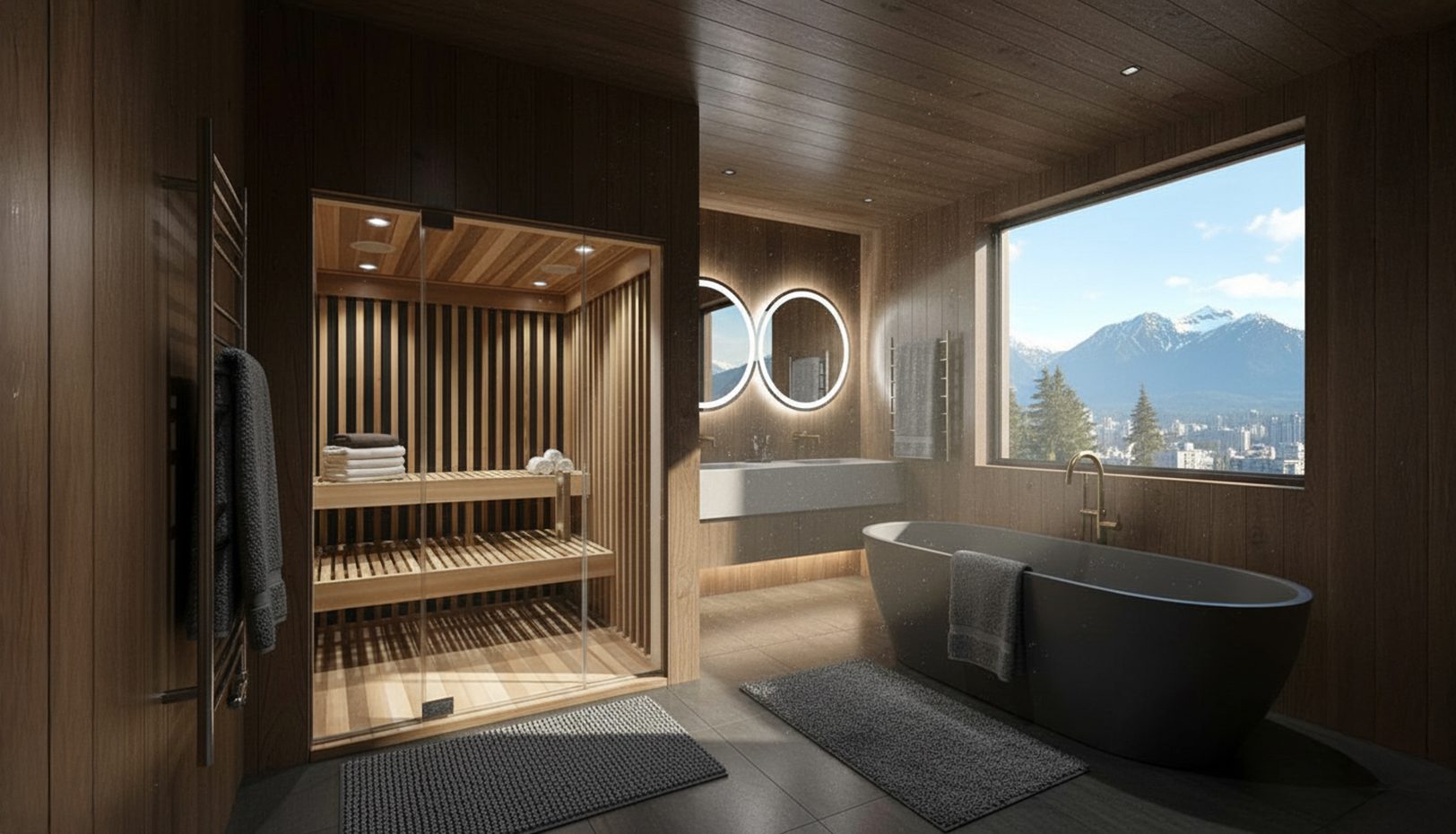
Getting High Naturally: The Complete Neurochemistry of the Infrared Sauna Euphoria (2026)
Read articleA Consistent, Calming Environment for Your Family
Custom designed for your space — controlled temperature, familiar environment, available on your schedule. The consistency of a home sauna IS the accommodation.