
What Happens After One Week of Daily Infrared Sauna Use: Day-by-Day Guide (2026)
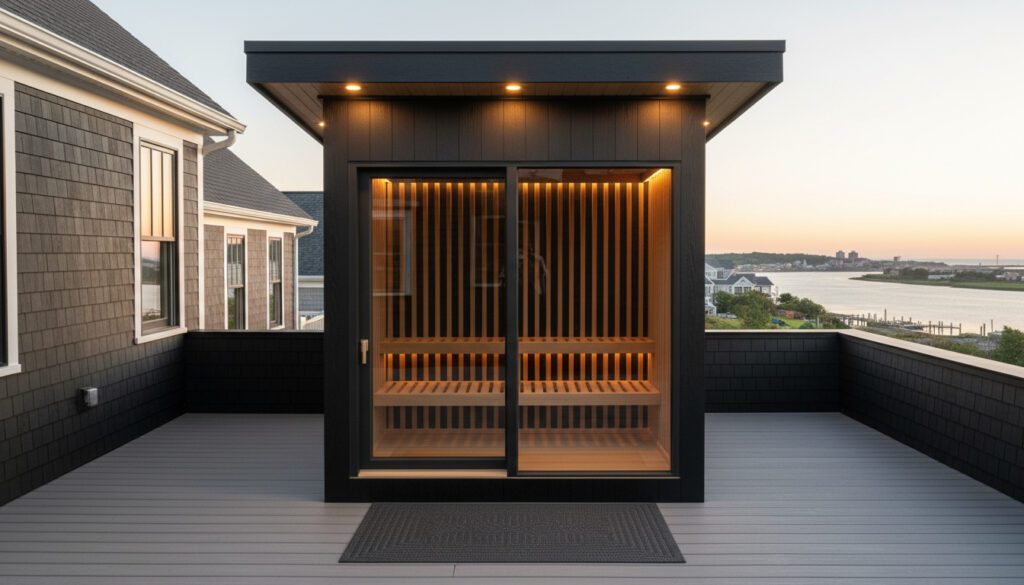
Key Takeaways
- Day 1: novel experience, moderate sweat, post-session relaxation. May feel tired later (body adjusting). Day 2-3: sweating increases, possible headache if under-hydrated, sleep improvement often noticeable. Day 4-5: mood lift becomes consistent, energy improves. Day 6-7: 'the turn' — cumulative effect becomes obvious
- Some people feel amazing after session 1. Others don't feel much for a week. Both are normal. The neurochemical adaptations (serotonin system, BDNF, cortisol baseline) take REPEATED exposure to build. Don't evaluate after one session — commit to seven
- Your body physically adapts during the first week: sweat response improves (you start sweating earlier), heart rate response decreases (same temp = less cardiovascular stress), skin adapts (less post-session redness). These are measurable signs of heat acclimation
- If you feel worse before feeling better (headache, fatigue, nausea), it's almost certainly DEHYDRATION or HEAT ADAPTATION — not 'toxins leaving your body.' The fix: drink more water, use shorter/cooler sessions. Don't suffer through symptoms based on 'detox reaction' mythology
- The realistic timeline: 1 week = sleep improvement, acute mood boost. 1 month = consistent energy, pain reduction, cardiovascular adaptation. 3 months = sustained neurochemical changes, body composition effects, full integration into daily routine
You just got your infrared sauna. You've done your first session. And maybe you're wondering: was that it? Or maybe you felt incredible and you're wondering if that keeps happening. Both are normal — and what unfolds over the next seven days is different from what you felt in session one.
Day by day: what to expect
Day 1: Everything is new. You're figuring out temperature, positioning, timing. Sweat is moderate — your body hasn't learned to sweat efficiently in this environment yet. Immediately after: a wave of relaxation, possibly some endorphin-mediated calm. An hour later: you may feel unexpectedly tired or sluggish — your body is processing an unfamiliar thermal load. Sleep that night may or may not improve immediately.
Day 2-3: Sweating increases as your thermoregulatory system begins adapting. If you get a mild headache after a session, the culprit is almost certainly dehydration — drink more next time. Your skin may feel different: softer, more flushed, a subtle 'glow' from increased circulation. Sleep improvement is often noticeable by night 2 or 3 — the parasympathetic rebound from evening sessions begins working.
Day 4-5: Sweat volume continues increasing — your body is getting better at cooling itself. The same temperature feels more manageable. Post-session mood lift becomes more consistent and more noticeable. Energy levels may start improving during the day. If you have chronic muscle tension or joint stiffness, you may notice it easing.
Day 6-7 — 'the turn': Many users report this is when the cumulative effect becomes obvious. Sleep is genuinely deeper. Mood is more stable throughout the day, not just after sessions. Pain levels feel lower. And the session itself starts to feel like something you WANT to do — a highlight of the day rather than an experiment you're testing. This is when the habit begins forming.
Physical adaptation signs
Your body is physically changing during this first week — adapting to heat exposure through measurable physiological shifts. Sweat response improves: You start sweating earlier in the session and more profusely. This means your cooling system is becoming more efficient. Heart rate response decreases: The same temperature produces less cardiovascular stress — your cardiovascular system is acclimating. Skin adapts: Less post-session redness and flushing as blood vessel reactivity normalizes. These are signs of heat acclimation — proof your body is responding.
The 'detox reaction' myth
Some users feel worse before feeling better — headache, fatigue, mild nausea in early sessions. The wellness industry calls this a 'healing crisis' or 'detox reaction,' implying toxins are leaving your body and causing temporary symptoms.
The honest assessment: these symptoms are almost always caused by DEHYDRATION and/or HEAT ADAPTATION — not toxin release. Your body is adjusting to a new thermal stressor and losing fluid it isn't replacing fast enough. The fix isn't to 'push through' — it's to drink more water, add electrolytes, and use shorter sessions at lower temperatures until your body adapts. Don't suffer through symptoms based on mythology.
What if you're not feeling much after a week?
Normal. Individual variation is enormous — genetics, body composition, fitness level, stress baseline, and sensitivity all affect the timeline. If you're not feeling much after 7 sessions: increase temperature by 5-10°F (you may not be reaching the dynorphin threshold). Extend duration by 5 minutes. Try evening sessions if you've been doing mornings (the sleep effect is often the first noticeable benefit). Ensure you're hydrating adequately. Give it another week — many people report 'the turn' happens in week 2, not week 1.
The bigger timeline: weeks, months, years
1 week: Sleep improvement, acute mood boost after sessions, initial relaxation benefits, early signs of heat acclimation. 1 month: Consistent energy improvement, measurable pain reduction, skin changes, cardiovascular adaptation (lower resting heart rate), the habit is established. 3 months: Sustained neurochemical adaptations (serotonin, BDNF, cortisol baseline), cardiovascular improvements, body composition changes, immune resilience. Years: The Laukkanen longevity data — 40-66% risk reductions across cardiovascular mortality, Alzheimer's, and all-cause death — reflects DECADES of consistent daily practice.
Frequently asked questions
Frequently Asked Questions
Individual variation. Some people feel a dramatic endorphin rush from session 1; others notice nothing until session 4-7. The neurochemical adaptations (serotonin, BDNF, cortisol) build with repeated exposure. Your body may need several sessions to reach the heat stress threshold that triggers a noticeable response. Try slightly higher temperature or longer duration, and commit to at least 7 consecutive sessions before evaluating.
Yes — very normal. Your body processed an unfamiliar thermal load, your cardiovascular system worked harder than usual, and the parasympathetic rebound after the session produces deep relaxation that can feel like fatigue. This typically resolves by days 3-4 as your body acclimates. Evening sessions can leverage this tiredness as a sleep aid.
If you can, yes — daily sessions accelerate the adaptation. If daily isn't realistic, aim for at least 4-5 sessions in the first week. The day-by-day progression described above assumes daily use. With less frequent sessions, the adaptation takes proportionally longer — but still happens.
Common in the first few sessions, but not something to ignore. The cause is almost certainly dehydration — you lost more fluid through sweat than you replaced. Fix: drink 16-24oz water 30-60 minutes BEFORE your next session (not just during or after). Add electrolytes. If headaches persist despite adequate hydration, reduce temperature and duration.
Sleep improvement is often the first noticeable benefit — many users report better sleep by night 2 or 3, especially with evening sessions (2-3 hours before bed). The thermoregulatory cooling effect promotes sleep onset, and the parasympathetic activation supports deeper sleep architecture. If sleep hasn't improved by the end of week 1, try moving your session to evening hours.
Track these markers: sleep quality (are you falling asleep faster, waking less, feeling more rested?), mood stability (are you less reactive to stress?), physical tension (are your shoulders lower, is your jaw less clenched?), energy levels (are afternoons less crashy?). The changes are often subtle and gradual — a journal entry comparing day 1 and day 7 reveals more than moment-to-moment assessment.

Founder & Lead Designer, SaunaCloud®
3,000+ custom saunas built since 2014 · Author of The Definitive Guide to Infrared Saunas · Featured in Forbes, Inc., and MSN
Chris has been designing and building custom infrared saunas since 2014. He wrote one of the first comprehensive books on infrared sauna therapy and is personally involved in every SaunaCloud build — from design consultation through delivery and beyond.
Continue Reading
Infrared Sauna Tips: Your First 30 Days and the Mistakes to Avoid (2026)
Read article
How Often Should You Use an Infrared Sauna? Research-Backed Frequency for Every Health Goal (2026)
Read article
Infrared Sauna Hydration Guide: How Much Water, Which Electrolytes, and Why It's the #1 Safety Behavior (2026)
Read articleStart Your First Week
Custom designed for daily practice from day one. VantaWave® far-infrared heaters, Western Red Cedar, built for the consistency that makes week 1 become year 1.