
Infrared Sauna FAQ: 25 Questions Answered by an Engineer With 3,000+ Builds
Key Takeaways
- Infrared saunas radiate energy absorbed directly by your body at 120-145°F instead of heating air to 180°F+. Benefits overlap with traditional saunas but the mechanisms and experience differ
- The Finnish JAMA study (2,315 men, 20 years) found 40% lower cardiovascular mortality and 65% lower Alzheimer's risk with 4-7 sessions/week — the strongest population-level evidence for any single wellness practice
- EMF varies enormously: generic panels emit 20-100+ mG, VantaWave® tests at <0.20 mG. "Low EMF" is unregulated — always ask for third-party results of the complete sauna, not just the heater panel
- Custom saunas cost $6,000-$17,000 installed but deliver engineered placement, verified components, and 15-20+ year lifespan. Prefab costs $2,000-$5,000 with 3-5 year average lifespan
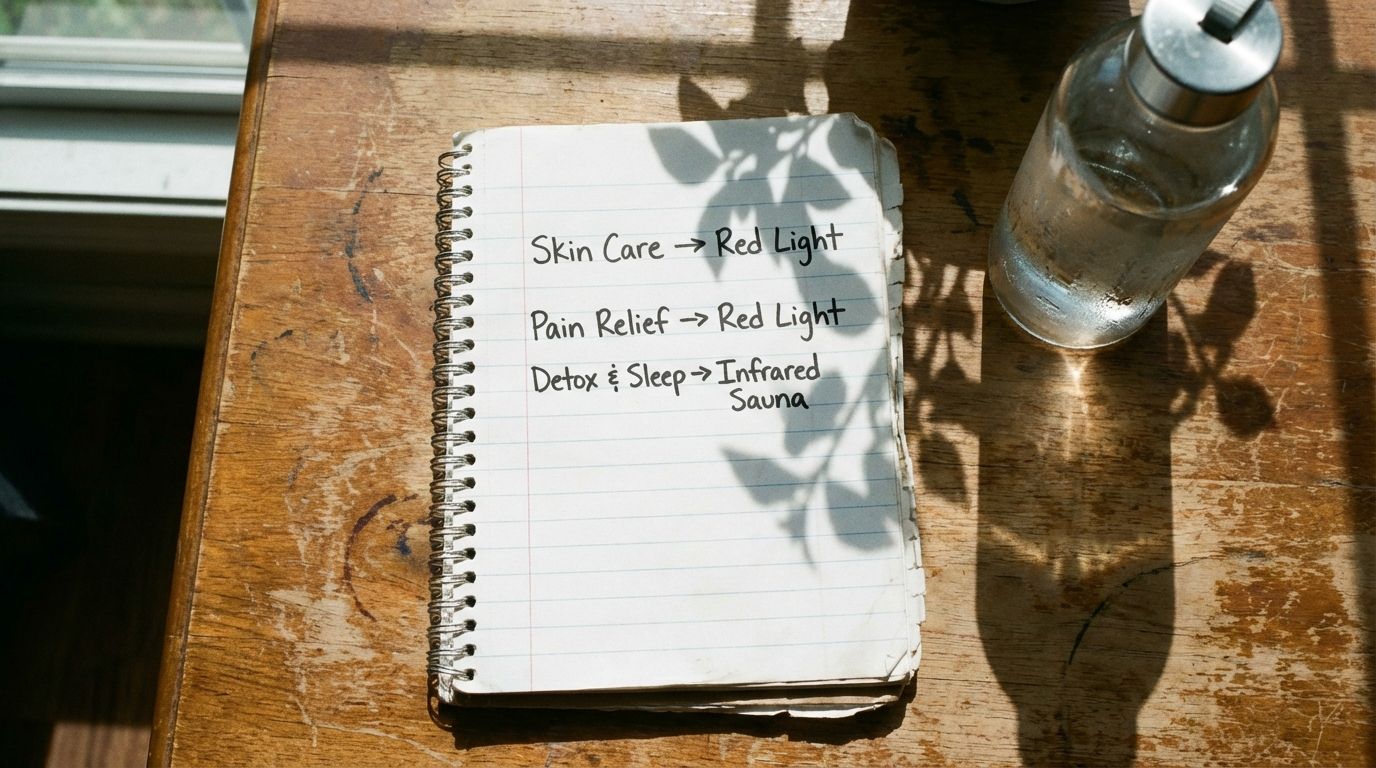
- SaunaCloud doesn't sell hybrid or "full spectrum" saunas — both are engineering compromises. We build far infrared with optional LED red light therapy at clinical proximity
After 12 years and 3,000+ custom infrared sauna builds, I've answered the same questions thousands of times — from first-time researchers who just discovered infrared therapy to engineers who want to understand the physics before committing. This FAQ covers 25 of the most common questions, organized from 'I'm curious about infrared saunas' through 'I'm ready to build one.'
Every answer is my honest take. Where the evidence is strong, I'll cite it. Where there's nuance, I'll explain it. Where the industry makes claims I think are misleading, I'll say so — including claims that competitors make AND claims that previous versions of our own marketing have made.
If your question isn't answered here, call me at 800-370-0820.
Understanding infrared saunas
Frequently Asked Questions
Traditional saunas heat air to 180-200°F, which heats your body from the outside in through convection. Infrared saunas radiate electromagnetic energy in the far-infrared spectrum (7-12 microns) that passes through air and is absorbed directly by your body, raising core temperature from the inside out at lower ambient temperatures (120-145°F). The experience is different: traditional feels like intense environmental heat, infrared feels like deep warmth radiating through your body. Both produce profuse sweating and cardiovascular stress that drives health benefits. A 2025 Oregon study found traditional saunas produce greater acute core temperature elevation, while infrared's advantage is sustained, comfortable exposure for longer sessions. <a href="/a-comparison-of-infrared-saunas-versus-traditional-saunas-the-definitive-2026-guide/">Full comparison →</a>
The strongest evidence comes from the Finnish Kuopio study (JAMA Internal Medicine, 2015) — 2,315 men followed for 20 years. 4-7 sauna sessions per week: 40% lower cardiovascular mortality, 65% lower Alzheimer's risk, 24% lower all-cause mortality. This is observational data from traditional saunas, not a controlled trial of infrared specifically. Infrared-specific research includes smaller clinical trials: chronic pain (Fedorchenko 2025 review), depression (Mason 2024 — 86% MDD remission with CBT), blood pressure reduction, and sleep quality (Putkonen — 70% increase in deep sleep). The honest answer: population-level evidence is strong for regular heat therapy broadly. Infrared-specific evidence is growing but consists mostly of smaller trials. The proposed mechanisms (heat shock proteins, nitric oxide, autonomic modulation) are biologically plausible. <a href="/the-ultimate-guide-to-far-infrared-sauna-health-benefits/">Complete benefits guide →</a>
Yes, for the vast majority of healthy adults. Key contraindications: unstable cardiovascular disease, pregnancy, active fever, multiple sclerosis (heat sensitivity), and medications that impair thermoregulation. Alcohol before or during a session is dangerous. The most common adverse effect is dehydration — drink 16-32 oz water before and during every session. The honest nuance: infrared saunas operate at lower temperatures than traditional, which makes them more tolerable, but they still raise core temperature significantly. "Lower temperature" doesn't mean "no physiological stress" — the stress IS the mechanism that produces benefits. <a href="/are-infrared-saunas-safe/">Full safety guide →</a>
First 5-10 minutes feel like gentle warmth — you'll question whether it's doing anything. Around 10-15 minutes, your heart rate increases and warmth deepens. By 15-20 minutes, you're sweating freely. The sweat feels different from exercise sweat — less salty, more profuse, often described as a 'deeper' sweat. The air at 120-145°F feels warm but not overwhelming (unlike 180°F+ traditional that hits you immediately). You WILL sweat — some people take 2-3 sessions to 'calibrate' as your sweating response adapts, but by session 3-4, virtually everyone sweats heavily.
EMF is produced by all electrical devices including infrared heaters. The question is whether levels exceed safety thresholds. The EPA recommends below 3 mG. Generic carbon panels typically emit 20-100+ mG. VantaWave® heaters test at <0.20 mG at the seated position. "Low EMF" is an UNREGULATED marketing claim — any company can say it. The critical question: can they provide third-party test results of the COMPLETE sauna (not just the heater panel)? Testing just the panel ignores the power supply — often the biggest EMF emitter — which sits under the bench in many prefab saunas. If a company can't provide full-system data, that tells you everything. <a href="/infrared-sauna-heater-comparison/">EMF comparison →</a>
"Full spectrum" implies near, mid, and far infrared from one heater system. The physics don't support this. Wien's Law determines peak wavelength by temperature: a carbon heater at 150-200°F emits far infrared (~8-10μm). Mid-infrared requires ~600°F. Near-infrared requires ~2,000°F+. No single heater spans this range. SaunaCloud stopped using "full spectrum" years ago because we refuse to make claims that violate thermodynamics. Instead: far infrared from VantaWave® heaters (the therapeutic workhorse) plus optional LED-based red light at 660nm/850nm for genuine near-infrared cellular benefits — two separate, honest technologies. <a href="/full-spectrum-infrared-sauna-guide/">Full spectrum truth →</a>
Yes — but not the way most marketing claims suggest. The claim that "infrared sweat contains 20% toxins vs 3% from traditional" is unsupported by current evidence — we removed it from our own site. What IS supported: the 2011 BUS study showed toxins in sweat that don't appear in blood or urine. A 2023 wIRA study found mercury 34.8x higher and arsenic 18x higher in infrared sweat vs exercise sweat. These are legitimate findings. But "detox" has been so overused that reasonable people are skeptical — and they should be. The honest answer: regular use supports your body's natural elimination pathways. It's not a miracle cleanse. It's a genuine, research-supported complement to overall health strategy. <a href="/the-ultimate-guide-to-far-infrared-sauna-health-benefits-detoxification/">Detox guide →</a>
Comparing and choosing
Frequently Asked Questions
Depends on what you value. Prefab: faster (hours), cheaper ($2,000-$5,000), no contractor. If standard sizes fit and you accept the manufacturer's engineering choices, prefab can be fine. Custom: fits your exact space, engineered heater placement (Atlas™ 360° coverage), VantaWave® verified specs, red light at clinical proximity, Western Red Cedar, 7-year warranty, direct support. The real question: are you buying to check a box, or investing in a daily-use therapeutic tool for 15-20 years? The per-session cost difference over thousands of sessions is pennies — but the therapeutic difference is significant every session. <a href="/the-only-custom-infrared-sauna-buying-guide-youll-ever-need/">Buying guide →</a>
You can — and for some people it's the right choice to try infrared with minimal commitment. Where budget saunas fall short: heaters on 1-2 walls (30% body coverage vs 85-95% with engineered placement), materials that off-gas at temperature (plywood backs, synthetic adhesives), higher EMF, and 3-5 year lifespan before electrical components fail. If you buy a $1,500 sauna and replace it every 4 years, you've spent $6,000 over 16 years on three progressively disappointing products. A $6,000 custom build lasts 15-20+ years and delivers better therapeutic results every session.
Because we can't engineer a hybrid that meets our standards. Traditional operates at 180-200°F with high humidity. Infrared operates at 120-145°F dry. Combining them compromises both: traditional heat interferes with infrared precision, humidity accelerates corrosion of electronics, and the warranty framework becomes ambiguous. Some companies sell hybrids because the market asks. We don't because we can't stand behind the engineering. Want traditional? Buy a good traditional sauna. Want infrared therapy? Build a proper infrared sauna. One box can't do both well.
Total installed: typically $6,000-$17,000. Kit ($5,000-$15,000+ depending on size, model, red light), contractor labor ($500-$2,000 for 1-3 days), electrician ($200-$800). The range is wide because a 1-person closet conversion differs from a 6-person Sierra with full red light. During the free consultation, we provide an exact quote. No hidden costs — kit includes all components and plans. <a href="/the-ultimate-guide-to-building-your-own-custom-infrared-sauna/">Build guide →</a>
Atlas: our standard custom model — VantaWave® heaters, CORE 5™, Western Red Cedar, full customization. What 80% of customers choose. Sierra: same therapeutic platform, elevated aesthetics — exotic wood options, premium hardware, upgraded bench. For people who want a design statement. Atlas One: compact, lower-entry model for smaller spaces, runs on 120V standard outlet. Right for first saunas or space-constrained installations. <a href="/atlas/">Atlas →</a> · <a href="/sierra/">Sierra →</a> · <a href="/atlas-one-red-light-infrared-sauna/">Atlas One →</a>
8-12 weeks total. Weeks 1-2: Design consultation — photos, measurements, goals, custom plans. Weeks 3-10: Kit fabrication — every heater tested for wavelength and EMF before shipping. Weeks 10-12: Contractor installation (1-3 days) + electrician. Phone and video support throughout. The longest phase is fabrication — these aren't pulled from a shelf. Each kit is manufactured for your specific build.
SaunaCloud does not provide installation services. You hire your own contractor and licensed electrician. We provide: detailed architectural plans with exact heater coordinates, framing specs, insulation requirements, cedar sequence, electrical diagrams, and phone/video support. This keeps costs lower (no travel fees), lets you use someone you trust, and means your contractor is local for future needs. Plans are detailed enough for a competent GC without prior sauna experience. We've supported 3,000+ installations this way.
Building and installation
Frequently Asked Questions
Yes — closet conversions are one of our most common installations. Minimum 4×4 feet interior for 1 person, 5×5 for 2 people. Ceiling 7-8 feet. Need access to electrical panel for a dedicated circuit. No plumbing, no ventilation, no floor drain required. We've built in closets, bathroom corners, garages, basements, master bedroom alcoves, outdoor structures, and one converted pantry. If you have the square footage and electrical access, it can almost certainly work — send measurements and we'll confirm within 24 hours.
Depends on your municipality. Most require an electrical permit for a new dedicated circuit (your electrician handles this). Some require a building permit for structural modifications. Closet conversions within existing walls often don't require one. Outdoor structures may, depending on size and setbacks. Always check with your local building department. If your inspector questions the installation, our code expert Chad speaks with them directly. Custom infrared saunas fall under NEC Article 424 (Fixed Electric Space Heating), not Article 422 (Appliances) — the classification question that comes up most.
Small builds (Atlas One, 1-2 person): 120V/20A dedicated circuit. Larger Atlas and Sierra: 240V/30A or 50A dedicated circuit. 'Dedicated' means nothing else on that circuit. Licensed electrician required — non-negotiable. Cost: $200-$800. We provide complete wiring diagrams. The electrician connects the main feed to the CORE 5™ power supply, which handles all downstream distribution to heater zones.
Clear-grade, kiln-dried Western Red Cedar only. Naturally antimicrobial, dimensionally stable through thousands of heat cycles, aromatic, comfortable. Hemlock is what mass-market uses because it's 40% cheaper — not because it performs. No antimicrobial properties, warps more. Basswood too soft. Poplar splits. Plywood is dangerous — adhesives off-gas formaldehyde when heated. You're building a health tool. Never seal or stain interior cedar. <a href="/is-cedar-wood-safe-for-infrared-saunas/">Cedar safety guide →</a>
DIY electrical — by far. I've seen house fires, insurance-voiding violations, and heaters that never reach therapeutic temperature. Second: omitting foil-faced insulation. Without it, infrared radiates through your walls — heat-up takes 35-45 min instead of 12-18, therapeutic intensity drops every session. The foil upgrade costs $150 during construction. Tearing out walls to fix it: $2,500-$4,000. <a href="/the-ultimate-guide-to-building-your-own-custom-infrared-sauna/">Complete build guide →</a>
Daily use and maintenance
Frequently Asked Questions
The Finnish longevity data is based on 4-7 sessions per week — the range associated with 40% lower cardiovascular mortality and 65% lower Alzheimer's risk. Daily use (5-7 sessions) is the goal. Each session 25-40 minutes at 130-145°F. No evidence of diminishing returns — the data suggests the opposite: more frequency = stronger outcomes. This is why location convenience matters when planning. If using it requires going to the basement through the garage, you'll skip sessions. Bedroom closet or bathroom? You'll use it daily. Compliance is everything.
130-145°F for 25-40 minutes. Core temperature needs to rise above ~101°F (38.5°C) to activate heat shock protein production — the cellular repair mechanism behind most benefits. At 130-145°F ambient, most people cross this at 15-20 minutes. The remaining 10-20 minutes is where the primary therapeutic work happens. Higher isn't necessarily better — 120-145°F allows comfortable, sustained sessions. If you can't stay 25 minutes because it's too hot, temperature is too high and you're reducing therapeutic time.
A typical 2-person SaunaCloud sauna uses 1,500-3,000 watts per session. At national average rates (~$0.16/kWh), a 30-minute daily session costs approximately $0.12-$0.24 per day, or $3.60-$7.20 per month. Compare that to a single session at a commercial studio ($25-$60). Your home sauna pays for its electricity in the first session of the month.
Minimal maintenance. After each session: wipe bench and sweat surfaces with a damp cloth. Weekly: leave door open 15-20 minutes after last session for air circulation. Monthly: wipe cedar with water and white vinegar if desired. Annually: inspect electrical connections, verify heater hardware. Never use chemical cleaners, bleach, or solvents on cedar — they damage the wood and off-gas when heated. Cedar's natural antimicrobial properties handle the hygiene.
A well-built custom sauna in the right location (master suite, wellness room) is increasingly viewed as a premium home feature, like a wine cellar or home theater. In luxury and wellness-conscious markets, it's a genuine differentiator. However, appraisers vary — some treat it as premium, others as personal preference. The more honest answer: build it for your health, not resale value. Daily use for 10+ years justifies the investment many times over through health benefits alone. Resale value is a bonus.
If it's a SaunaCloud sauna, absolutely — we support our builds for life. If it's prefab from another manufacturer, usually it's more cost-effective to replace than repair. Most prefab failures involve the power supply or control board, which are proprietary. If that manufacturer is out of business (common in the low-end market), replacement parts don't exist. Heater panels from one brand aren't compatible with another's controller. In most 'can you fix it?' situations, reverse-engineering a failed proprietary system costs nearly as much as a new build with components engineered to last.
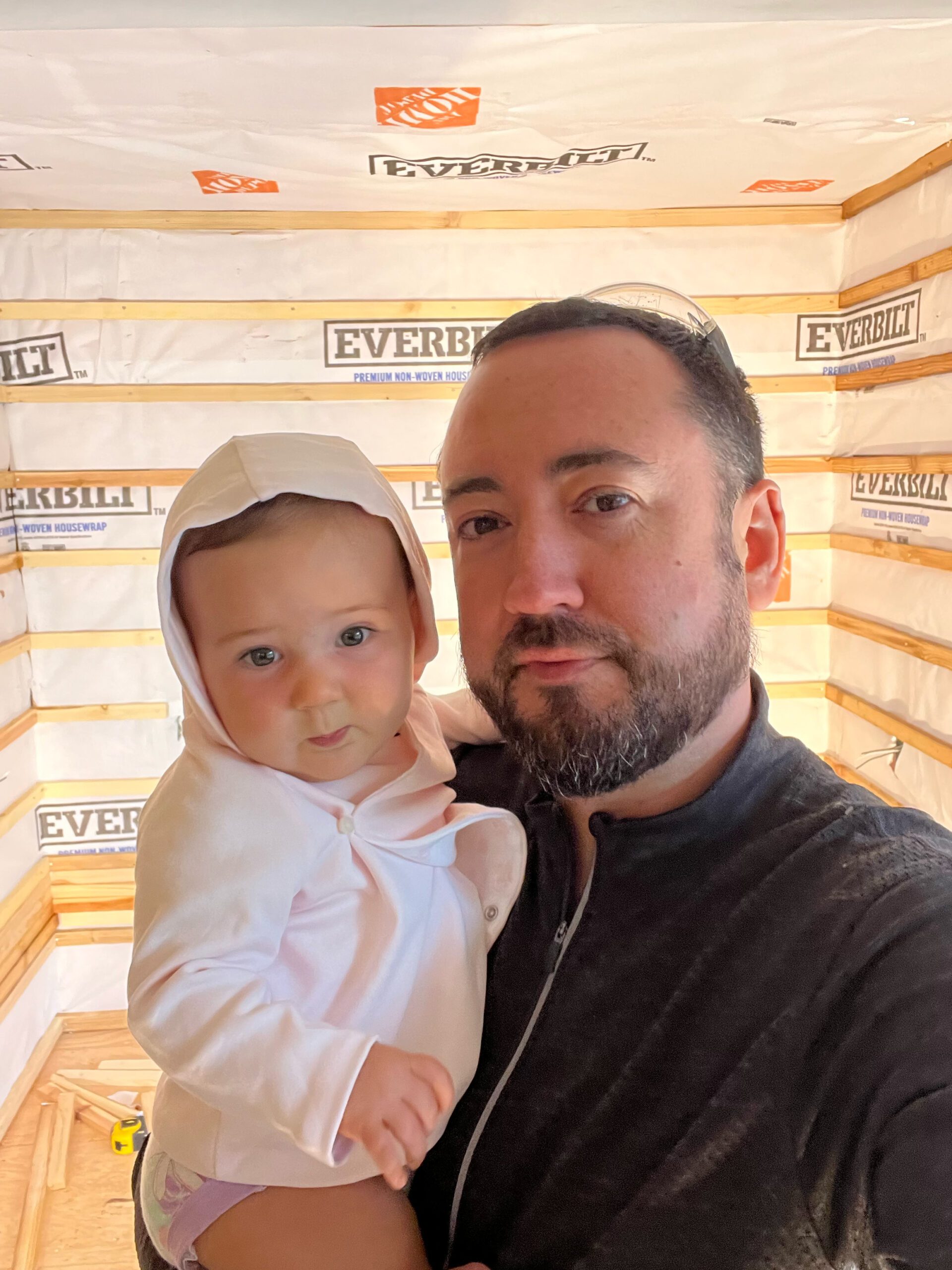
Founder & Lead Designer, SaunaCloud®
3,000+ custom saunas built since 2014 · Author of The Definitive Guide to Infrared Saunas · Featured in Forbes, Inc., and MSN
Chris has been designing and building custom infrared saunas since 2014. He wrote one of the first comprehensive books on infrared sauna therapy and is personally involved in every SaunaCloud build — from design consultation through delivery and beyond.
Continue Reading
Infrared Sauna Health Benefits: The Complete Science-Backed Guide (2026)
Read article
Are Infrared Saunas Safe? The Evidence-Based Answer (2026)
Read articleInfrared Sauna vs Traditional Sauna: The Honest Comparison (2026)
Read articleStill Have Questions?
Call Christopher directly at 800-370-0820 — or book a free design consultation. No pressure, just expertise.