
Infrared Sauna Tips: Your First 30 Days and the Mistakes to Avoid (2026)
Key Takeaways
- The first 3-5 sessions may not feel amazing. Your body is acclimating to heat stress — the dynorphin response produces discomfort before the endorphin payoff arrives. If you quit after 2 sessions because it 'wasn't relaxing,' you missed the adaptation period. Give it 2 weeks before evaluating
- Structure your first month in three phases: Week 1 (acclimation: 110-120°F, 15 min, 2-3x/week), Weeks 2-3 (building: 120-140°F, 20-30 min, 3-4x/week), Week 4+ (optimization: 130-150°F, 25-40 min, 4-5x/week). The progression matters more than jumping to the 'ideal' protocol on day one
- Not hydrating enough is the #1 mistake in 3,000+ installations. Drink 16-24oz water 30-60 minutes before, sip during, and replenish with electrolytes after. Most headaches, nausea, and 'bad sauna experiences' trace back to inadequate hydration
- What you do AFTER your session matters as much as the session itself. Stay seated 2-3 minutes before standing (prevents dizziness). Cool shower. Electrolytes. Then 15-30 minutes of rest — this parasympathetic rebound window is where the deepest relaxation and mood benefit occurs. Don't rush to the next activity
- Leave your phone outside. The enforced digital disconnection is one of the most valuable aspects of daily sauna practice — and checking your phone constantly undermines the mental health benefits that many users end up valuing most
You just got your infrared sauna. Or you're about to. Here's what 12 years and 3,000+ installations have taught us about how to start — including the honest truth that the first few sessions might not blow your mind. They will. Just not yet.
Your first 30 days: the three-phase progression
Week 1 — Acclimation (learning what heat feels like): Temperature: 110-120°F. Duration: 15 minutes maximum. Frequency: 2-3 sessions. Your body is learning to manage heat. You probably won't sweat much. You probably won't feel dramatically different afterward. That's normal. The neurochemical adaptation is beginning beneath the surface.
Weeks 2-3 — Building (the adaptation kicks in): Temperature: 120-140°F. Duration: 20-30 minutes. Frequency: 3-4 sessions per week. You'll start sweating earlier and more profusely. The post-session mood lift becomes noticeable. Sleep may improve. You're building heat tolerance AND the nervous system training that produces long-term benefits.
Week 4+ — Optimization (your practice): Temperature: 130-150°F (your personal sweet spot). Duration: 25-40 minutes. Frequency: 4-5+ sessions per week. This is where sauna shifts from 'something you do' to 'something you need.' The cumulative cardiovascular, neurochemical, and autonomic benefits are building. Most people who reach this phase report sauna as one of the most valuable daily habits they've ever built.
The pre-session checklist
Before every session: Drink 16-24oz water (30-60 min before — not right as you enter). Avoid alcohol for 4+ hours prior. Eat a light meal 2+ hours before — don't sauna on a completely empty or completely full stomach. Set your timer (start conservative — you can always go longer next time). Prepare post-session water and electrolytes so they're ready when you step out. Place a towel on the bench to sit on, and have a second for wiping sweat.
During your session
Do: Sit upright or reclined — whichever is comfortable. Sip water if thirsty. Practice mindfulness or simply sit with your thoughts. Read a book. Listen to music or a podcast. Pay attention to how your body feels — the warmth progression, the onset of sweating, the deep muscle relaxation.
Don't: Scroll your phone (the heat isn't great for it, and the digital disconnection is half the benefit). Push through genuine distress (discomfort is productive; dizziness/nausea means exit). Compare your session to someone else's temperature or duration. Fall asleep (rare, but set a timer as backup).
The post-session protocol
Step 1: Stay seated for 2-3 minutes after turning off the sauna. Your blood pressure is lower than normal from vasodilation — standing up quickly can cause dizziness. Step 2: Cool shower — gradual cooling, not ice-cold shock (unless you're doing contrast therapy). Step 3: Rehydrate with water plus electrolytes — sodium, potassium, magnesium. Not just plain water.
Step 4 (the one most people skip): Rest for 15-30 minutes. Don't immediately jump into the next activity. The parasympathetic rebound — the deep calm, the mood lift, the theta brainwaves — peaks in this window. Rushing to your phone or your to-do list cuts this benefit short. Sit. Breathe. This quiet period IS the therapy.
The 10 common mistakes (from 3,000+ installations)
1. Not hydrating enough — the #1 mistake. Most headaches and nausea after sauna = dehydration. 2. Starting too hot, too long — leads to a bad first experience. Start conservative. 3. Expecting it to feel like a traditional sauna — lower air temp, different heat sensation. The warmth builds from the inside. 4. Evaluating after one session — benefits compound over weeks. Commit to 2 weeks before judging. 5. Checking phone constantly — undermines the mental health benefits.
6. Skipping the post-session rest — the parasympathetic rebound is where the deepest benefit occurs. 7. Drinking alcohol before sauna — dehydration, impaired thermoregulation, arrhythmia risk. 8. Not replacing electrolytes — water alone doesn't replace what you sweat out. 9. Sauna in a cold garage without insulation — the unit can't reach target temperature. 10. Inconsistency — 1x/week provides minimal benefit. The Laukkanen data shows 4-7x/week for maximum effect.
Christopher's daily routine (12 years running)
I sauna every evening, about 2-3 hours before bed. 140°F for 30-35 minutes. I leave my phone in another room — non-negotiable. Sometimes I listen to music. Sometimes I sit in silence. Increasingly, the silence is what I choose. After 12 years, the sauna high isn't a novelty — it's a daily practice I rely on for sleep, stress management, and mental clarity. The sessions where I don't feel like going in are usually the ones I need most.
My routine has evolved over the years — shorter sessions when I started, higher temperatures as I acclimated, and increasingly focused on the post-session rest period as I learned that's where the deepest benefit lives. The biggest change: I stopped trying to optimize and started just showing up consistently. Consistency beats intensity every time.
Frequently asked questions
Frequently Asked Questions
Your body hasn't acclimated to heat stress yet. Sweating is a trained thermoregulatory response — it improves with exposure. By week 2-3, most people notice significantly more sweating. Some individuals with different genetics or fitness levels sweat less regardless. The sweat itself isn't the therapeutic mechanism — core temperature elevation is. Don't judge effectiveness by sweat volume.
As little as comfortable. A towel or light shorts work well. Synthetic fabrics can get uncomfortably hot. Avoid heavy clothing that prevents the infrared from reaching your skin. Sit on a towel to absorb sweat and protect the bench surface.
Light meal 2+ hours before — not fasting (your liver needs fuel), not full (digestion diverts blood from skin, making thermoregulation less efficient). After: light snack with mineral-rich foods (Brazil nuts, pumpkin seeds, dark chocolate) plus electrolytes. See our sauna nutrition guide for complete pre/during/post food recommendations.
Productive discomfort: warmth, sweating, elevated heart rate, the urge to leave (dynorphin — this is normal). Overdoing it: dizziness, nausea, confusion, extreme headache, cessation of sweating while still in heat, heart pounding uncomfortably. If any of the 'overdoing it' signs appear, exit immediately. The line between productive and excessive is individual — learn yours gradually.
Evening (2-3 hours before bed) optimizes sleep benefits — the thermoregulatory cooling effect promotes sleep onset. Morning provides energy and focus for the day. Both work for cardiovascular, immune, and mood benefits. Choose based on your schedule and what you need most. The best time is the time you'll consistently show up.
Acute mood lift: many people feel this from the first session (endorphin release). Improved sleep: often within the first week of consistent evening sessions. Sustained mood improvement and stress resilience: 2-4 weeks. Cardiovascular and longevity benefits: these compound over months and years — the Laukkanen data reflects 20+ years of practice. Commit to 30 days before evaluating whether sauna is 'working.'

Founder & Lead Designer, SaunaCloud®
3,000+ custom saunas built since 2014 · Author of The Definitive Guide to Infrared Saunas · Featured in Forbes, Inc., and MSN
Chris has been designing and building custom infrared saunas since 2014. He wrote one of the first comprehensive books on infrared sauna therapy and is personally involved in every SaunaCloud build — from design consultation through delivery and beyond.
Continue Reading
How Often Should You Use an Infrared Sauna? Research-Backed Frequency for Every Health Goal (2026)
Read article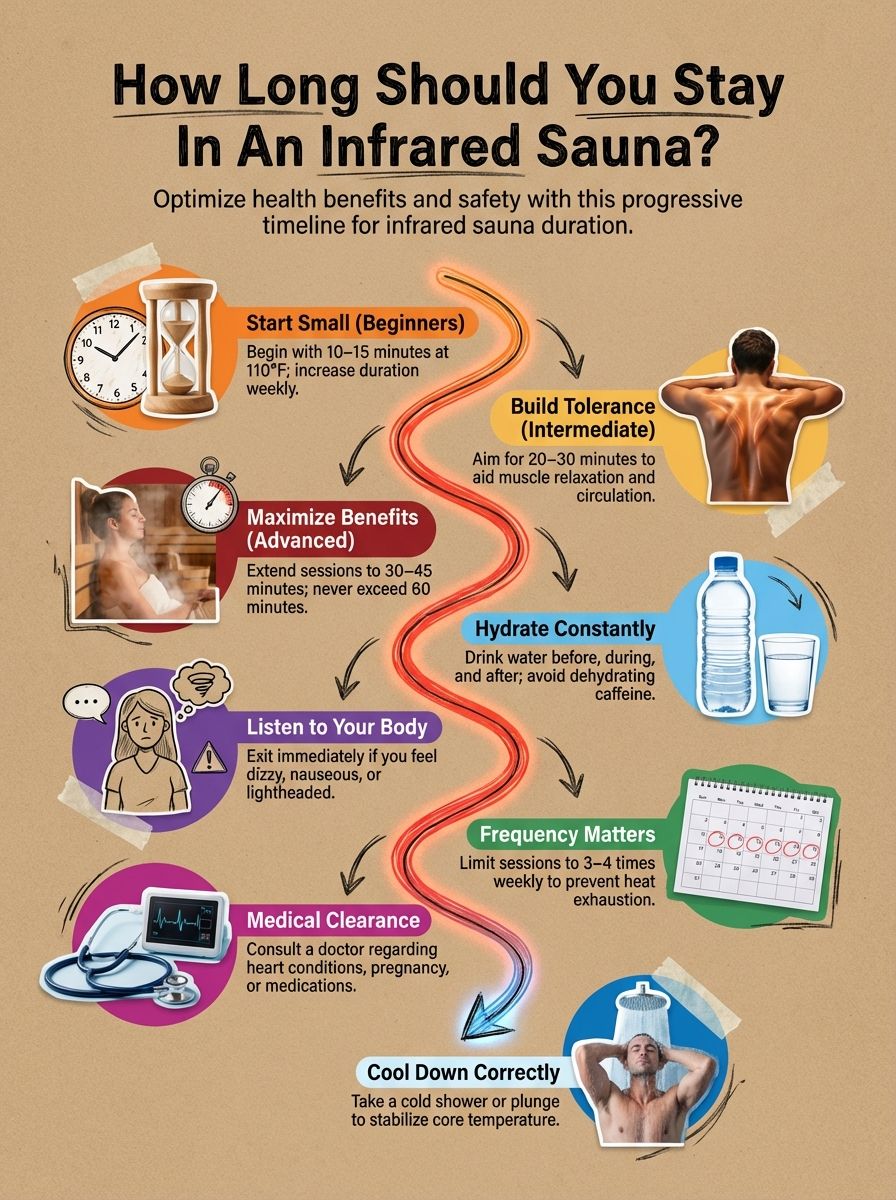
How Long Should You Stay in an Infrared Sauna?
Read article
How Infrared Saunas Work: From Photon to Health Effect in Five Steps (2026)
Read articleStart Your Practice With a Sauna Built for Daily Use
Custom designed for your space, engineered for consistency. The best tip we can give: show up every day. Your sauna should make that easy.