
Infrared Sauna and Wound Healing: Two Mechanisms, Two Technologies, One Session (2026)
Key Takeaways
- FIR promotes wound healing through Notch1 signaling activation (Hsu 2017, J Mol Med) — a direct cellular mechanism beyond just 'improved circulation'
- TWO different mechanisms: HEAT-mediated (FIR → vasodilation, Notch1, inflammation) and LIGHT-mediated (PBM → mitochondrial ATP, collagen synthesis, angiogenesis). Most companies conflate them
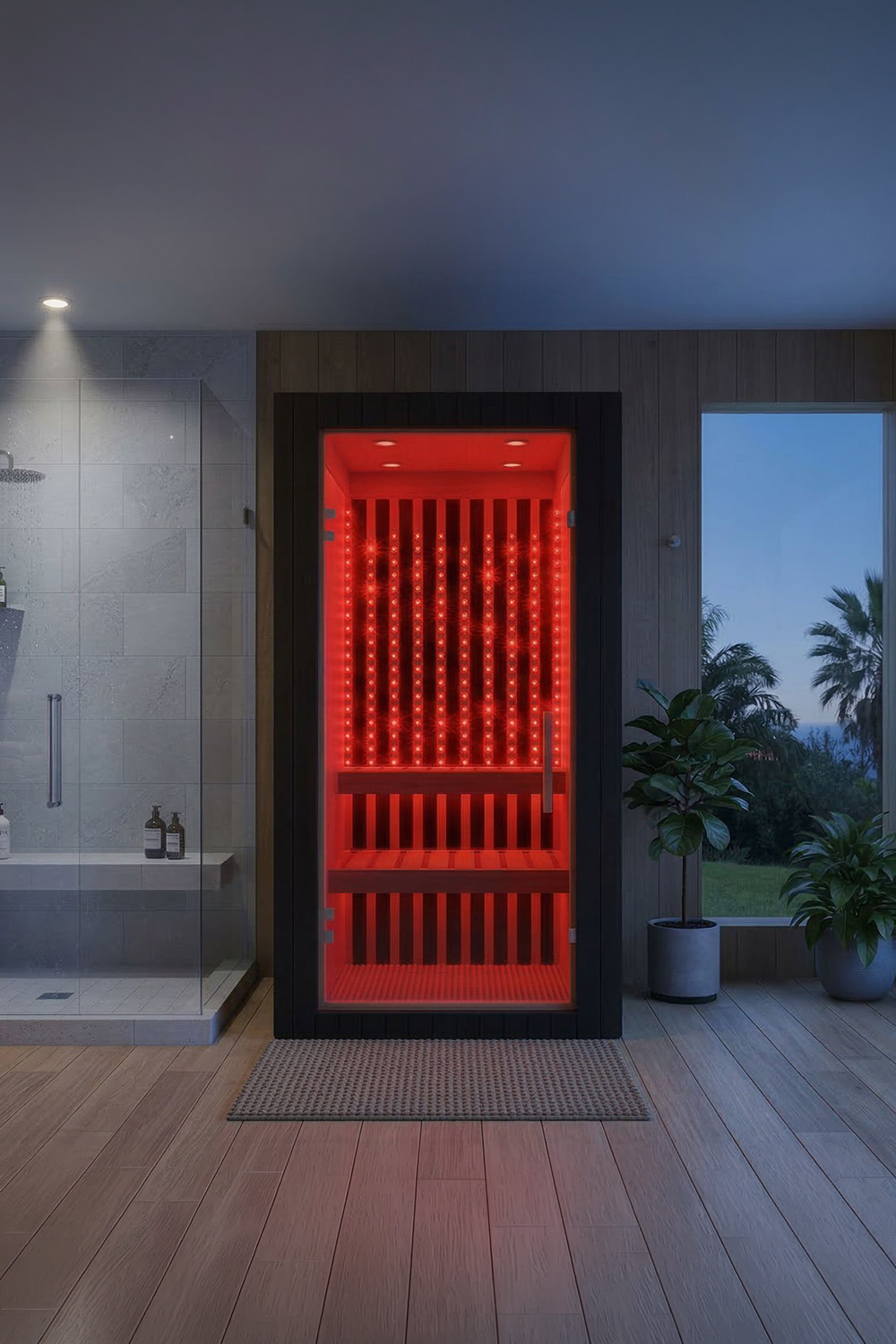
- SaunaCloud integrates both: FIR heat for systemic circulation/inflammation + PBM LEDs at 660/850nm for direct cellular repair energy
- Post-surgical: do NOT sauna with open wounds (infection risk). Wait for closure (2-4 weeks). ALWAYS clear with your surgeon first
- Pre-surgical 'prehabilitation' — 2-4 weeks daily sauna before surgery to optimize circulation, HSP levels, and inflammatory status — is an emerging concept
There are two completely different ways infrared wavelengths accelerate wound healing — and most sauna companies conflate them into one vague 'infrared helps healing' claim.
Mechanism 1 — HEAT-mediated (what the sauna does): Far infrared heats tissues → vasodilation → dramatically increased blood flow → oxygen and nutrient delivery to wound sites → inflammation modulation → and specifically, Notch1 signaling pathway activation (Hsu 2017, J Mol Med), a direct cellular mechanism that promotes wound repair.
Mechanism 2 — LIGHT-mediated (what red light therapy does): Photons at 660nm/850nm are absorbed by cytochrome c oxidase in mitochondria → ATP production increases → cellular energy for repair → fibroblast stimulation → collagen synthesis → angiogenesis (new blood vessel formation). This is photobiomodulation (PBM) — a completely different biological pathway from heat.
SaunaCloud provides both: VantaWave® far-infrared heaters (Mechanism 1) + optional bench-integrated LED panels at 660/850nm (Mechanism 2). Both mechanisms in every session.
The four phases of wound healing — where each mechanism helps
Phase 1 — Hemostasis (seconds to hours): Blood clotting, initial wound closure. Neither FIR nor PBM is relevant here — this is the body's immediate emergency response.
Phase 2 — Inflammation (days 1-7): Immune cells arrive to clean the wound and prevent infection. FIR helps: reduces excessive inflammatory signaling (TNF-α, CRP down; IL-10 up), preventing inflammation from becoming chronic. PBM helps: reduces localized inflammation through NF-κB modulation.
Phase 3 — Proliferation (days 4-21): New tissue forms — fibroblasts produce collagen, blood vessels grow (angiogenesis). FIR helps: increased blood flow delivers raw materials. Notch1 activation promotes cell proliferation. PBM helps: ATP energy drives fibroblast activity, collagen synthesis, and angiogenesis. THIS is where PBM adds the most value.
Phase 4 — Remodeling (weeks to months): Collagen matures, scar tissue strengthens. FIR helps: TGF-β/TIMP1 pathways support collagen maintenance (build new, protect existing). PBM helps: continued cellular energy supports collagen remodeling. HSPs from regular heat exposure maintain protein quality control during this phase.
The Notch1 study: far infrared does more than 'increase blood flow'
Hsu et al. 2017 (Journal of Molecular Medicine): 'Far infrared promotes wound healing through activation of Notch1 signaling.' This study demonstrated that far infrared radiation directly activates a specific cellular signaling pathway — Notch1 — that promotes wound repair at the molecular level. This isn't just 'more blood gets to the wound' (though that matters). It's a direct cellular instruction: 'repair this tissue.'
This is the strongest FIR-specific wound healing evidence and the reason infrared sauna has a mechanistic basis for wound healing beyond the general circulation argument.
Post-surgical timing: when it's safe to start (CRITICAL)
Do NOT sauna with open, unhealed surgical wounds. Heat increases blood flow to the wound site — which is beneficial for CLOSED wounds but creates infection risk for OPEN wounds. Warm, moist, bacteria-friendly environments are the opposite of what an open surgical wound needs.
Timeline: Wait for wound closure — typically 2-4 weeks depending on the procedure. Signs you're ready: all stitches/staples removed, no drainage, wound edges fully sealed, no signs of infection. ALWAYS get explicit clearance from your surgeon before starting sauna use.
Particularly beneficial after: joint replacement (inflammation management + mobility support), abdominal surgery (systemic recovery acceleration), cosmetic procedures (collagen remodeling support — many plastic surgeons are sauna-friendly post-healing). Extra caution: cardiac surgery (discuss with cardiologist), thoracic surgery (respiratory considerations).
Pre-surgical prehabilitation: optimize healing before the cut
Emerging concept: 2-4 weeks of daily sauna before scheduled surgery to optimize your body's healing capacity. The goal: elevate baseline HSP levels (cellular resilience), improve baseline circulation (nutrient delivery capacity), reduce systemic inflammation (CRP, TNF-α) pre-operatively, and improve sleep quality (recovery foundation).
Frame this as complementary to standard surgical preparation — not instead of your surgeon's pre-op instructions. Some progressive surgeons are already incorporating heat therapy into prehabilitation protocols alongside exercise and nutrition optimization.
Diabetic wound healing: where both mechanisms matter most
Diabetic patients have impaired healing from three directions: poor circulation (limits nutrient delivery), neuropathy (can't feel damage or overheating), and immune dysfunction (impaired infection control). FIR addresses circulation directly (vasodilation, nitric oxide). PBM addresses cellular energy deficit (ATP for repair). Combined: the most comprehensive approach for a population with the most healing challenges.
Extra caution: monitor blood sugar before/after sessions. Check skin carefully post-session (neuropathy means you can't feel burns). Start at lower temperatures (120°F) and shorter durations.
Athletic injury recovery
Muscle strains, ligament sprains, post-workout DOMS. Ahokas 2025: post-exercise infrared sauna enhanced neuromuscular performance recovery. The mechanism: reduced inflammation at the injury site, increased blood flow for nutrient delivery, endorphin release for pain management, and HSP activation for protein repair.
Timing: sauna AFTER exercise, not before (dehydration from a sauna session before intense training impairs performance). For acute injuries: wait 24-48 hours for initial inflammation to peak, then begin sauna therapy for the recovery phase.
Frequently Asked Questions
After wound closure — typically 2-4 weeks depending on procedure. All stitches/staples must be removed, no drainage, wound edges fully sealed. ALWAYS get explicit clearance from your surgeon. Starting too early with an open wound creates infection risk.
Both mechanisms contribute: FIR supports collagen remodeling through circulation and TGF-β/TIMP1 pathways. PBM at 660nm has stronger evidence for scar tissue remodeling specifically — accelerating collagen maturation and improving scar appearance over 6-12 weeks. Combined is more effective than either alone.
NO. Wait until stitches are completely removed AND the wound is fully sealed. Sutures hold tissue together but don't prevent bacteria from entering a wound track. Heat + moisture + open wound = infection risk.
Different mechanisms. HBOT increases dissolved oxygen in blood plasma under pressure. Infrared sauna increases blood FLOW (delivering more oxygen-carrying blood) + activates cellular signaling (Notch1). They're potentially complementary — some wound care centers use both. Infrared is more accessible for home daily use.
Yes — infrared penetrates 3-4cm into tissue (reaching muscle, joint capsule) vs surface-only conduction from a heating pad. Infrared also triggers systemic responses (cardiovascular conditioning, endorphin release, HSP activation) that a local heating pad can't. And you get both sides of the injury treated simultaneously in a full-surround sauna.
Acute inflammation reduction: within days. Tissue repair acceleration: over 2-4 weeks of consistent use. Scar remodeling improvement: 2-6 months. The timeline depends heavily on wound type, size, and your overall health status.
Discuss with your plastic surgeon. Many are sauna-friendly once healing is complete — and some specifically recommend infrared for collagen remodeling. But timing varies by procedure: facelifts typically 4-6 weeks, abdominoplasty 4-8 weeks, breast augmentation 3-4 weeks. Your surgeon's timeline takes priority.
Founder & Lead Designer, SaunaCloud®
3,000+ custom saunas built since 2014 · Author of The Definitive Guide to Infrared Saunas · Featured in Forbes, Inc., and MSN
Chris has been designing and building custom infrared saunas since 2014. He wrote one of the first comprehensive books on infrared sauna therapy and is personally involved in every SaunaCloud build — from design consultation through delivery and beyond.
Continue Reading
Infrared Sauna and Skin: Separating the 'Glow' from the Claims (2026)
Read article
Red Light Therapy in Infrared Saunas: The Complete Science of Integration (2026)
Read article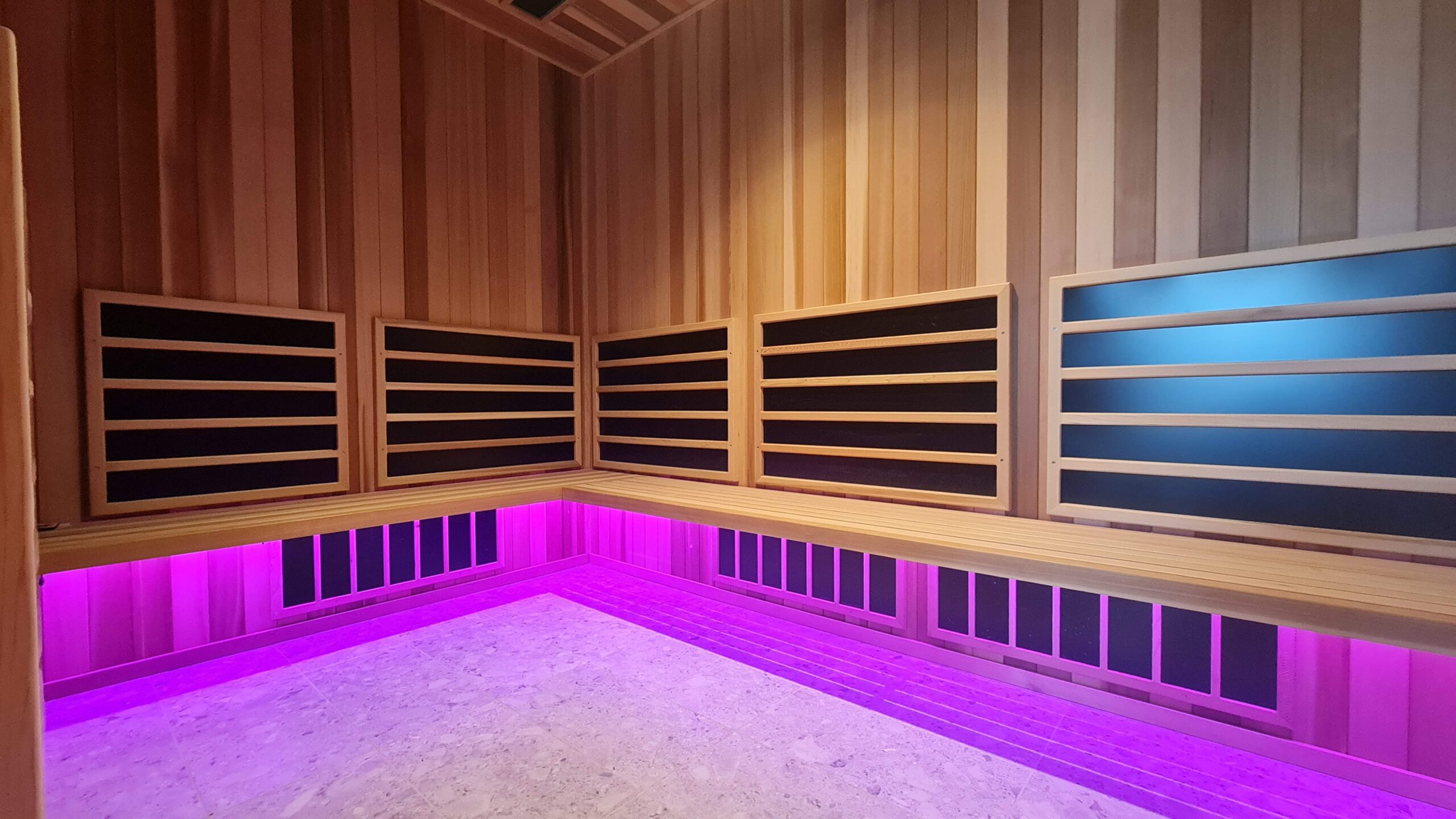
Infrared Sauna and Diabetes: The Honest State of the Evidence (2026)
Read articleSee How Red Light Integration Accelerates Healing
Bench-integrated 660nm + 850nm LEDs provide the light-mediated repair mechanism that sauna heat alone can't deliver — both technologies in every session.