
Red Light Therapy + Infrared Sauna: The Complete Guide to Combined Therapy (They're Not the Same Thing)
Key Takeaways
- Red light therapy and infrared sauna are NOT the same thing. Red light (630nm, 850nm) triggers photochemical reactions in mitochondria (ATP production via cytochrome c oxidase). Infrared sauna produces thermal effects (core temp elevation, cardiovascular response, HSP activation). Different mechanisms — which is why combining them is powerful
- Combined therapy exceeds the sum of parts: infrared heat increases blood flow, enhancing delivery of nutrients mobilized by red light's mitochondrial activation. For skin: heat boosts dermal circulation while red light stimulates collagen. The heat makes the red light more effective
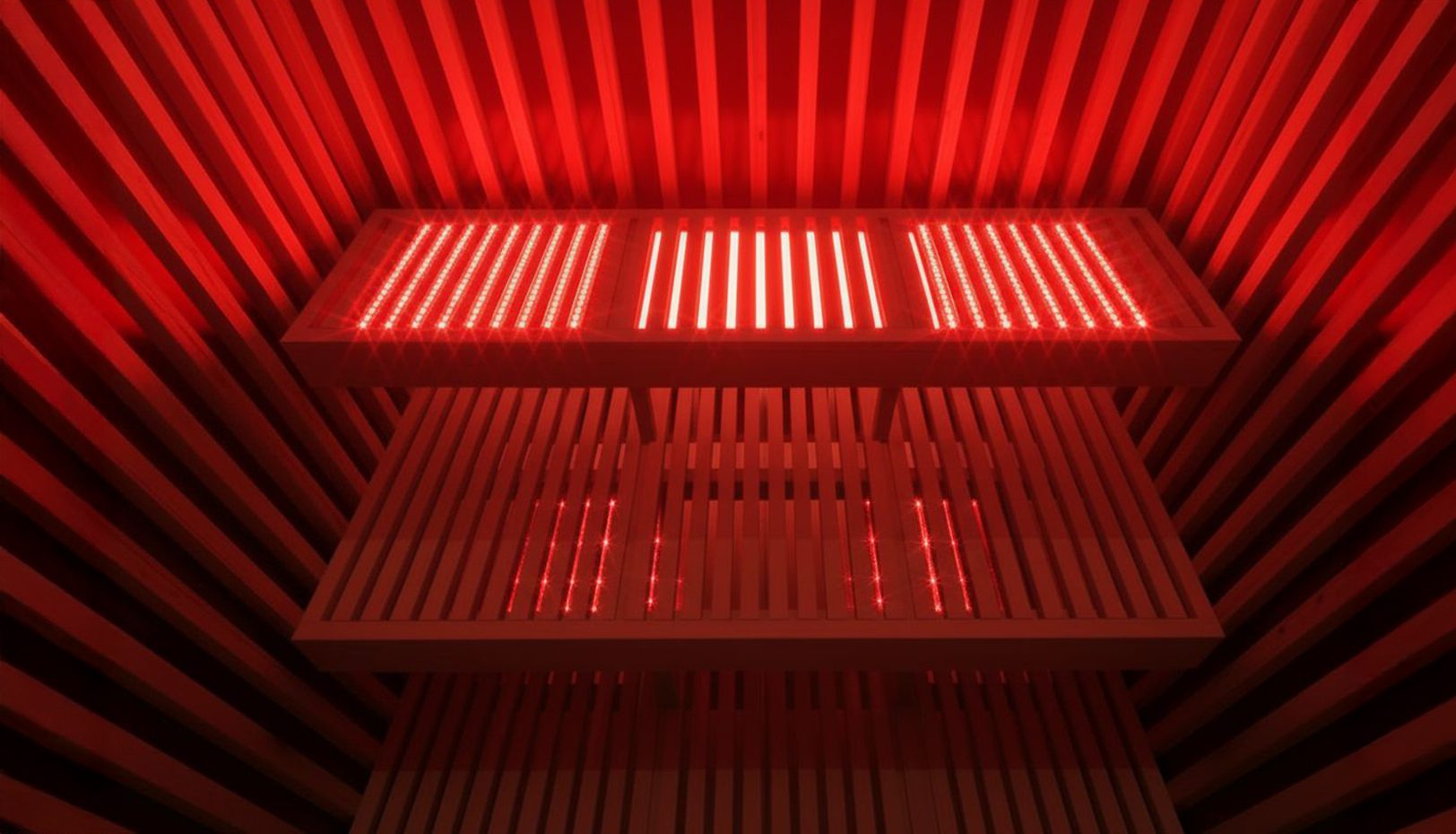
- The distance problem separates marketing from medicine. Red light follows the inverse square law — at 12-24 inches (typical wall-mounted), irradiance falls below therapeutic threshold. SaunaCloud engineers panels for 2-6 inch proximity. This engineering detail determines whether 'red light sauna' is therapy or decoration
- How to use: pre-heat 15-20 min, position for red light proximity, session 20-30 min (red light is dose-dependent), hydrate, plan 15-30 min quiet time after. Combined therapy produces a stronger parasympathetic rebound
- The practical argument: one 25-minute session delivering BOTH thermal and photochemical benefits instead of two separate sessions. Integration in a single cabin is the most sustainable approach for long-term consistency
Red light therapy and infrared sauna are not the same thing. They share the word 'infrared' and they're increasingly sold together — but they work through completely different biological mechanisms. Understanding the distinction is what separates effective combined therapy from expensive mood lighting.
How red light therapy works (photobiomodulation)
Red light therapy — properly called photobiomodulation (PBM) — uses specific wavelengths of visible red (630nm) and near-infrared (850nm) light at specific power densities (30-60 mW/cm² at tissue). These photons are absorbed by cytochrome c oxidase, an enzyme in your mitochondria. The result: increased ATP production (cellular energy), reduced oxidative stress, enhanced collagen synthesis, accelerated tissue repair, and modulated inflammation.
This is a PHOTOCHEMICAL pathway — light energy converted to biochemical change. It works through the same physics as photosynthesis: specific wavelengths absorbed by specific molecules, producing specific biological responses. It requires CLOSE PROXIMITY (2-6 inches) because intensity drops with distance squared.
How infrared sauna works (thermal therapy)
Far infrared sauna uses wavelengths of 3-100μm that produce HEAT. The mechanism is thermal — elevated core temperature triggers cardiovascular conditioning, heat shock protein activation, autonomic rebalancing, neurochemical release, and sweat production. The health benefits come from what your body DOES in response to heat — not from the photons themselves.
They're different therapies that happen to share the word 'infrared.' Using them together is powerful BECAUSE the mechanisms are different — you get both thermal AND photochemical benefits simultaneously.
Why they synergize
Circulation enhancement: Infrared heat causes vasodilation — increased blood flow to every tissue. This enhanced circulation delivers more oxygen and nutrients to cells that red light's mitochondrial activation has primed to use them. The heat makes the red light more effective. Complementary anti-inflammatory pathways: Red light reduces NF-κB and increases anti-inflammatory cytokines at the cellular level. Infrared heat reduces systemic inflammatory markers (CRP, TNF-α, IL-6). Two anti-inflammatory mechanisms working through different pathways.
Skin health: Heat opens pores and boosts dermal circulation (delivery system) while red light at 630nm stimulates fibroblast activity and collagen production (cellular instruction). The combination produces skin benefits neither achieves as effectively alone. Pain relief: Thermal analgesia (heat relaxing muscles, endorphin release) plus photobiomodulation analgesia (red light reducing inflammatory mediators at the joint level) = complementary pain pathways.
The distance problem: why engineering matters
This is the engineering detail that separates marketing from medicine. Red light therapy follows the inverse square law — double the distance, quarter the intensity. At the therapeutic threshold of 30-60 mW/cm², distance matters enormously.
Most 'red light saunas' mount LED panels on walls at 12-24 inches from the user. At that distance, irradiance typically drops below therapeutic threshold — similar to the chromotherapy power density problem. You get a red glow, not a therapeutic dose. SaunaCloud engineers red light panels for CLOSE PROXIMITY — bench-integrated at 2-6 inches from skin when you lay down. This is the difference between a clinical dose and a decorative accent.
The skin health deep dive
630nm red: Stimulates fibroblast activity → increased collagen and elastin production. Wunsch & Matuschka 2014 demonstrated improved skin complexion and feeling with LED phototherapy. 850nm near-infrared: Penetrates deeper into subcutaneous tissue → anti-inflammatory, wound healing, reduces hyperpigmentation. Far infrared heat: Increases dermal blood flow → delivers nutrients, removes waste, enhances natural skin turnover.
Combined: the skin receives surface-level photochemical treatment (collagen instruction) PLUS deep circulatory support (nutrient delivery) simultaneously. Honest caveat: these benefits accumulate over weeks to months of consistent use. Single sessions produce a temporary glow (increased blood flow) but not structural collagen changes. Consistency over months is what produces visible improvement.
How to use a red light infrared sauna
Step 1: Pre-heat the sauna (15-20 min). Step 2: Enter and position yourself for red light proximity — in SaunaCloud's design, this means laying on the bench with your back against the integrated LED panels. Step 3: Session duration: 20-30 minutes. Red light therapy is dose-dependent — more isn't always better. Step 4: Hydrate before, during, and after. Step 5: Post-session: combined therapy produces a stronger parasympathetic rebound. Plan 15-30 minutes of quiet time.
Why choose combined over either alone
Red light therapy alone: effective for skin, pain, and cellular energy — but you miss the cardiovascular conditioning, HSP activation, and neurochemical cascade from heat. Infrared sauna alone: excellent thermal therapy — but you miss the photochemical benefits of collagen remodeling, mitochondrial ATP boost, and targeted cellular repair. Combined: BOTH mechanisms in a single daily session. One 25-minute commitment delivering two therapies. Time efficiency IS the practical argument.
SaunaCloud's approach: not retrofitting red light onto a sauna, but engineering the cabin so that LED panels are at correct distance and angle for therapeutic delivery while you receive infrared heat. This is why we stopped saying 'full spectrum' and started engineering proper PBM integration.
Frequently asked questions
Frequently Asked Questions
No — completely different mechanisms. Red light therapy (photobiomodulation) uses specific wavelengths (630nm, 850nm) to trigger photochemical reactions in mitochondria (ATP production). Infrared sauna uses far infrared wavelengths to produce thermal effects (core temperature elevation, cardiovascular response). They share the word 'infrared' but work through different biological pathways — which is why combining them is more effective than either alone.
Two simultaneous therapies: the infrared heaters raise your core temperature (triggering cardiovascular conditioning, HSP activation, sweating, neurochemical release) while the red light panels deliver photons to your skin and tissue (stimulating collagen production, increasing mitochondrial ATP, reducing localized inflammation). The thermal and photochemical pathways are complementary — the heat enhances the red light's effectiveness by increasing blood flow to treated areas.
Critically. Red light follows the inverse square law — double the distance, quarter the intensity. At 12-24 inches (typical wall-mounted panels), irradiance often falls below the 30-60 mW/cm² therapeutic threshold. SaunaCloud's bench-integrated panels position LEDs within 2-6 inches of your skin, ensuring therapeutic delivery. This engineering detail is the difference between a clinical dose and a decorative red glow.
630nm red light stimulates fibroblasts to produce more collagen and elastin (structural proteins that determine skin firmness). 850nm near-infrared penetrates deeper for anti-inflammatory and wound-healing effects. Combined with infrared heat (which boosts dermal circulation), the skin receives photochemical treatment PLUS enhanced nutrient delivery simultaneously. Results accumulate over 4-8 weeks of consistent use — not overnight.
Red light therapy is dose-dependent — more isn't always better. Standard PBM protocols recommend 10-20 minutes of direct exposure at therapeutic intensity. Within a 25-30 minute sauna session, you're receiving red light for the full duration, which is within the effective range. The infrared heat component doesn't have the same dose ceiling — heat therapy benefits scale with duration up to 30-40 minutes.
Yes — a standalone red light panel at close range delivers PBM effectively. But you miss the thermal benefits (cardiovascular conditioning, HSP, neurochemical response), and you need a separate daily session for infrared sauna. The combined approach delivers both in one 25-minute session — making daily consistency more sustainable. If you're going to own both tools, engineering them into one cabin is the most practical solution.
No. Chromotherapy uses low-power colored LEDs (0.01-0.5 mW/cm²) for decorative mood lighting — 100-1000x below therapeutic power density. Red light therapy (PBM) uses specific wavelengths at 30-60+ mW/cm² to trigger measurable cellular responses. Same word ('light'), completely different technology. See our chromotherapy debunk for the full comparison.
Because we stopped calling our saunas 'full spectrum' and started engineering proper PBM integration instead. Our red light panels are positioned at therapeutic distance (2-6 inches from skin, bench-integrated), use the two wavelengths with the most PBM research (660nm + 850nm), and operate at power densities within the therapeutic range. Not decorative. Not a marketing feature. An honestly-presented separate technology integrated into the sauna at clinical specifications.

Founder & Lead Designer, SaunaCloud®
3,000+ custom saunas built since 2014 · Author of The Definitive Guide to Infrared Saunas · Featured in Forbes, Inc., and MSN
Chris has been designing and building custom infrared saunas since 2014. He wrote one of the first comprehensive books on infrared sauna therapy and is personally involved in every SaunaCloud build — from design consultation through delivery and beyond.
Continue Reading
Red Light Therapy in Infrared Saunas: The Complete Science of Integration (2026)
Read article
Infrared Sauna and Skin: Separating the 'Glow' from the Claims (2026)
Read article
Why We Stopped Calling Our Saunas 'Full Spectrum' — And What I Learned About Infrared Physics
Read articleSee How We Engineer Red Light Integration for Therapeutic Distance
660nm + 850nm at clinical power density. Bench-integrated at 2-6 inches. Two therapies, one daily session, properly engineered.