
Sauna Safety for Kids: Age-Specific Guidelines, Temperature Limits, and Why Infrared Is Safer (2026)
Key Takeaways
- Children thermoregulate differently than adults: higher surface-area-to-mass ratio (absorb heat faster), less developed sweat response, higher metabolic heat production per kilogram, and greater risk of rapid core temperature elevation. These are physiological facts that determine every safety guideline on this page
- Age-specific guidelines: Under 2 — not recommended. Ages 2-4 — brief exposure only (2-5 min, 100-110°F, parent holding child). Ages 5-8 — short sessions (5-10 min, 110-120°F). Ages 9-12 — moderate sessions (10-15 min, 120-135°F). Ages 13-17 — approaching adult protocols (15-25 min). Adult supervision required at ALL ages
- Infrared saunas operate at 130-150°F — significantly lower than traditional saunas at 170-200°F. This lower ambient temperature provides a substantial safety margin for children. A child in a 120°F infrared sauna is at far less risk than a child in a 180°F traditional sauna
- Young children may not recognize or communicate overheating symptoms. Watch for: flushed face, lethargy, confusion, irritability, and — critically — stopping sweating (a sign of heat exhaustion, not comfort). Exit immediately if any of these appear
- NEVER leave a child unattended in a sauna. Not for a minute. Not to answer the phone. An adult must be physically present inside the sauna for the entire session, every session, no exceptions
The #1 question parents ask: is it safe for my child to use a sauna? The answer: yes, with age-appropriate guidelines, temperature limits, and constant supervision. Children are not small adults — their bodies handle heat differently, and the safety protocols reflect that.
Why children and heat are different
Children thermoregulate differently than adults through basic physics and physiology. They have a higher surface-area-to-mass ratio — meaning they absorb heat from the environment faster relative to their body size. Their sweat response is less developed — they can't cool themselves as efficiently. They produce more metabolic heat per kilogram of body weight. And their core temperature can rise more rapidly than an adult's in the same environment.
These aren't theoretical concerns — they're the same physiological factors that make children more vulnerable to heat illness in hot cars, during sports, and in any high-temperature environment. A sauna is a controlled heat environment, which means we can manage these risks — but only if we respect them.
Age-by-age sauna guidelines
Under age 2: NOT recommended under any circumstances. Infants and toddlers under 2 have immature thermoregulatory systems, cannot communicate distress, and are at highest risk for rapid overheating. No temperature or duration is safe enough.
Ages 2-4: Brief exposure only. Maximum 2-5 minutes. Temperature: 100-110°F (well below adult levels). Parent should be holding or in direct physical contact with the child. The child dictates the duration — if they want to leave after 1 minute, you leave after 1 minute. Think of this as introduction and familiarization, not a 'session.'
Ages 5-8: Short sessions. Maximum 5-10 minutes. Temperature: 110-120°F. Direct adult supervision inside the sauna at all times. Bring a favorite book, toy, or quiet activity. End the session before the child wants to — leave them wanting more, not exhausted. Hydrate before and after.
Ages 9-12: Moderate sessions. 10-15 minutes. Temperature: 120-135°F — approaching standard infrared range. Adult present in or immediately adjacent to the sauna. The child should understand how to open the door and exit independently. Discuss what 'feeling too hot' means and what to do about it.
Ages 13-17: Approaching adult protocols. 15-25 minutes at standard infrared temperatures (130-140°F). Adult oversight recommended — a teenager can be trusted with more autonomy, but should not be using the sauna while home alone. Hydration, exit awareness, and timer use should be established habits.
The Finnish Sauna Society — the authority on sauna culture in the country where children have used saunas for centuries — recommends children can begin supervised sauna use from approximately age 4. Finland's approach emphasizes gradual introduction, brief sessions, and always with adult supervision.
The session safety checklist
NEVER leave a child unattended in a sauna. Not for a minute. Not to answer the phone. Not to grab a towel. An adult must be physically present for the entire session, every session, no exceptions.
Before every session: Hydrate — have the child drink 8-16oz water (age-appropriate amount). Ensure the sauna door is unlocked and easily opened from inside. Set a timer — children should not be responsible for tracking time. During: Watch for warning signs: flushed face, lethargy, confusion, unusual irritability, and — critically — stopping sweating (this is a sign of heat exhaustion, not comfort). Have a cool damp towel available. After: Hydrate again. Cool down gradually. Monitor for 15-30 minutes for delayed signs of heat stress.
Exit immediately if: The child says they want to leave (respect this without negotiation). You observe flushing, confusion, lethargy, or irritability. Sweating stops. The child becomes unusually quiet or unresponsive. Any sign of distress — physical or emotional.
Why infrared is safer for children
Traditional Finnish saunas operate at 170-200°F with periodic steam. Infrared saunas operate at 130-150°F with dry heat. For children — who absorb heat faster and cool themselves less efficiently — this temperature difference provides a substantial safety margin. A child in a 120°F infrared sauna is experiencing a fundamentally different thermal load than a child in a 180°F traditional sauna.
Infrared also heats the body more gradually through radiant energy absorption rather than convective air heating — giving more time to observe the child's response and exit before core temperature rises too quickly. This gentler heating profile is one of the genuine safety advantages of infrared for families with children.
Special considerations
Children with ASD: Sensory processing differences may make the sauna experience challenging or calming — it's highly individual. Non-verbal children need pre-established exit signals (picture card, specific gesture). Gradual introduction over weeks is essential. Never force the experience. Children with medical conditions: Any child with a cardiac condition, seizure disorder, metabolic disorder, or chronic illness should have physician clearance before sauna use. Children on medications: Some medications affect thermoregulation — discuss with the child's pediatrician.
When NOT to put a child in a sauna
During a fever — the body is already managing elevated temperature. During any illness with vomiting or diarrhea (dehydration risk). If the child is dehydrated for any reason. If the child doesn't want to go in — never force sauna use on a child. After vigorous exercise in hot weather (cumulative heat stress). If the child has sunburn (heat on damaged skin causes pain and further injury).
Frequently asked questions
Frequently Asked Questions
The Finnish Sauna Society recommends supervised introduction from approximately age 4. Under age 2 is not recommended under any circumstances. Ages 2-4: very brief exposure (2-5 minutes) at low temperature (100-110°F) with parent in direct contact. Guidelines scale up with age — see the age-tier chart above.
Lower than adults. Ages 2-4: 100-110°F. Ages 5-8: 110-120°F. Ages 9-12: 120-135°F. Ages 13-17: standard infrared range (130-140°F). Infrared saunas are significantly safer for children than traditional saunas because of their lower ambient temperatures (130-150°F vs 170-200°F).
Shorter than you expect. Ages 2-4: 2-5 minutes maximum. Ages 5-8: 5-10 minutes. Ages 9-12: 10-15 minutes. Ages 13-17: 15-25 minutes. Always end the session BEFORE the child reaches their limit — leave them wanting more, not exhausted. If the child wants to leave at any point, leave immediately.
Watch for: flushed face and neck, lethargy or unusual sleepiness, confusion or disorientation, unusual irritability or fussiness, and — the most critical sign — stopping sweating. If a child who was sweating stops sweating while still in the heat, this indicates heat exhaustion. Exit immediately, cool down, and hydrate. If symptoms don't resolve quickly, seek medical attention.
We recommend adult oversight even for teenagers — they should not use the sauna while home alone. An established teenager who understands hydration, timer use, and exit signals can have more autonomy, but someone should be in the home and aware the sauna is in use. Unexpected medical events (vasovagal syncope, heat exhaustion) can happen to anyone.
Infrared is significantly safer for children due to lower ambient temperatures (130-150°F vs 170-200°F). Children absorb heat faster than adults due to their higher surface-area-to-mass ratio. The lower air temperature of infrared provides a wider safety margin and more gradual core temperature rise — giving parents more time to observe and respond to the child's tolerance.
Founder & Lead Designer, SaunaCloud®
3,000+ custom saunas built since 2014 · Author of The Definitive Guide to Infrared Saunas · Featured in Forbes, Inc., and MSN
Chris has been designing and building custom infrared saunas since 2014. He wrote one of the first comprehensive books on infrared sauna therapy and is personally involved in every SaunaCloud build — from design consultation through delivery and beyond.
Continue Reading
Infrared Saunas and Autism: What's Supported, What's Theoretical, and How to Approach Safely (2026)
Read article
Are Infrared Saunas Safe? The Evidence-Based Answer (2026)
Read article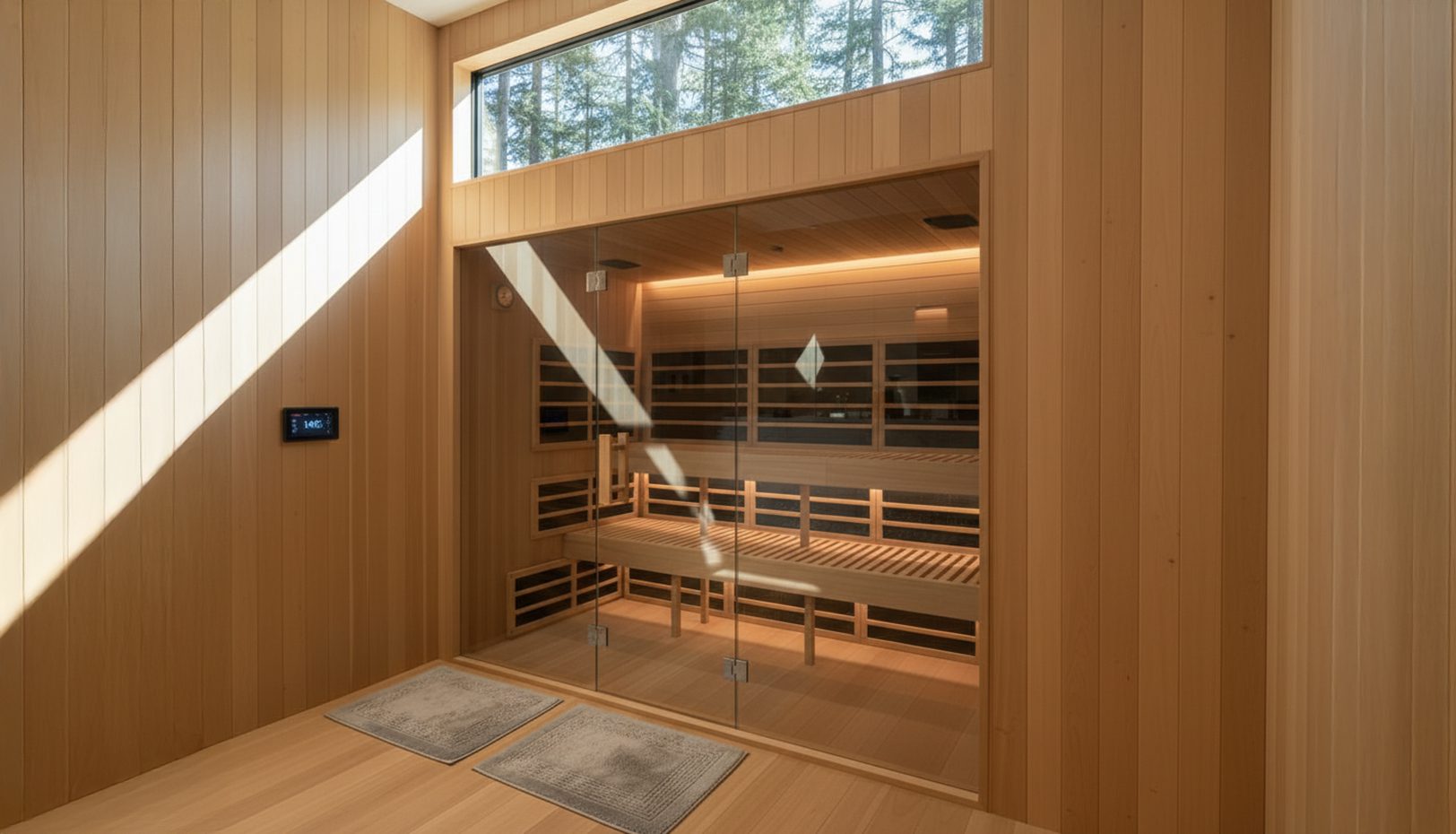
How Often Should You Use an Infrared Sauna? Research-Backed Frequency for Every Health Goal (2026)
Read articleA Sauna Your Whole Family Can Use Safely
Custom designed with your family in mind — temperature controls, bench heights for all ages, and the safety features that matter. Talk to our team.