
Why You Should Use Your Infrared Sauna in Summer (Not Just Winter)
Key Takeaways
- Finnish people sauna year-round — and the Laukkanen study's 50% reduced cardiovascular mortality came from CONSISTENT use, not seasonal. Stopping for 3-4 months every summer means losing the cumulative benefits you spent all winter building
- Sauna makes you BETTER at handling summer heat, not worse. Regular use trains your thermoregulation — you sweat earlier, sweat more efficiently, and maintain lower core temps during outdoor activities. Athletes use sauna specifically for heat acclimation
- Summer sleep is often WORSE (hot bedrooms, humidity, longer daylight). Evening sauna paradoxically fixes this: the core temperature rise triggers a larger melatonin-producing fall afterward. Daily sauna users sleep consistently well year-round
- Summer adjustments are minimal: reduce temp by 5 degrees F, increase hydration 25-50%, shift to morning or evening sessions, use a cool shower to cool down after (no cold outdoor air in summer). Duration stays roughly the same
- Summer is PEAK contrast therapy season — cold plunge after sauna is most enjoyable and refreshing in warm weather. Natural cold water sources are more accessible. If you've been hesitant about cold exposure, summer is the easiest season to start
"Why would I sit in a hot box when it's already 90°F outside?" Fair question. Intuitive logic says saunas are for winter — cold outside, warm inside. But Finnish people sauna year-round, including July. The Laukkanen study's cardiovascular benefits came from consistent, year-round use over 20 years — not seasonal use with a 4-month summer break.
If you stop saunaing every summer, you lose the cumulative benefits you spent all winter building. Heat shock proteins, cardiovascular adaptation, immune function, pain management, sleep quality — all of it requires consistent stimulus. A summer break means rebuilding from scratch in September. Here's why that's unnecessary — and why summer sauna is actually easier and more enjoyable than winter.
Why summer sauna is actually easier
- Faster preheat: The sauna starts at ambient 75-85°F instead of 55-65°F. It reaches therapeutic temperature 5-10 minutes faster
- Your body is already warm: Core temperature starts higher, so the therapeutic rise happens faster. You may sweat sooner and deeper
- Looser muscles: Warm ambient temperatures mean less baseline tension. The relaxation effect builds on an already-warmer starting point
- Longer days: More daylight = more scheduling flexibility for your session
Summer-specific benefits
1. Heat acclimation — you'll handle summer BETTER
This is the most counterintuitive benefit and the most compelling. "Won't the sauna make me more sensitive to heat?" No — the opposite. Regular sauna use trains your thermoregulation system: you sweat earlier, sweat more efficiently, and maintain lower core temperatures during outdoor heat exposure. Athletes use sauna specifically for heat acclimation before competing in hot environments. The same principle applies to hiking, golfing, gardening, or any summer outdoor activity. You'll tolerate heat better because of your sauna practice, not worse.
2. Better summer sleep
Summer heat disrupts sleep — hot bedrooms, humidity, longer daylight. Many people sleep worse May through September. Evening sauna paradoxically fixes this: the core temperature rise during your session triggers a larger fall afterward, producing a stronger melatonin response than the small natural evening cool-down. Follow with a cool shower → AC or fan in the bedroom → excellent sleep. Daily sauna users sleep consistently well year-round because the temperature-drop mechanism overrides ambient heat.
3. Allergy season support
Summer brings grass pollen, mold, and regional allergens. Daily sauna maintains the sinus clearing and immune modulation benefits. Stopping during peak allergy season is the worst possible timing — you're removing the therapy when you need it most.
4. Summer skin recovery
Sun exposure, chlorine from pools, salt water, bug spray — summer is hard on skin. Daily sessions flush pores, improve circulation to sun-stressed skin, and promote collagen repair. Red light therapy supports skin recovery from UV exposure (not a substitute for sunscreen, but supports cellular repair). The "summer glow" from consistent sauna use is better than any tan.
5. Recovery from summer activities
Hiking, swimming, sports, yard work — summer is physically active. Evening sauna is the perfect recovery tool: muscle relaxation, lactic acid clearance, endorphin-based pain relief, and deep sleep for overnight repair.
Summer Sauna \u2014 What Changes, What Doesn't
What CHANGES
Faster preheat (5-10 min faster)
Sweat starts sooner
Reduce temp ~5°F
Increase hydration 25-50%
Shift to AM or evening sessions
Cool shower needed after
Cold plunge is easier + more refreshing
What DOESN'T Change
Cardiovascular benefits (year-round)
Sleep improvement (MORE needed in summer)
Pain relief (doesn’t take vacation)
Immune support (allergies peak in summer)
Detoxification (toxins don’t hibernate)
Mental health benefits (stress doesn’t stop)
The habit (break it = restart from scratch)
Summer sauna adjustments
- Temperature: Reduce by about 5°F. If you normally do 140°F, try 135°F. Your body starts warmer so you need less external heat for the same therapeutic core temperature
- Duration: Same or slightly shorter (25-35 min vs 30-40 in winter). You'll reach therapeutic sweat faster
- Timing: Early morning (before the heat) or late evening (after it breaks). Avoid mid-afternoon in hot climates
- Hydration: Increase by 25-50%. Summer: 24oz electrolyte water before (vs 16-20 in winter), sip during, 24oz after
- Cooling after: In winter, cold air cools you. In summer, you need a cool shower, fan, or AC. Don't step from 140°F into 95°F humid air
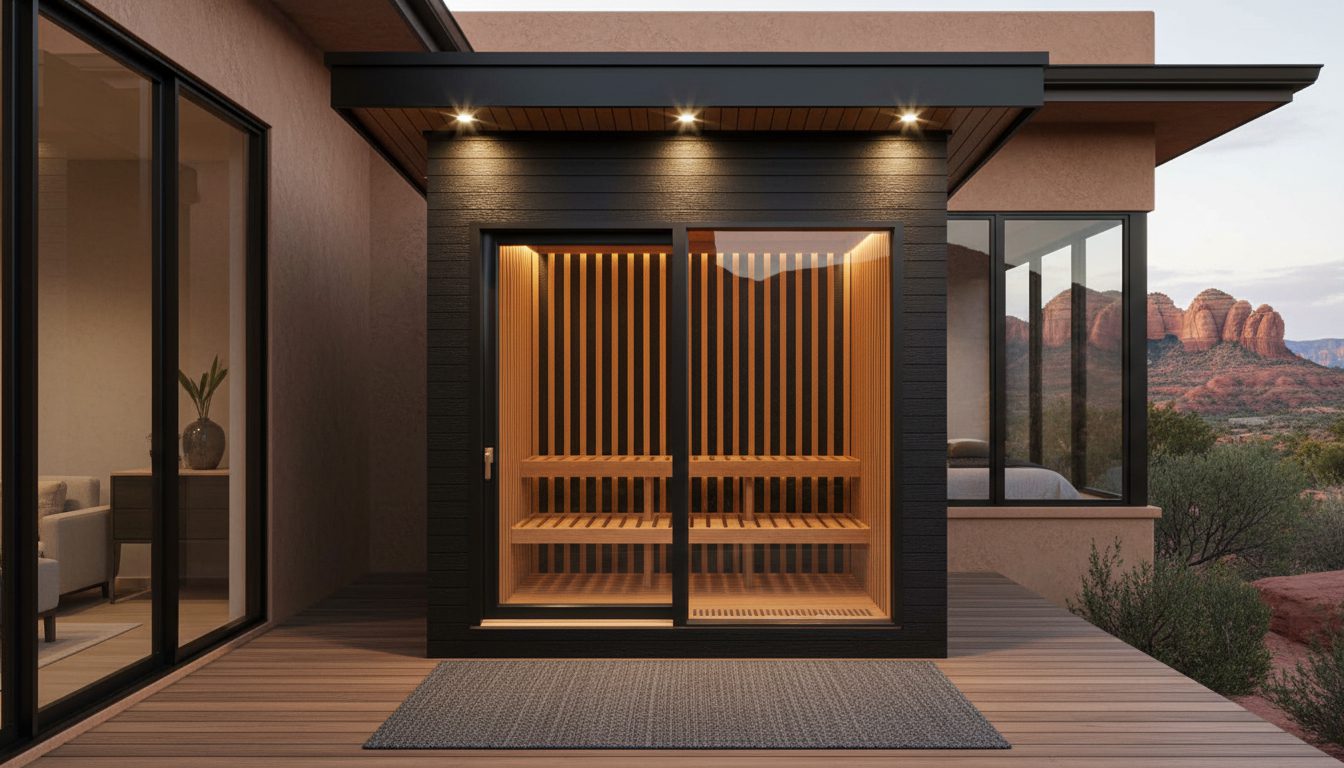
- Outdoor saunas: Shade matters in summer. Direct afternoon sun adds heat load. Morning/evening sessions or shaded placement are key
Don't break the chain
The consistency argument is simple: every benefit you value from your sauna requires ongoing stimulus to maintain.
- Heat shock proteins: A cumulative adaptation. Stop for months and you lose built-up cellular resilience
- Cardiovascular conditioning: The Laukkanen benefits were from year-round use over 20 years
- Pain management: Patients who stop in summer often report symptoms returning within 2-3 weeks
- Sleep improvements: Reset if you stop. You'll go back to tossing and turning
- The habit itself: Re-forming it in September is harder than maintaining it through July
I sauna 365 days a year, including the hottest days of summer in California. The benefits don't take a vacation, and neither should your practice. I just dial back the temperature 5 degrees and shift to morning sessions. Easiest adjustment in the world.
Summer contrast therapy — peak season
This is the fun part. Hot sauna → cold plunge in summer is peak enjoyment. The cold water feels incredibly refreshing against summer baseline warmth. Outdoor contrast sessions (sauna → garden hose → sunshine → repeat) are uniquely summer pleasures. Natural cold water sources — lakes, rivers, ocean — are more accessible and tolerable.
The Søberg protocol (57 minutes heat + 11 minutes cold per week) is easiest to hit in summer when the cold plunge is less daunting. If you've been hesitant about cold exposure, summer is the season to start. The temperature differential between a 140°F VantaWave session and 55°F water triggers both heat shock and cold shock proteins — the full hormetic response at its most enjoyable.
Your infrared sauna works just as hard for you in July as it does in January. The benefits don't hibernate. The habit shouldn't either. Dial the temp down five degrees, drink more water, and keep going.
Frequently Asked Questions
Absolutely. The therapeutic benefits (cardiovascular, immune, sleep, pain relief) don't stop because it's warm outside. Stopping for summer means losing cumulative benefits you spent months building. Finnish people sauna year-round, and the Laukkanen study's benefits came from consistent year-round use. Reduce temperature by 5 degrees F, increase hydration, and shift to morning or evening sessions.
The opposite. Regular sauna use trains your thermoregulation — you sweat earlier, sweat more efficiently, and maintain lower core temperatures during outdoor activities. Athletes use sauna specifically for heat acclimation before competing in hot environments. Sauna users tolerate summer heat better, not worse.
Yes — and summer is when you may need it most. Hot bedrooms disrupt sleep. An evening sauna session creates a larger core temperature rise-then-fall than normal, producing a stronger melatonin response. Follow with a cool shower and AC or fan in the bedroom. Daily sauna users sleep consistently well year-round regardless of ambient temperature.
Minor adjustments: reduce temperature by about 5 degrees F (your body starts warmer), increase hydration by 25-50%, and time sessions for early morning or evening. Duration stays the same or slightly shorter since you reach therapeutic sweat faster. These are small tweaks, not major changes.
It's the most enjoyable time. Cold plunge feels incredibly refreshing against summer warmth, natural cold water sources are more accessible, and the temperature contrast produces a powerful hormetic response. If you've been hesitant about cold exposure, summer is the easiest season to start the Soberg protocol.
Increase normal sauna hydration by 25-50%. Summer protocol: 24oz electrolyte water before (vs 16-20oz in cooler months), sip throughout, 24oz after. Total daily fluid target on summer sauna days: 130-170oz. Summer baseline dehydration plus sauna sweating demands aggressive replacement.

Founder & Lead Designer, SaunaCloud®
3,000+ custom saunas built since 2014 · Author of The Definitive Guide to Infrared Saunas · Featured in Forbes, Inc., and MSN
Chris has been designing and building custom infrared saunas since 2014. He wrote one of the first comprehensive books on infrared sauna therapy and is personally involved in every SaunaCloud build — from design consultation through delivery and beyond.
Continue Reading
Infrared Sauna Hydration: How Much Water You Really Need (And Why Plain Water Isn't Enough)
Read article
The Complete Guide to Outdoor Infrared Saunas: Installation, Electrical, and Climate Engineering
Read article
Hot Yoga in an Infrared Sauna: Poses, Benefits, and a 30-Minute Session Guide
Read article365 Days a Year — Including Summer
VantaWave heats faster from summer ambient temps — lower energy costs. Outdoor models designed with shade positioning for summer. Your benefits don't take a vacation.