
Infrared Sauna for Wound Healing: How Far Infrared and Red Light Accelerate Recovery
Key Takeaways
- Wound healing depends on four phases — hemostasis, inflammation, proliferation, and remodeling. Every phase requires adequate blood flow, controlled inflammation, collagen production, and cellular energy (ATP). Infrared and red light therapy support ALL four phases through different mechanisms
- Far infrared's primary wound healing mechanism is dramatically improved microcirculation — more oxygen, nutrients, and immune cells delivered to the wound bed. Chronic wounds (diabetic ulcers, venous ulcers) are fundamentally circulation problems — infrared directly addresses the root cause
- Red light therapy (630nm + 850nm) has the STRONGEST evidence base of any light therapy for wounds — increases ATP production 200%+, directly stimulates fibroblast collagen production, promotes angiogenesis, accelerates epithelial migration. The Atlas One delivers both infrared AND red light at clinical treatment distance
- SAFETY: Do NOT apply heat to actively bleeding wounds, active infections, acute burns, or within 48 hours of surgery (unless surgeon approves). Ice for acute injury (first 48-72 hours), heat for healing (after the acute phase). Work with your wound care specialist
- Nutritional support is essential alongside sauna therapy: protein (1g/lb body weight during healing), vitamin C (500-1000mg for collagen synthesis), zinc (25-45mg — wound healing is zinc-dependent), vitamin A (epithelial cell function)
This article covers active wound healing — how infrared and red light therapy accelerate the closure, tissue regeneration, and recovery of cuts, surgical incisions, burns, ulcers, and injuries. For scar tissue improvement (the appearance of already-healed wounds), see our companion article on scar management.
Every wound — whether a surgical incision, diabetic ulcer, burn, or sports injury — heals through the same four-phase process. And every phase depends on the same fundamentals: adequate blood supply, controlled inflammation, collagen production, and cellular energy. Far infrared and red light therapy support all four, through two distinct mechanisms that are most powerful when combined.
How wounds heal — the four phases
The Four Phases of Wound Healing
Hemostasis
Minutes
Clotting, platelet aggregation
Not yet involved
Inflammation
Days 1-5
Immune cells clean the wound
Modulates — enough to clean, not damage
Proliferation
Days 5-21
Collagen, new blood vessels, closure
Circulation ↑, fibroblasts ↑, angiogenesis. Red light: ATP ↑ 200%
Remodeling
Weeks-months
Scar maturation, collagen reorganization
Organized collagen, improved scar quality
- Hemostasis (minutes): Blood clotting stops bleeding. Platelets aggregate, fibrin mesh forms. Infrared is not involved at this stage
- Inflammation (days 1-5): Immune cells flood the wound. Neutrophils clear bacteria and debris. Macrophages coordinate repair. Redness, swelling, warmth, and pain are signs of healing — not infection (unless excessive or prolonged)
- Proliferation (days 5-21): The rebuilding phase. Fibroblasts lay down collagen. New blood vessels grow (angiogenesis). Granulation tissue fills the wound. Epithelial cells migrate across the surface to close it. This is where infrared and red light have their biggest impact
- Remodeling (weeks to months): Collagen matures and reorganizes. The wound contracts. Scar tissue strengthens. This phase continues 6-24 months after initial closure
How far infrared accelerates healing
1. Dramatically improved microcirculation
Blood flow is everything in wound healing. VantaWave far infrared penetrates 1.5-2 inches, vasodilating blood vessels in and around the wound. More blood flow delivers more oxygen to hypoxic wound tissue, more nutrients (amino acids for collagen, glucose for cellular energy), more immune cells (neutrophils, macrophages) to the wound bed, and faster removal of inflammatory debris. Toyokawa et al. (2003) demonstrated far infrared significantly improved wound healing through enhanced microcirculation.
Chronic wounds — diabetic ulcers, venous stasis ulcers — are fundamentally circulation problems. The wound can't heal because it's not getting enough blood. Infrared directly addresses this root cause.
2. Angiogenesis and fibroblast activation
Angiogenesis — the growth of new blood vessels into the wound — is critical for the proliferation phase. Far infrared and red light therapy both stimulate VEGF (vascular endothelial growth factor) production. Meanwhile, fibroblasts (the cells that produce collagen) are activated by heat and by the improved delivery of amino acids they need: proline, glycine, and hydroxyproline. More active fibroblasts, better supplied with building materials, produce more collagen faster.
3. Inflammation modulation and immune support
Acute inflammation is essential for wound healing — it clears bacteria and debris. But chronic inflammation prevents healing — the wound gets stuck. HSP70 helps resolve inflammation after the acute phase, moving the wound into productive proliferation. TNF-alpha and IL-6 reduction prevents chronic wounds from being trapped in perpetual inflammation. Better circulation also delivers more neutrophils and macrophages to the wound bed, while reduced cortisol from sauna stress relief means immune cells function more effectively.
How red light therapy supercharges wound healing
Red light therapy (photobiomodulation) has the strongest evidence base of any light therapy for wound healing. Red (630nm) and near-infrared (850nm) light is absorbed by cytochrome c oxidase in the mitochondrial electron transport chain, directly increasing ATP production — giving cells more energy for repair.
- ATP production increased 200%+ in wound cells — more energy for every repair process
- Fibroblast collagen production directly stimulated at the cellular level
- Angiogenesis promoted — new blood vessel growth for permanent circulation improvement
- Epithelial cell migration accelerated — faster wound surface closure
- Excessive inflammation reduced — prevents wounds from getting stuck
- Stem cell recruitment to the wound site enhanced
The Atlas One delivers red light panels at 2-4 inches from the body — the correct clinical treatment distance. Positioning wounds near these panels during sessions delivers both thermal (far infrared) and photochemical (red light) healing simultaneously.
Wound types and guidance
Surgical incisions
Wait until your surgeon clears you for heat exposure — typically 2-6 weeks depending on the procedure. Red light therapy (without heat) may be approved earlier. Once cleared, position the surgical site facing a heater or red light panel. Common applications: joint replacement, abdominal surgery, breast surgery, cosmetic procedures, C-sections.
Burns
Do NOT apply heat to active or acute burns — the tissue is already thermally damaged. Wait until the burn has fully re-epithelialized and is in the remodeling phase. Then infrared + red light can dramatically improve burn scar quality, flexibility, and appearance. For contractures (tightening), warm tissue stretches more safely — sauna before physical therapy. See: scar management guide.
Diabetic ulcers
Among the most devastating chronic wounds — often on the feet and lower legs, extremely slow to heal due to diabetic vascular disease. Infrared's circulation improvement is exactly what these wounds need. Red light has specific evidence for diabetic wound healing. Critical: neuropathy patients may not feel heat — position carefully, check skin after every session. Work with your wound care specialist.
Athletic injuries
RICE protocol first (rest, ice, compression, elevation) for acute injury (first 48-72 hours). After the acute phase: transition to heat. Infrared promotes the blood flow tissue repair needs. Red light has evidence for tendon healing and muscle repair. Many professional sports teams use infrared + red light as standard recovery.
Safety — when NOT to use infrared on wounds
Do NOT use infrared on: Open, actively bleeding wounds. Active wound infections (increasing redness, pus, red streaks, fever). Within 48 hours of surgery (unless surgeon approves). Active or acute burns. Wounds with compromised sensation (neuropathy — you may not feel burns). Deep puncture or bite wounds (require medical evaluation). Any wound not healing normally — see a wound care specialist.
The simple rule: ice for acute injury (first 48-72 hours), heat for healing (after the acute phase). See our complete contraindications guide.
The wound healing protocol
- Phase 1 — Acute healing (post-clearance, weeks 1-3): 125-130°F, 15-20 min, 3-4x/week. Position wound toward heater/red light panel. Monitor wound appearance after each session
- Phase 2 — Active proliferation (weeks 3-8): 130-135°F, 20-30 min, 4-5x/week. Wound should be actively closing. Red light exposure is maximally beneficial during this phase
- Phase 3 — Remodeling (months 2-6+): 135-140°F, 30-40 min, daily. Wound is closed but scar is maturing. Infrared + red light promote organized collagen remodeling. See: scar optimization guide
Nutritional support
- Protein: 1g per pound of body weight during active healing — amino acids are the building blocks of collagen
- Vitamin C: 500-1000mg daily — critical for collagen synthesis. Deficiency directly impairs wound healing
- Zinc: 25-45mg daily — wound healing is zinc-dependent
- Vitamin A: supports epithelial cell function and immune response at the wound site
- Hydration: dehydration impairs every aspect of wound healing
A custom SaunaCloud sauna with VantaWave far infrared and integrated red light therapy delivers dual-mechanism wound healing support — thermal circulation enhancement plus photochemical cellular stimulation — in every session. The Atlas One is specifically designed for this combination.
Frequently Asked Questions
Yes. Far infrared dramatically improves microcirculation to the wound site, delivering more oxygen, nutrients, and immune cells while removing inflammatory waste. When combined with red light therapy (which directly stimulates cellular energy production and collagen synthesis), the dual-mechanism approach significantly accelerates wound closure and improves healing quality.
Wait until your surgeon clears you — typically 2-6 weeks depending on the procedure. Red light therapy (without heat) may be approved earlier. Once cleared, position the surgical site facing heater and red light panels. Start with lower temperatures (125-130 degrees F) and shorter sessions (15-20 minutes).
Diabetic ulcers are fundamentally circulation problems — the wound can't heal due to inadequate blood flow. Far infrared's microcirculation improvement directly addresses this root cause. Red light therapy has specific evidence for diabetic wound healing. However, neuropathy means you may not feel heat — monitor visually and work with your wound care specialist.
Far infrared works through thermal effects: heating tissue to improve blood flow, deliver nutrients, and recruit immune cells. Red light (630nm/850nm) works through photochemical effects: directly stimulating mitochondrial ATP production (200%+ increase), activating fibroblasts for collagen synthesis, and accelerating epithelial cell migration. Different mechanisms at different tissue depths — most powerful combined.
Ice for the first 48-72 hours after acute injury (reduces swelling). After the acute phase: transition to heat. Far infrared promotes the blood flow needed for tissue repair — something ice inhibits. For surgical wounds, follow your surgeon's protocol then transition to infrared once cleared.
Yes — clinical evidence supports red light for scar improvement. Red light (630nm) stimulates organized collagen production, promotes fibroblast activity, and may reduce keloid formation post-surgery. SaunaCloud's Atlas One delivers therapeutic wavelengths at the correct 2-4 inch distance. For detailed scar management, see our dedicated scar article.
Protein is essential (1g per pound body weight during healing — amino acids build collagen). Vitamin C (500-1000mg — critical for collagen synthesis). Zinc (25-45mg — wound healing is zinc-dependent). Vitamin A (supports epithelial function). Stay well-hydrated — dehydration impairs every aspect of healing.
Founder & Lead Designer, SaunaCloud®
3,000+ custom saunas built since 2014 · Author of The Definitive Guide to Infrared Saunas · Featured in Forbes, Inc., and MSN
Chris has been designing and building custom infrared saunas since 2014. He wrote one of the first comprehensive books on infrared sauna therapy and is personally involved in every SaunaCloud build — from design consultation through delivery and beyond.
Continue Reading
Infrared Sauna for Diabetes: Insulin Sensitivity, Neuropathy Relief, and Cardiovascular Protection
Read article
Infrared Saunas and Cell Health: What Far Infrared Actually Does Under the Hood
Read article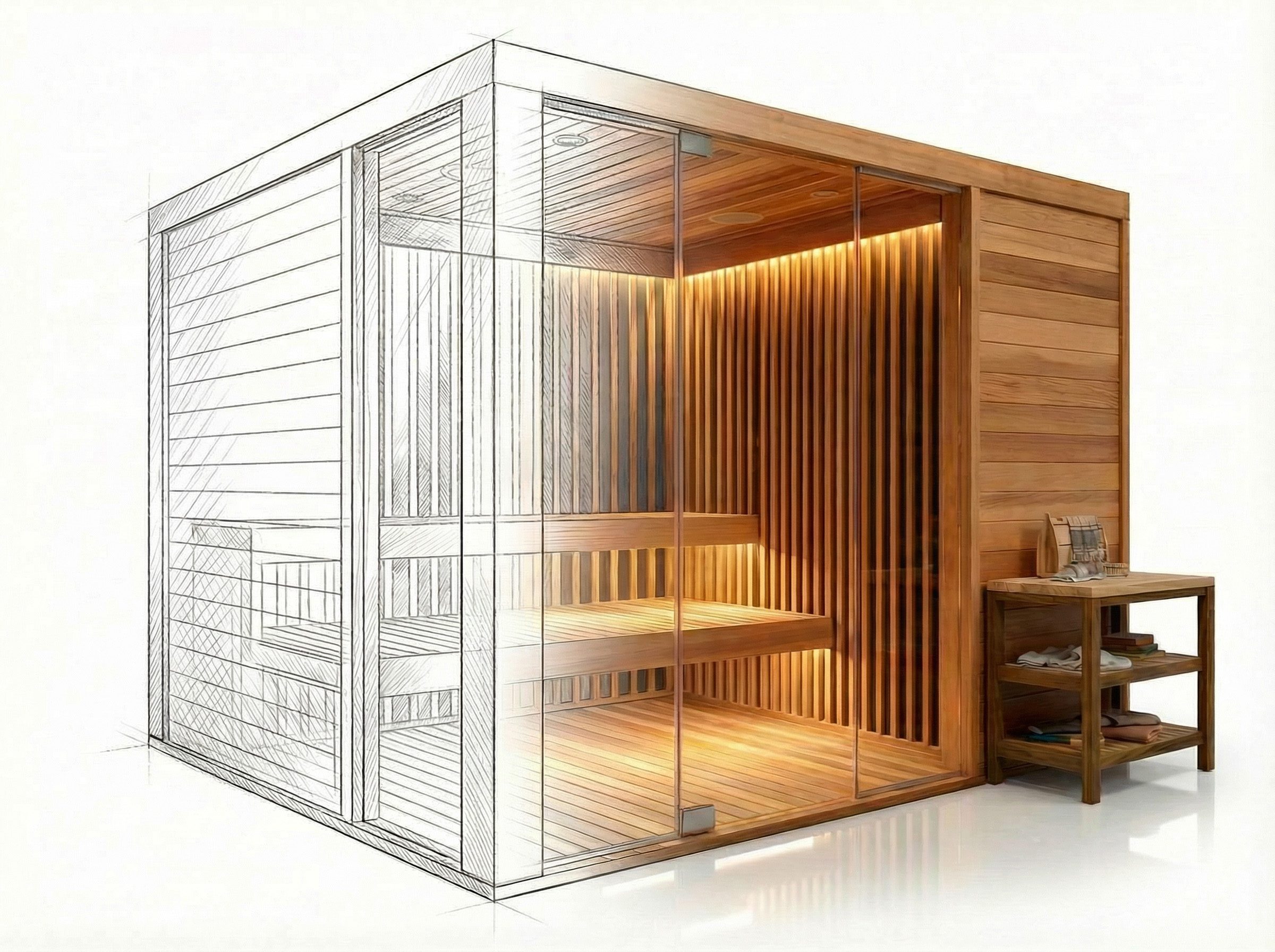
Hot Yoga in an Infrared Sauna: Poses, Benefits, and a 30-Minute Session Guide
Read articleDual-Mechanism Wound Healing — Atlas One with Integrated Red Light
VantaWave far infrared for circulation. Clinical-grade red light for cellular repair. Two proven mechanisms in every session. Ask about the Atlas One.