
Is Campfire Heat Infrared Radiation or Hot Air? The Science That Explains Your Sauna

Key Takeaways
- The warmth on your face from a campfire is INFRARED RADIATION, not hot air. Proof: someone walks between you and the fire — the warmth instantly disappears. Hot air can't switch off at the speed of light. Radiation can. This directionality is the defining characteristic of radiant heat
- An infrared sauna uses the same physics as a campfire: radiant heat absorbed directly by your tissue. A traditional sauna uses convection: hot air heating your skin surface. This is why infrared works at 130-145 degrees F while traditional saunas need 180-200 degrees F — radiation bypasses the air and heats tissue directly
- The campfire test for your sauna: place cardboard between you and the heater panel. In an infrared sauna, the warmth from that direction decreases (radiation blocked). In a traditional sauna, you'd still feel hot (the air is hot). This demonstrates the fundamental difference in heating mechanism
- Radiation penetrates 1.5-2 inches into tissue. Convection only heats the skin surface. This depth difference is why infrared provides deep therapeutic heating — reaching muscles, joints, and blood vessels — at comfortable air temperatures you can breathe easily for 30-45 minutes
- Humans evolved absorbing radiant heat from campfires for 400,000+ years. An infrared sauna isn't a modern invention — it's a modern delivery system for the oldest healing energy on earth. VantaWave at 7.9 microns recreates the campfire's physics at the optimal wavelength for human tissue
Sit in front of a campfire on a cool evening. Your face feels warm. Your back is cold. Now here's the question most people never think to ask: why is the warmth directional?
If the warmth came from hot air, your entire body would heat — hot air disperses in all directions and would surround you. But the warmth is one-sided. Turn around and your face goes cold while your back warms. The warmth tracks with your line of sight to the fire.
Now the definitive test: someone walks between you and the fire. The warmth on your face instantly disappears. The moment they step aside, it returns. Hot air can't switch on and off that fast — it takes seconds to minutes to build and dissipate. But this warmth appeared and vanished instantaneously, because it's not hot air at all. It's infrared radiation — electromagnetic waves traveling from the fire to your skin at the speed of light.
This simple observation — the warmth from a campfire is radiation, not convection — is the exact same physics that explains why an infrared sauna works differently from a traditional sauna, and why it works better for therapeutic heating.
Two types of heat from one fire
A campfire gives you both types of heat simultaneously, which is why it's confusing. But they're fundamentally different:
How Heat Reaches You
Traditional Sauna
Convection dominant
Hot rocks heat the air to 180-200\u00B0F
Hot air surrounds your body on all sides
Air heats skin surface \u2192 skin heats deeper tissue
Indirect. Requires extreme air temp.
Infrared Sauna
Radiation dominant
Heater panels emit infrared radiation
Photons absorbed directly by tissue 1.5-2\u201D deep
Body heats from within \u2014 air only 130-145\u00B0F
Direct. Like a campfire, not an oven.
The campfire test: block the panel with cardboard. Warmth decreases? That\u2019s radiation. Still hot? That\u2019s convection.
- Radiant heat (infrared radiation): Travels at the speed of light in straight lines from the hot coals to your skin. Absorbed directly by your tissue. Instant — appears and disappears the moment line-of-sight is made or broken. Requires no medium — works through vacuum (this is how the sun heats the earth through 93 million miles of space). This is the warmth on your face.
- Convective heat (hot air): Heated air rises from the fire, creating currents that slowly warm the general area. Disperses in all directions. Takes time to build. Requires a medium (air). Speed: a few feet per second. This is the general ambient warmth near a fireplace.
At a distance of 5+ feet from a campfire, the dominant heat transfer to your body is radiation, not convection. The air between you and the fire isn't that hot — but the infrared photons streaming from those glowing coals are being absorbed by your skin and converted to warmth inside your tissue.
This explains traditional saunas vs infrared saunas
Traditional Finnish sauna = convection dominant
Hot rocks heat the air to 180-200°F. The hot air heats your body through convection — your skin feels it on all surfaces equally, like standing in an oven. Löyly (water on rocks) adds steam, increasing the air's heat transfer capacity. The air must be extremely hot because convection is an indirect transfer: air → skin surface → deeper tissue. Inefficient. Which is why traditional saunas need 180-200°F to work.
Infrared sauna = radiation dominant
VantaWave heater panels emit far infrared radiation at 7.9 microns. These photons travel directly from the panels to your body — absorbed by water molecules in your tissue. Your body heats from within. The air is secondary — warm but not the primary mechanism. This is why infrared saunas work at 130-145°F — the air doesn't need to be hot because the radiation is doing the work.
It's the exact same principle as the campfire. The warmth you feel isn't from hot air — it's from infrared photons being absorbed by your skin and tissue. And this is why you sweat profusely in an infrared sauna even though the air "doesn't feel that hot."
The campfire test for your sauna
You can demonstrate this yourself. In a traditional sauna: block the heater with a large piece of cardboard. You'll still feel hot — because the air is hot. In an infrared sauna: hold cardboard between you and a heater panel. The warmth from that direction noticeably decreases — because you've blocked the radiation, exactly like someone walking between you and a campfire. The air temperature barely changed. The radiation stopped.
Why radiation is better for therapeutic heating
- Depth: Radiant infrared penetrates 1.5-2 inches into tissue — reaching muscles, joints, blood vessels. Hot air only heats the skin surface
- Efficiency: Radiation transfers energy directly to tissue. Convection wastes energy heating the air first
- Comfort: 135°F air is comfortable to breathe for 40 minutes. 190°F air is harsh on nasal passages and lungs within 15 minutes
- Core temperature: Despite lower air temperature, infrared raises core body temp as effectively as traditional saunas — the radiation bypasses the air
- Energy consumption: Heating panels to 200°F uses less electricity than heating an entire room of air to 190°F
Everyday examples you already know
- The sun on a cold day: Air is 30°F but the sun feels warm on your face. Infrared radiation traveled 93 million miles through the vacuum of space. The air between you and the sun wasn't heated — the radiation heated you
- A car in a parking lot: Interior gets hot on a cool day because infrared passes through glass and is absorbed by seats and dashboard. Objects heat first, then they heat the air. Radiation came first
- A heat lamp at a restaurant: Food stays warm not because the air is hot — infrared from the lamp is absorbed by the food directly. Move the plate and it cools immediately (radiation blocked)
- A person next to you in bed: You feel their warmth without touching them — that's their infrared radiation reaching you. Every human emits ~100 watts of infrared
The oldest heating energy on earth
Humans have been sitting around campfires for 400,000+ years. The warmth of infrared radiation is literally encoded in our biology — associated with safety, warmth, community, and healing. An infrared sauna isn't a modern invention. It's a modern delivery system for the oldest heating energy on earth.
When I sit in my sauna and feel the warmth radiating into my body, I think about the fact that this is the same type of energy that warmed humans around fires for hundreds of thousands of years. We didn't evolve to sit in 190°F air. We evolved to absorb radiant heat from glowing coals. That's what VantaWave recreates — the physics of the campfire, refined.
For the deep physics dive — Wien's Law, Planck's Law, and the electromagnetic spectrum. For how sunlight and infrared relate. For the complete terminology glossary. And for the engineering that turns campfire physics into a custom therapeutic tool — VantaWave at 7.9 microns.
Frequently Asked Questions
Both, but the warmth on your face is primarily infrared radiation. Hot air (convection) rises and disperses slowly. Infrared travels in straight lines at the speed of light. The proof: someone walks between you and the fire and the warmth instantly disappears. Hot air can't switch off that fast — radiation can, because it travels at 186,000 miles per second.
Radiant heat (infrared radiation) travels as electromagnetic waves directly from a hot object to your body — no medium required, works through vacuum. Convective heat transfers through moving hot air. Radiant heat is directional, instant, and penetrates 1.5-2 inches into tissue. Convective heat is diffuse, gradual, and only warms the skin surface. Infrared saunas use radiant heat; traditional saunas primarily use convective heat.
Different heating mechanisms. A traditional sauna heats the air to 180-200 degrees F, which heats your skin through convection — like standing in a hot oven. An infrared sauna emits radiation absorbed directly by your tissue at only 130-145 degrees F air temperature — your body heats from within. Same principle as a campfire: the warmth isn't from hot air, it's radiation absorbed by your skin.
Because infrared radiation transfers energy directly into tissue without heating the air first. Traditional saunas need 180-200 degree F air because convection is indirect and inefficient. Infrared bypasses the air — photons are absorbed by water molecules in your tissue, heating you from within. Lower air temperature, same therapeutic core temperature increase, much more comfortable for longer sessions.
The campfire test: hold cardboard between you and the heater panel. In an infrared sauna, warmth from that direction decreases (radiation blocked). In a traditional sauna, you'd still feel hot because the air is hot. This test demonstrates the same principle as someone walking between you and a fire — instant warmth change means radiation is the primary mechanism.
Same type of energy, different wavelengths. Campfire coals at ~1000 degrees F emit near-infrared peaking at ~2.9 microns. VantaWave heaters at 200 degrees F emit far infrared peaking at 7.9 microns — specifically optimized for water molecule absorption in human tissue. Both are non-ionizing electromagnetic radiation. The sauna delivers a more therapeutic wavelength at a more comfortable intensity.

Founder & Lead Designer, SaunaCloud®
3,000+ custom saunas built since 2014 · Author of The Definitive Guide to Infrared Saunas · Featured in Forbes, Inc., and MSN
Chris has been designing and building custom infrared saunas since 2014. He wrote one of the first comprehensive books on infrared sauna therapy and is personally involved in every SaunaCloud build — from design consultation through delivery and beyond.
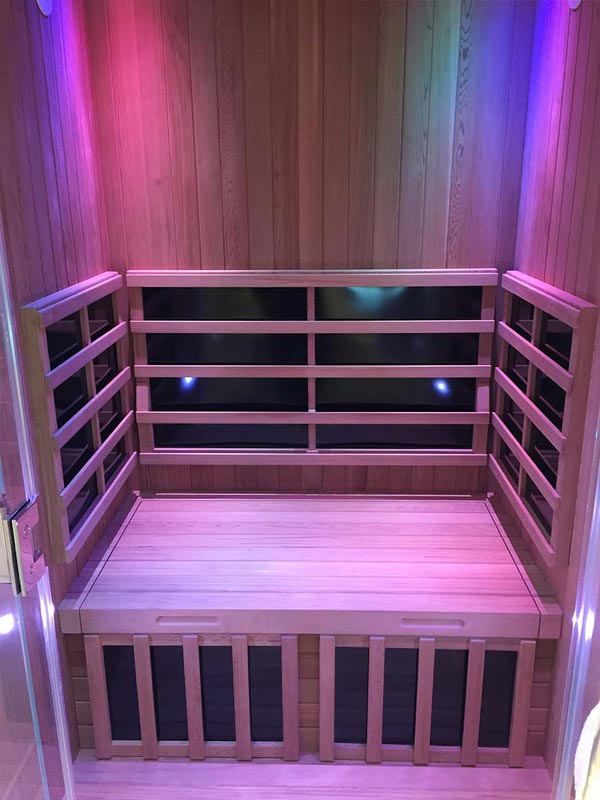
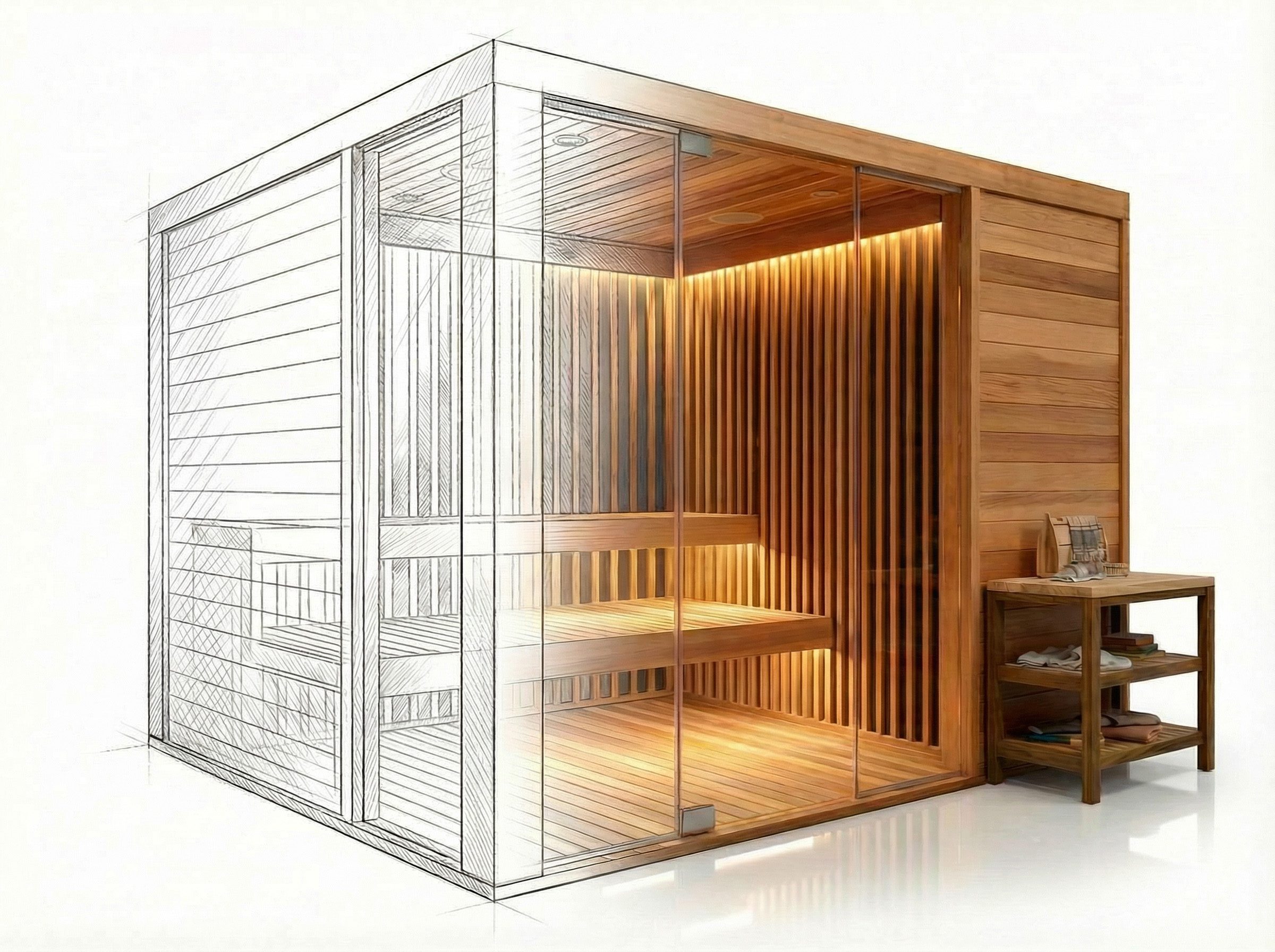
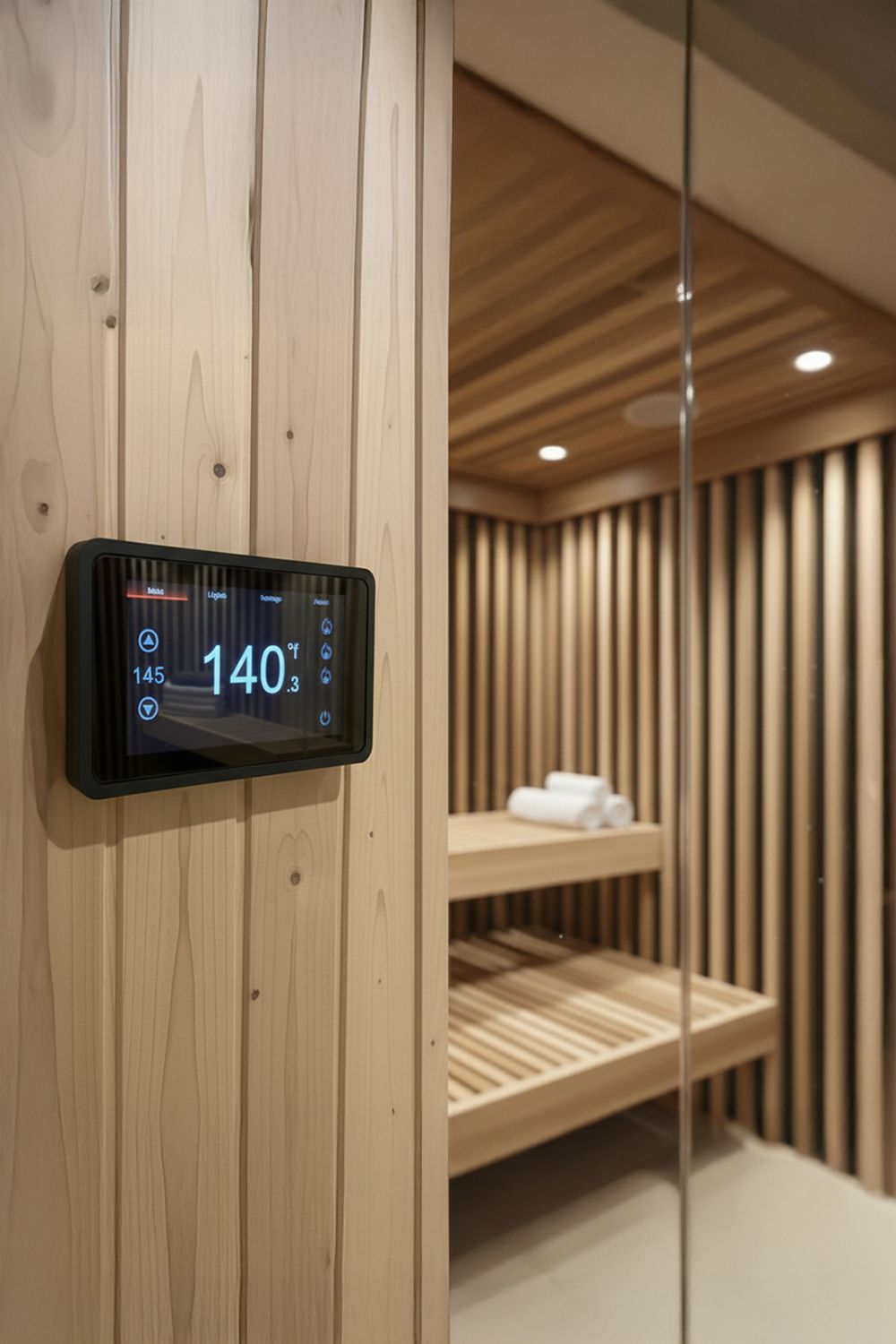
The Physics of the Campfire — Refined
VantaWave recreates radiant heat at 7.9 microns — the optimal wavelength for human tissue. The same energy that warmed our ancestors, delivered with modern precision.