
How Infrared Saunas Work: From Photon to Health Effect in Five Steps (2026)

Key Takeaways
- An infrared sauna heats your body through electromagnetic radiation — the same physics as feeling warmth from a campfire. Heater panels emit far infrared waves absorbed directly by water molecules in your skin. This is fundamentally different from a traditional sauna, which heats the AIR first. Radiation vs convection — the air is a bystander
- The physiological cascade follows five steps: (1) heater emits infrared, (2) skin absorbs it in the first few mm, (3) energy converts to heat, (4) warmed blood circulates deeper raising core temp 0.5-1.5°C, (5) body responds with cardiovascular changes, sweating, HSP production, hormonal release, and autonomic shifts. Every health benefit traces back to this cascade
- Infrared saunas operate at 130-150°F air temperature vs 170-200°F traditional — because air temperature isn't the therapeutic mechanism. The infrared energy reaches you directly. More comfortable, easier to breathe, accessible to people who find traditional saunas overwhelming
- Neither infrared nor traditional is categorically 'better.' Traditional saunas produce faster core temp elevation and have the largest research base (Laukkanen). Infrared is more comfortable, has the Waon therapy research, uses less energy, and is easier to install at home. Different tools with overlapping benefits
- Infrared sauna technology is 130+ years old — John Harvey Kellogg invented the first radiant heat bath in 1891. European royalty installed them in palaces. The Japanese revived the concept as Waon therapy in the 1970s. This isn't a wellness trend — it's century-old technology backed by modern clinical research
Stand near a campfire on a cool night. The smoke rises straight up — hot air goes UP, not toward you. But your face still glows warm. That warmth traveling sideways through the air to your skin? That's infrared radiation. And that's exactly how your infrared sauna works.
From heater panel to health effect: the five-step cascade
Step 1 — Heater emits infrared radiation: Your sauna's heater panels — whether carbon, ceramic, or VantaWave — emit far infrared electromagnetic waves in the 3-15 micrometer wavelength range. These waves travel at the speed of light through the air between the panel and your body.
Step 2 — Skin absorbs the energy: Your skin is 60-70% water. Water molecules absorb far infrared energy efficiently, converting electromagnetic waves into molecular vibration — heat. Most absorption occurs in the first few millimeters of skin tissue.
Step 3 — Tissue temperature rises: The absorbed energy warms the superficial tissue directly. You feel this as the warming sensation on your skin in the first few minutes of a session.
Step 4 — Blood carries heat deeper: Warmed blood flowing through heated superficial tissue absorbs thermal energy and carries it deeper into the body through normal circulation. Over 20-40 minutes, core body temperature gradually increases by 0.5-1.5°C depending on session parameters.
Step 5 — Your body responds: The core temperature elevation triggers a cascade of thermoregulatory responses: cardiovascular changes (increased heart rate, vasodilation), sweating, heat shock protein activation, hormonal release (endorphins, growth hormone), and autonomic nervous system rebalancing. Every documented health benefit traces back to this cascade.
What you feel vs what's happening
Minutes 0-5: Warming sensation on skin surfaces facing the heater panels. This is Steps 2-3 — infrared absorption in superficial tissue. Comfortable, gentle. Minutes 5-15: Warmth deepens. Heart rate begins increasing. You feel heat from the inside, not just the surface. This is Step 4 — warmed blood circulating deeper, core temperature beginning to rise.
Minutes 10-20: Sweating begins. Muscles relax. Mental chatter quiets. This is Step 5 engaging — your thermoregulatory system has activated. Minutes 15-30: Full sweat. Heart rate elevated (100-150 bpm). Meditative state possible. The full cascade is engaged — cardiovascular conditioning, HSP activation, hormonal response all running simultaneously.
Post-session: Parasympathetic rebound. Heart rate drops below pre-session baseline. Deep muscle relaxation. Euphoria from endorphin peak. The 15-60 minutes after stepping out is when the deepest therapeutic benefit occurs.
Two tools, overlapping benefits, different experiences
Traditional Finnish sauna: Air temperature 170-200°F. Heats you primarily through convection (hot air contacts skin). Faster core temperature elevation. The largest research base — the Laukkanen Finnish cohort (20+ years, dramatic cardiovascular and cognitive outcomes). Steam (löyly) option for respiratory comfort. Deep cultural tradition. Social sauna experience.
Infrared sauna: Air temperature 130-150°F. Heats you primarily through radiation (electromagnetic waves absorbed by skin directly). Gentler on respiratory system — easier to breathe in lower ambient temperatures. More comfortable for longer sessions. The Waon therapy research base (heart failure, CFS). Lower energy cost. Faster warmup time. Easier home installation.
Neither is categorically 'better.' A 2025 American Journal of Physiology study comparing infrared, traditional, and hot water immersion found all three produced health-relevant physiological responses — with traditional and hot water producing greater core temperature elevation. Your choice depends on your priorities, health goals, space constraints, and personal preference. See our full comparison guide.
130 years old — not a wellness fad
John Harvey Kellogg — yes, the cereal company founder — invented the first infrared radiant heat bath in 1891. He called it the 'electric light bath' and displayed it at the 1893 Chicago World's Fair. King Edward VII of England and Kaiser Wilhelm II of Germany had them installed in their palaces. The technology predates antibiotics, X-rays, and automobiles.
Japanese researchers revived the concept in the 1970s, developing Waon therapy — a specific far-infrared sauna protocol for treating heart failure and chronic fatigue. Today, far-infrared therapy is studied in peer-reviewed journals from JAMA Internal Medicine to the American Journal of Physiology. The technology is older than you think. The research is newer than you'd expect.
Why the heat cascade produces health benefits
The five-step cascade produces health benefits through several well-characterized mechanisms. Cardiovascular conditioning: Heat stress mimics exercise — your heart works harder, blood vessels dilate, and over time, cardiovascular function improves. Heat shock protein activation: HSPs protect and repair cells under stress — relevant to longevity, brain health, and immune function.
Autonomic rebalancing: The stress-then-recovery cycle trains your nervous system to switch from fight-or-flight to rest-and-digest. Neurochemical release: Endorphins, serotonin, BDNF, norepinephrine — the same brain chemicals triggered by exercise. Supplementary detoxification: Sweat contains trace heavy metals and environmental compounds at concentrations exceeding blood levels.
Common misconceptions
'Infrared radiation is dangerous' — Infrared is non-ionizing electromagnetic energy, the same category as visible light and radio waves. Your own body emits infrared. It cannot damage DNA. 'Infrared penetrates 1.5 inches' — Mostly absorbed in the first few mm of skin. Heat reaches deeper tissue through blood circulation, not direct photon penetration. 'Full-spectrum is better' — A marketing claim. Far infrared does the heavy lifting. 'Higher temperature = better results' — Core temperature elevation matters, not air temperature. 'You need to sweat a lot' — Sweating is one output of the cascade, not the only therapeutic mechanism.
Why SaunaCloud
Every SaunaCloud sauna is custom designed and built with VantaWave® far-infrared heaters — engineered from the physics up to deliver consistent, therapeutic infrared at the wavelengths and power densities that drive the five-step cascade. Full-surround heater placement ensures uniform body coverage. Optional red light therapy integration adds photobiomodulation for cellular repair.
Frequently asked questions
Frequently Asked Questions
The primary heat transfer mechanism. Traditional saunas heat the AIR (convection) at 170-200°F — hot air contacts your skin and transfers heat. Infrared saunas emit electromagnetic radiation absorbed directly by your tissue at 130-150°F air temperature. Both raise core body temperature and produce overlapping health benefits. Infrared is more comfortable and easier to breathe in; traditional produces faster core temp elevation and has a larger research base.
Yes. Infrared is non-ionizing electromagnetic energy — the same physics as visible light, radio waves, and the warmth from your own body (which emits infrared at all times). It cannot damage DNA, cause mutations, or produce cancer. It has nothing in common with nuclear/ionizing radiation except the word 'radiation.' William Herschel discovered infrared in 1800 with a prism and a thermometer.
Air temperature: 130-150°F (55-65°C) — significantly cooler than traditional saunas (170-200°F). But the air temperature isn't the therapeutic mechanism. The infrared energy heats your body directly, raising core temperature by 0.5-1.5°C over a 20-40 minute session. This core temp elevation — not the air temp — is what produces health benefits.
20-35 minutes for most people. Beginners: start with 15-20 minutes at 125-130°F. Build to 30-40 minutes at 135-145°F over several weeks. The physiological cascade takes 10-15 minutes to fully engage — sessions shorter than 15 minutes may not produce the full thermoregulatory response. See our frequency guide for session-by-session protocols.
The Laukkanen Finnish data shows a clear dose-response: more frequent = greater benefit. The strongest associations are at 4-7 sessions per week. At minimum, 3-4 sessions per week provides consistent cardiovascular and nervous system stimulus. Consistency over months and years matters more than individual session intensity.
Yes — the Amano 2015 CFS study used 40-45°C (104-113°F) and still achieved 77.8% positive response rate. Waon therapy uses 60°C (140°F). The therapeutic threshold isn't a specific air temperature — it's sufficient core temperature elevation to trigger the thermoregulatory cascade. Lower temperatures require longer sessions but can be equally effective for many applications.

Founder & Lead Designer, SaunaCloud®
3,000+ custom saunas built since 2014 · Author of The Definitive Guide to Infrared Saunas · Featured in Forbes, Inc., and MSN
Chris has been designing and building custom infrared saunas since 2014. He wrote one of the first comprehensive books on infrared sauna therapy and is personally involved in every SaunaCloud build — from design consultation through delivery and beyond.
Continue Reading
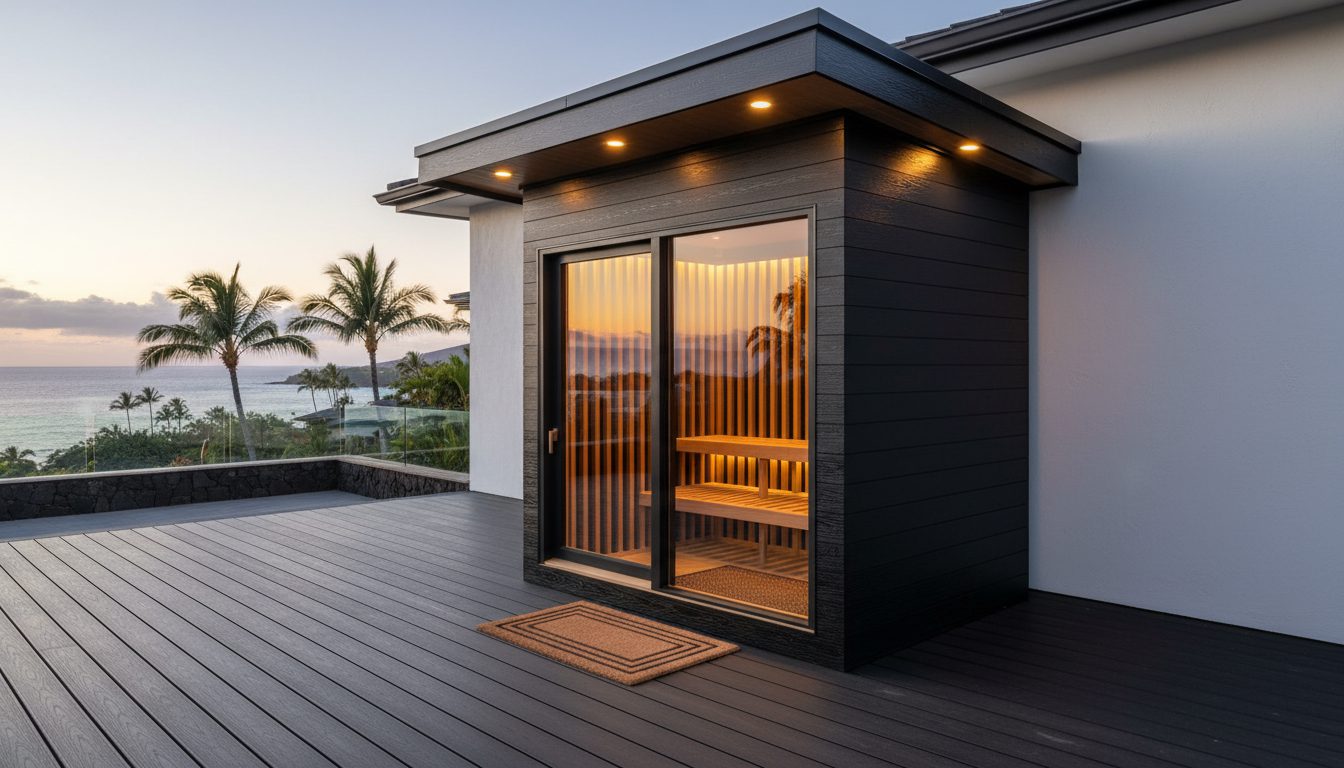
How Infrared Heat Actually Works: The Physics Behind Why You Can Feel a Campfire (2026)
Read article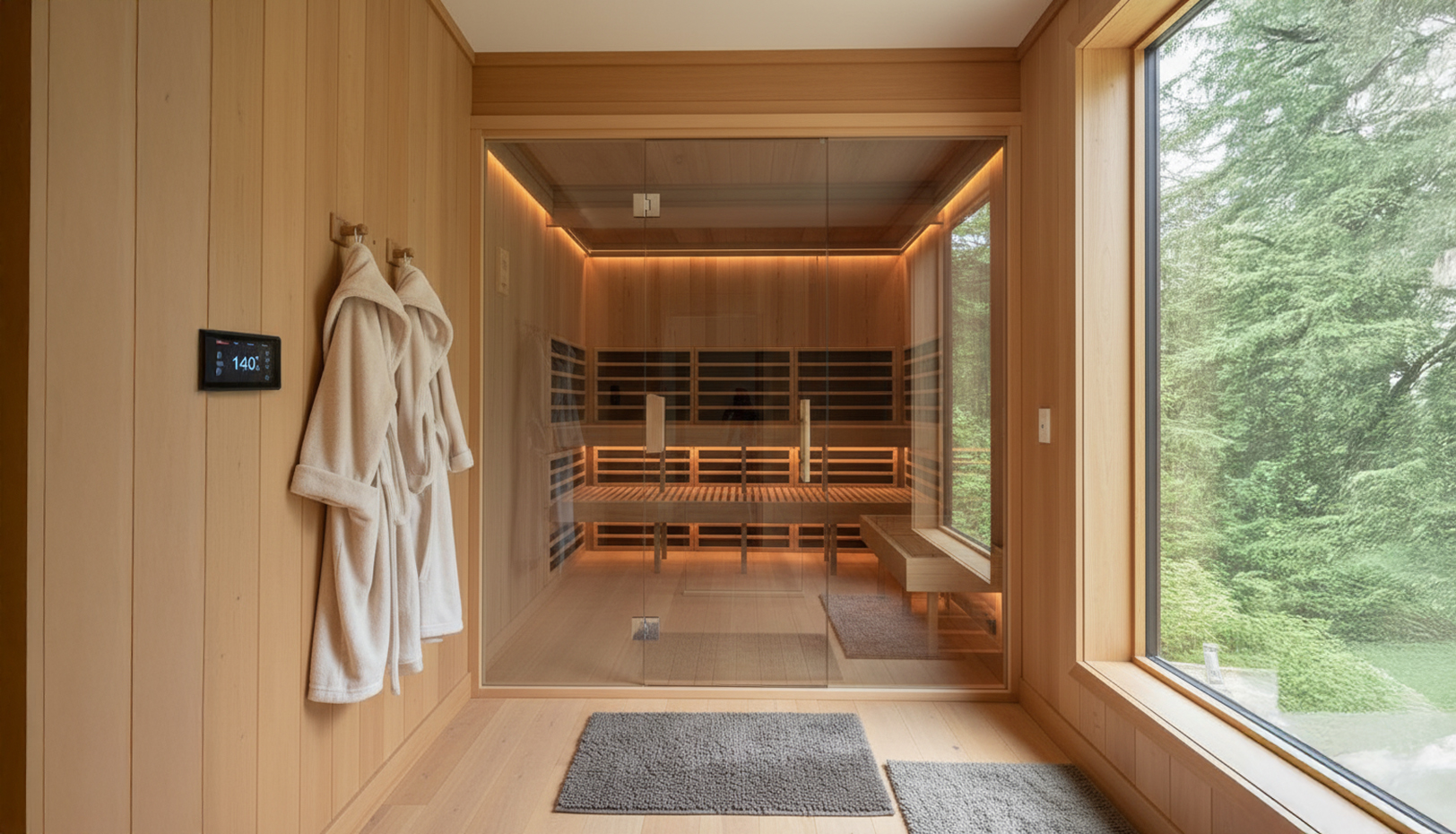
Infrared Sauna vs Traditional Sauna: The Honest Comparison (2026)
Read article
Infrared Sauna Heater Comparison: Carbon vs Ceramic vs Halogen vs VantaWave® (2026)
Read articleReady to Experience the Difference?
VantaWave® far-infrared heaters engineered from the physics up. Custom designed for your space, built for daily practice.