
Hot Yoga in an Infrared Sauna: Poses, Benefits, and a 30-Minute Session Guide
Key Takeaways
- Infrared heats tissue 1.5-2 inches deep — making muscles and connective tissue more pliable than any yoga studio's convective air heat. Collagen becomes measurably more extensible above 104°F, muscle viscosity decreases, and heat raises the pain threshold for deeper stretches
- Focus on seated and supine poses that work in small spaces: forward folds, spinal twists, butterfly stretch, neck/shoulder stretches, child's pose, supine twists. Avoid inversions (blood pressure changes in heat) and vigorous movement (cardio stress + heat = dangerous)
- The 30-minute sauna yoga session: minutes 0-5 settle and breathe, 5-10 neck/shoulders, 10-15 forward fold/butterfly/twist, 15-20 child's pose or supine twist, 20-25 pranayama breathwork, 25-30 stillness. Follow it step by step tonight
- Better than a hot yoga studio in key ways: deeper tissue heating (radiation vs convection), dry heat (easier breathing), private (no crowds), your schedule (no class times), one-time cost (vs $150-250/month membership). Tradeoff: no instructor, limited space
- Everyone is good at stretching in the sauna — the heat removes the biggest barrier (stiffness) and the private space removes the second (self-consciousness). Chronic pain sufferers, desk workers, seniors, and anxiety sufferers benefit most
This isn't about doing a full 90-minute Bikram class inside a wooden box. It's about incorporating gentle stretches, yoga poses, and breathwork into your infrared sauna session — turning a passive heat therapy session into an active flexibility, mindfulness, and recovery practice. The combination is more powerful than either alone.
Hot yoga studios heat the air to 105°F with 40% humidity (convection). Your infrared sauna heats your tissue to 130-145°F with dry heat (radiation). Infrared is actually more effective at warming the muscles and connective tissue that determine flexibility — it penetrates 1.5-2 inches deep, reaching the structures that stretching targets. And you don't need a crowded room, a fixed schedule, or a $200/month membership.
The science of heat + stretching
- Collagen becomes more pliable: The collagen fibers in tendons, ligaments, and fascia are the primary limitation on flexibility. Above 104°F, collagen becomes measurably more extensible — stretches further with less resistance
- Muscle viscosity decreases: Warm muscles have lower internal friction — smoother contraction and extension, less risk of micro-tears
- Pain threshold increases: Heat raises the pain threshold, allowing deeper stretches without discomfort. Combined with endorphin release, you access ranges of motion that are impossible at room temperature
- Joint synovial fluid thins: Warm joints move more freely with less grinding. This is why physical therapists warm tissue before manual therapy
Poses that work inside a sauna
Most home saunas are 3’x4’ to 5’x6’. You can't do warrior poses or sun salutations. But seated, supine, and bench-based stretches are highly effective:
Seated poses (on the bench)
- Seated forward fold: Legs extended, fold from hips. Hamstrings and lower back. Dramatically deeper in heat
- Seated spinal twist: Cross one leg, twist toward crossed knee. Spinal rotators and obliques. The rear heater warming your spine makes this incredible
- Neck rolls and holds: Slow circles, then 30 seconds each direction (ear to shoulder). Cervical muscles release deeply with the rear panel warming them
- Shoulder stretches: Cross-body pull, overhead tricep, clasped hands behind back. Heat loosens chronic desk-worker tension
- Butterfly stretch: Soles together, knees out, gentle forward fold. Much deeper hip opening with infrared warmth
Floor poses (if space allows)
- Supine twist: Lying on back, knees to one side. Deep spinal rotation
- Child's pose: Kneeling, arms forward, forehead down. Deeply calming with slow breathing
- Modified legs-up-the-wall: Sit sideways, legs extended up the back wall. Hamstring stretch + lymphatic drainage
Breathwork (pranayama)
- Deep belly breathing: Inhale 4 counts through nose, exhale 6-8 through mouth. Warm air soothes nasal passages
- Alternate nostril breathing: Particularly effective when sinuses are clear from the heat
- Ujjayi breath: Constrict throat slightly on exhale for an “ocean” sound. Deeply meditative in warmth
- Box breathing: Inhale 4, hold 4, exhale 4, hold 4. Excellent for anxiety
The 30-minute sauna yoga session
30-Minute Sauna Yoga Session
From settling in to deep stillness
0-5 min
Settle + breathe
Let tissue warm
5-10
Neck + shoulders
Gentle stretches
10-15
Forward fold, butterfly, twist
Heat fully penetrated
15-20
Child’s pose or supine twist
If space allows
20-25
Pranayama
Breathwork, eyes closed
25-30
Stillness
Just sit. Be present.
- Minutes 0-5: Settle in. Seated, eyes closed, deep belly breathing. Let the warmth build. Don't stretch yet — let tissue warm
- Minutes 5-10: Gentle neck and shoulder stretches. Slow, never force. Feel the heat softening before you extend
- Minutes 10-15: Forward fold, butterfly, spinal twist (both sides). Heat has fully penetrated — flexibility is noticeably greater
- Minutes 15-20: Child's pose or supine twist if space allows. Otherwise continue seated stretches or transition to breathwork
- Minutes 20-25: Pranayama — alternate nostril or ujjayi. Eyes closed. Sweat flowing. Mind quiet
- Minutes 25-30: Stillness. Just sit. Body stretched, hydrated, relaxed. Mind clear. Deeply present
Post-session: cool down, hydrate, gentle movement. Your flexibility lasts longer than after room-temperature yoga because the deep tissue warming persists.
Why this beats a hot yoga studio
- Deeper heat: Infrared penetrates 1.5-2” into tissue. Studio air heats only skin surface
- Dry heat: No humidity worsening breathing or promoting mold
- Private: No stranger's sweat puddle. No self-consciousness about your flexibility
- Your schedule: 6 AM or 11 PM. No class times, no driving
- Cost: Studio: $150-250/month ($1,800-3,000/year). Your sauna: one-time investment, unlimited sessions forever
- Red light therapy: Get photobiomodulation during your practice — no studio offers this
- The tradeoff: No instructor, limited space. Learn basics in a class first, then transition
Safety
Important: Never force a stretch — heat makes you more flexible but tissues can still tear. Avoid inversions (blood pressure changes). No vigorous exercise — cardio + heat stress = dangerous. Hydrate extra (sweating + moving). Listen to your body — dizziness or nausea means stop and sit. Start simple if new to yoga.
Who benefits most
- Chronic pain sufferers: Heat preemptively relaxes the muscles that make yoga painful. Many who “can't do yoga” find they can in the sauna. See: fibromyalgia guide
- Desk workers: 30 minutes undoes a day of postural damage to neck, shoulders, and hip flexors
- Athletes: Deeper post-workout stretching for recovery and injury prevention
- Seniors: Gentle stretching in warmth is more accessible and less injury-prone than room-temp classes
- Anxiety sufferers: Yoga + heat + breathing = the most powerful natural anxiety protocol available
- Anyone “bad at yoga”: The heat removes the biggest barrier (stiffness). The private space removes the second (self-consciousness). Everyone is good at stretching in the sauna
A custom SaunaCloud sauna can be designed with wider floor area for floor poses, custom bench heights for seated stretching, and chromotherapy set to calming blue or green for your practice. Try the 30-minute session tonight — your body already knows how to do this. The heat just makes it easier.
Frequently Asked Questions
Yes — and the combination is remarkably effective. Infrared heats tissue 1.5-2 inches deep, making muscles and connective tissue more pliable than in any studio. Focus on seated and supine poses (forward folds, twists, hip openers, shoulder stretches). Start with breathwork, add poses gradually.
For deep tissue flexibility, arguably yes — infrared penetrates deeper than convective studio air. For instruction and full sequencing, a studio is better. The ideal: learn basics in class, then practice in your sauna. Offers privacy, your schedule, dry heat, deeper warming, and no membership fees.
Seated: forward folds, spinal twists, butterfly stretch, neck/shoulder stretches. Floor (if space): child's pose, supine twists, legs-up-the-wall. Avoid inversions due to blood pressure changes. Focus on flexibility and breathwork, not strength or cardio.
Three reasons: collagen becomes more extensible above 104 degrees F. Muscle viscosity decreases, allowing smoother extension. Heat raises pain threshold for deeper stretches. Combined, you safely access ranges of motion impossible at room temperature.
Gentle stretching and breathwork are safe. Vigorous exercise is NOT recommended — combined cardiovascular stress of heat plus intense exercise risks dangerous blood pressure drops, dehydration, and heat exhaustion. Keep it low-impact. Stop if dizzy or nauseated.
Heat preemptively relaxes muscles and joints that make yoga painful at room temperature. Endorphins raise pain threshold. Deep tissue infrared reaches the joints and connective tissue where chronic pain lives. Many people who can't do yoga due to pain find they can in the sauna.

Founder & Lead Designer, SaunaCloud®
3,000+ custom saunas built since 2014 · Author of The Definitive Guide to Infrared Saunas · Featured in Forbes, Inc., and MSN
Chris has been designing and building custom infrared saunas since 2014. He wrote one of the first comprehensive books on infrared sauna therapy and is personally involved in every SaunaCloud build — from design consultation through delivery and beyond.
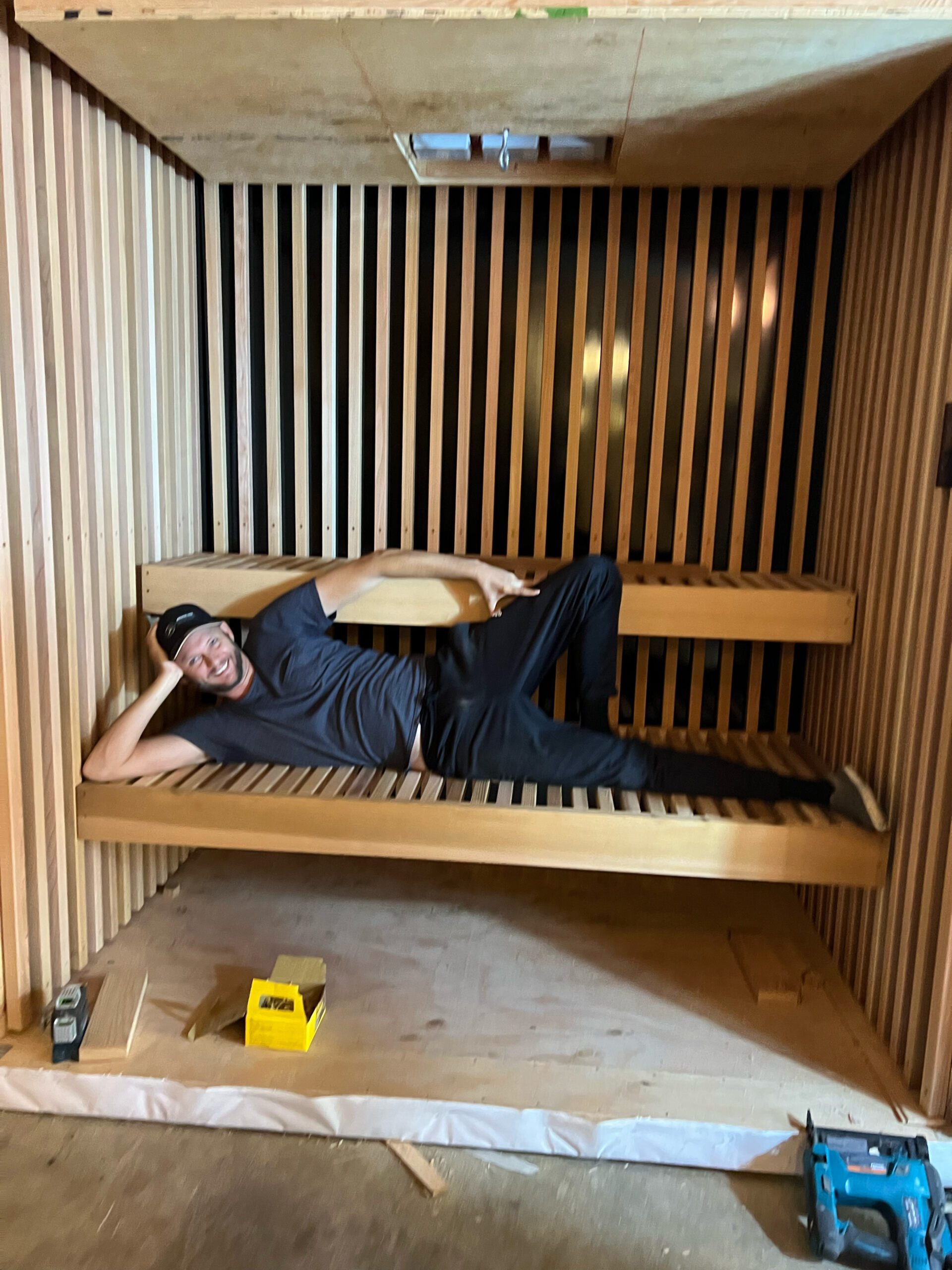
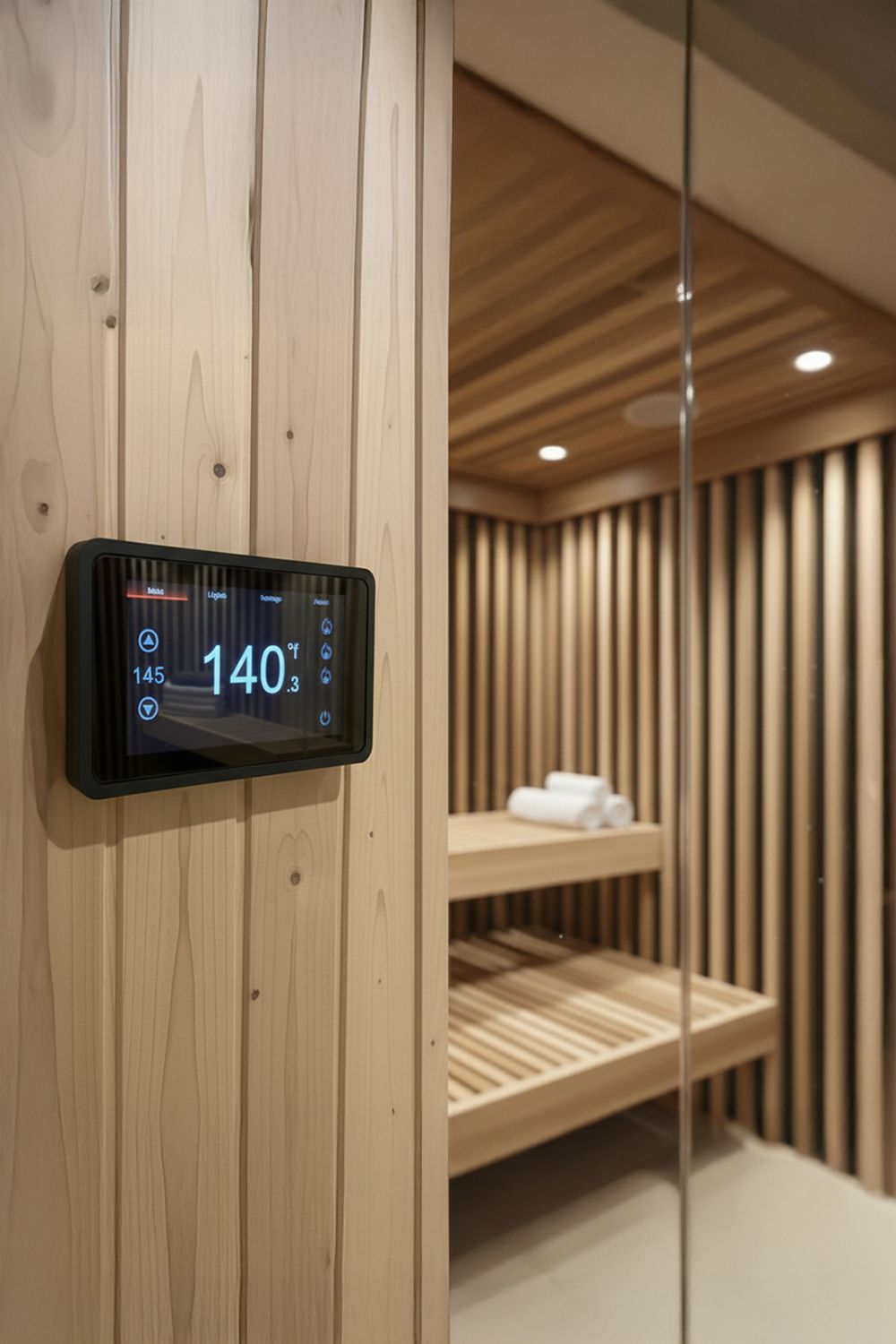
Design Floor Space for In-Sauna Yoga
Custom bench heights for seated stretching. Wider floor area for supine poses. Chromotherapy for your practice. VantaWave deep tissue warming makes every stretch deeper.